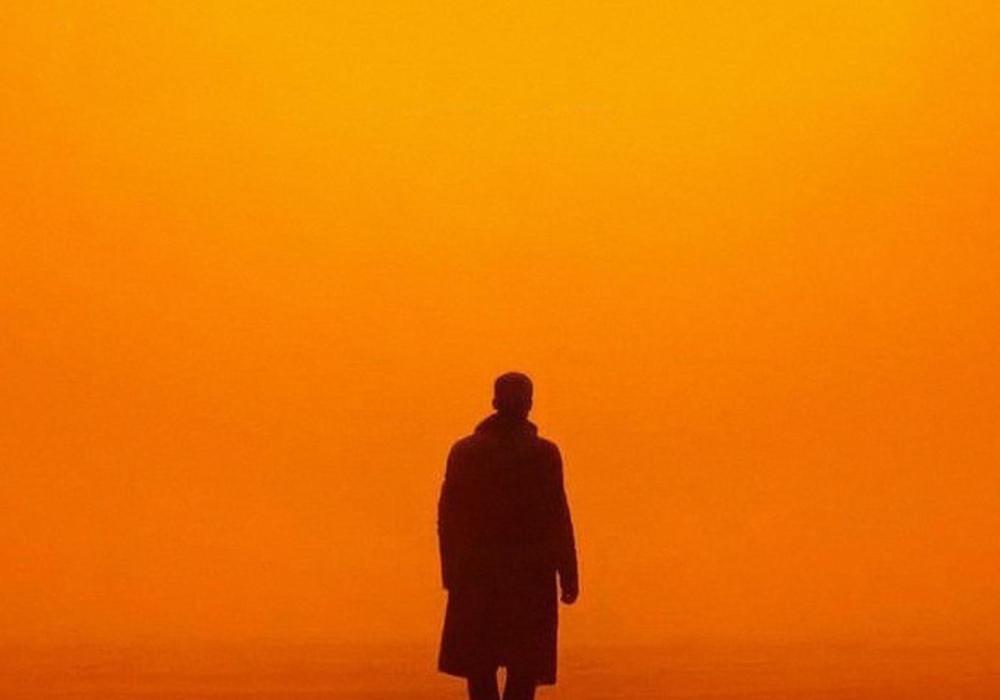
What ‘Blade Runner 2049’ means to me

We often hear that films, like all forms of art, are “subjective.” But what does that actually mean?

There is a deeply personal side to watching movies that we rarely acknowledge. Reviews, for good reason, generally address the more “objective” qualities of a film—the quality of its camerawork or soundtrack, for instance, or whether or not its actors were convincing in their roles. Then there is film criticism, which, like its literary counterpart, delves into the themes and background of the work. But even if you combine these, as Roger Ebert often did, you still have only half the picture of the true experience of a film.

How were you feeling when you entered the theater? Were you still thinking about how your boss chewed you out earlier in the day? Maybe the film triggered a long-forgotten childhood memory, or a character’s voice sounded just like your mother’s. Perhaps a comic relief sidekick everyone hated was your favorite character, if only because you once knew someone just like him.

These are not objective measures of a film, but we should not discount them, either. After all, there is a reason few critics agree on their favorite films. What pushes a film from great to magnificent is not perfect technical precision or classically trained actors; it’s the moments when something inside us connects with something in the film, and for a time, the line between reality and performance fades away.

With that said, let me tell you about a time when, for me, a great film became magnificent.

I saw Blade Runner 2049 four times when it entered theaters in October of 2017. I like to watch great films more than once, but four times in the span of a few weeks was unusual even for me. I’ve already written an analysis of some of the film’s themes, which provides plenty of reasons why I should like it, but that’s not the whole story. You see, in October of 2017, I was working as a manager at a big-box retailer (if you would like to know which one, consider that the experience of working there felt like repeatedly banging my head against a brick wall, and its name references that same wall). Despite several positive developments in my life (including marriage), I was languishing in depression. I have always had something of a morose personality, but the deeply cynical realities of working in this particular environment were driving me into the ground at an alarming rate.

Along came 2049. Somewhere around the scene where K (Ryan Gosling) learns—or thinks he learns—that he is more than your average replicant, I began to sense a working-class parable in the making. K is essentially a slave at the beginning of the film, and he is closely monitored for any signs of dissatisfaction with his role via a “baseline test.” He is an arm of the State, which could just as easily be a megacorporation, and his identity is tied to that entity. Developing his own sense of self is forbidden for two principal reasons: First, it would affect his ability to do his job. Hunting replicants depends on accepting the narrative that they are inferior and unworthy of free will, because denying that narrative means empathizing with those he is supposed to kill or capture. Second, a sense of self, with all the emotions and aspirations that come with it, would rob the powerful of much of their hold on society. Consider Niander Wallace (Jared Leto), a rock star of an entrepreneur who derives his immense wealth and power from the assumption that his replicants are completely under his control. Lt. Joshi (Robin Wright), K’s boss, also alludes to a figurative wall separating humans and replicants that must remain in place to prevent all-out war between the oppressors and their slaves.

I connected with K immediately, because I felt similar pressures to conform and defer to questionable authority. Staff meetings were thinly-disguised baseline tests; Incomprehensibly stupid instructions were sometimes given for seemingly no other reason than to ensure I would blindly do as I was told. Employees with difficult home lives or mental issues were steamrolled unceremoniously by an unsympathetic system run by traumatized nutbags. A certain deceased entrepreneur (you might say he contributed a “ton” of bricks to the “wall” I mentioned earlier. Gosh, I’m clever) was practically worshipped as a prophet for his pure and altruistic motives, even as the corporation he founded raked in monstrous profits by terraforming local economies to suit its business model. Wallace would have been proud.

It felt good to see K realize, all at once, that he had far more potential as an individual than he had been allowed to believe. The rage and sadness he felt at simultaneously understanding the extent of his oppression and becoming aware of his own capacity for free thought made me think about how I might have been limiting myself in my depressive haze. As tears streamed from K’s face, I recalled a time when I had broken down in tears in the middle of an aisle at work, having dwelled a moment too long on the vast difference between what I wanted to do with my life and what I was doing with my life. I felt trapped on a path I had never intended to take. I sensed that K, too, felt his life had been guided by a malevolent hand.

Of course, K eventually realizes that he is not, in fact, the “chosen one” he believed himself to be. This is the film’s most brilliant touch, because by the time this happens, K has already steered himself onto a path of self-actualization. As it turns out, the idea that he was the first natural-born replicant was never his primary motivator. It was simply a push in the right direction, a red pill that allowed him to see past the life society had built for him. His true motivation is the knowledge that he is an individual, that he serves no master but himself.

This internal drive is underlined by his rejection of the replicant freedom fighters, who seem at first to be saviors but treat him as just another cog in the machine, a pawn to be sacrificed, an arm of the rebellion. He defies their orders to kill Rick Deckard (Harrison Ford), saving the old hunter instead. Rather than swapping one set of overlords for another, he serves only his own will.

The scene in which K fights to save Deckard, battling against the ocean’s inexorable tide and Wallace’s replicant minion, struck me more powerfully than any other part of the film. It has been noted by many critics that the enormous waves thrashing into K in this climactic scene function as a nod to Rutger Hauer’s final rain-drenched scene in the original Blade Runner. While this is certainly true, the waves meant something far more profound to me. As I watched K struggle to hold his ground against the unstoppable elements, I began to feel a perverse sense of pride. I know what that feels like, I thought. I’ve been doing that every day.

The waves represented every outside force conspiring to weigh me down. They represented internal forces like doubt, mental exhaustion, and fatalism. They represented the overwhelming power of a society that wanted to cram me into a corner and leave me there to rot. And yet, dealing with these same forces, K fought on.

Maybe I could, too.

From that day forward, whenever I began to slip into despair, I would remember K standing firm as waves whaled into him on the shore, and I would find the strength to keep going. I had never had what you might call an “idol” growing up, but suddenly K, a fictional character, fit into that slot perfectly. In less than two months, I found a job that was better in every way, a job where I could use my degree and where the work environment did not make me feel like I was competing on “Survivor.” This was no coincidence. Crazy as it may sound, Denis Villeneuve’s film inspired me to climb out of the quicksand and better myself. 2049 understands what it is like to be dehumanized by a power structure consumed with its own self-interest and corrupt, insular morality. It understands how people become machines, and how machines become people. Regardless of whether or not Villeneuve and the writers fully intended to create a story about a working-class drone rising up to defy the dictates of society, that was the film I saw, and I will forever be grateful for it.
How ‘Blade Runner 2049’ Trumps ‘Interstellar’ When it Comes to Love

[Note: This article contains spoilers]

“Love,” as a theme, has been thoroughly wrung out by Hollywood. It’s been rebuked by decades of dark, cynical films; cheapened by rom-coms; mythologized by fairy-tale fantasies. There is nothing wrong with any of these approaches in measured doses — I love films in all three categories — but, until recently, we seemed to be getting nothing but iterations on these same three points of view. For a fresh perspective, it seemed you had to look to indie films (Ain’t them Bodies Saints, for example, is a love story that defies convention at every turn).

Then Christopher Nolan came along. He gave us Interstellar, a gorgeous sci-fi epic that attempted what Henry David Thoreau accomplished in his daily journal almost two centuries ago – to unite science with emotion, to be at once technically accurate and lavishly passionate. Unfortunately, Nolan failed to convince us in at least one respect. In the film, Dr. Amelia Brand (played by Anne Hathaway) delivers a speech that seems to suggest love, like physics, is a constant, tangible force in the universe. Faced with the dilemma of saving either Matt Damon’s Dr. Mann or Brand’s lover, Brand argues that love, not logic, should inform the decision.

Nolan’s direction and the emotive strength of Hathaway’s performance make it clear to us that we should see Brand’s speech as a blueprint for understanding the arc of the film. Love is stronger than space, time, or gravity, Nolan wants us to believe – and in the end, it’s strong enough to physically unite a father and his daughter across space and time.

I didn’t buy it. Ultimately, Interstellar is weighted too far towards science and rationality to support the other end of the spectrum, and Brand’s speech comes off as little more than the mad ravings of a lovesick teenager. In creating a film that paid admirable attention to scientific detail, Nolan invalidated the philosophical side of his film.

After seeing Blade Runner 2049, I realized I had seen something different. Unlike Interstellar, Denis Villeneuve’s incredible sequel to the 1982 classic Blade Runner had managed tell a serious science fiction story that relied as much on philosophy as on science, and much of that philosophy centered around love.

Of course, “love” may not immediately jump out at you as a central theme of the film. It wasn’t until my second viewing that I began to understand the arc of K’s story in the context of love, and that understanding hinges upon K’s relationship with the three main female characters in the film: Joi, K’s AI assistant-turned-lover; Lt. Joshi, his boss at the LAPD; and Luv, essentially an “enforcer” for the Wallace Corporation.

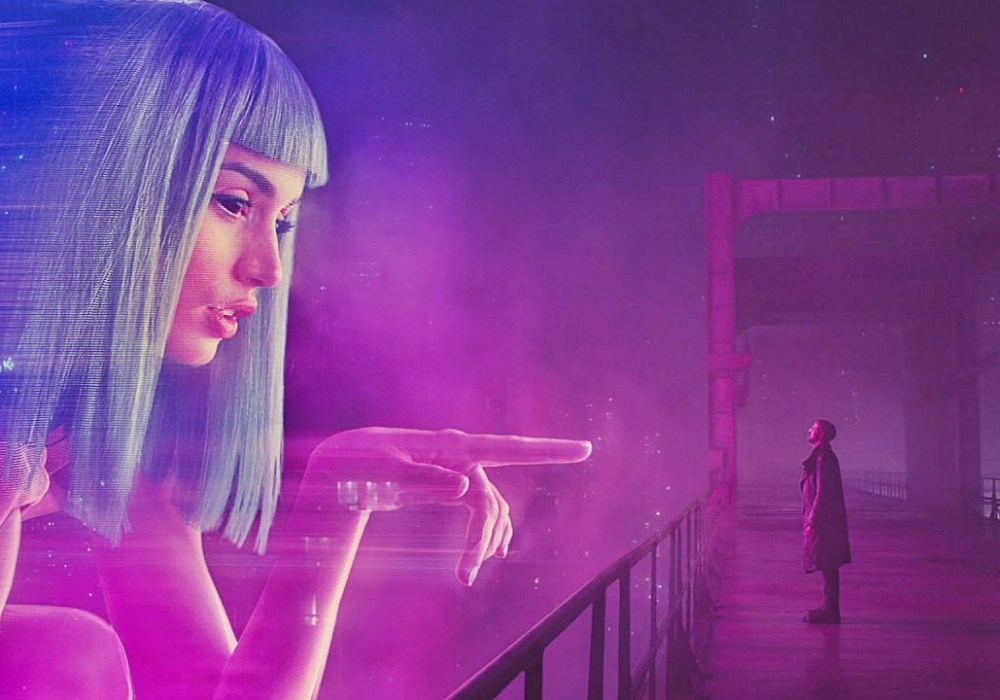
Let’s start with Joi, portrayed by Ana de Armas with a peculiar sort of vulnerability that is by turns touching and horrifically unsettling. This dichotomy is exemplified when she steps out into the rain, ‘feeling’ the water against her ‘skin’ for the first time. We are drawn to her in this moment, willing to believe that somewhere underneath her simulated exterior, she may contain a spark of humanity. But then, just as she and K begin to kiss, she freezes, instantly dehumanized, transformed into a text message delivery system that has more in common with an iPhone than a human being. We are reminded that Joi is a product – designed, simulated. The transition is so sudden it becomes tragicomic; more than a few people at my screening laughed.

But when K is forced to flee the city, Joi does something surprising. She asks to be disconnected from K’s home-bound entertainment system and placed into a device that he can carry with him, leaving her vulnerable to death if something should happen to the device. This is a fundamentally irrational decision on her part (even if we are to believe her hasty explanation that this will prevent Wallace Corp. from data-mining her system) – she is placing the safety of K above her own self-preservation, a decision that seems more human than synthetic. Love, after all, is irrational. We don’t typically say the same about computers.

In her final scene, Ana de Armas manages to pack more emotional nuance into the character and strengthen the idea that she is truly in love with K. After K inadvertently leads Wallace’s goons to the hideout of original Blade Runner Rick Deckard, Luv (don’t worry, we’ll get to her) seizes the opportunity to destroy the device that Joi is now bound to. Realizing she is about to die, Joi declares her love to K with tears in her eyes. Now, it isn’t just the declaration itself that’s important here. Why does she wait until the moment before her death to express her feelings? Even after consummating the physical side of their relationship with a freaky sex scene that seems almost too inspired by Ghost, the timing implies she has been holding back, perhaps uncertain of K’s reaction or of the validity of her own feelings (given that she is evidently fully aware of what she is and what she is designed to do, it’s certainly possible she is having her own internal conflict about what is or isn’t real). At the moment of her death, Joi is concerned with the most human of all preoccupations: her legacy. She wants K to know her feelings, even if there is no time left to act on them. None of this seems like artificial behavior, though we know she was created artificially. These seem like the motivations of a woman in love, with all the complications and uncertainties that go along with that.

There is, of course, an obvious counterpoint to the idea that Joi is in love with K. If she was designed to serve as some kind of virtual “pleasure model” (as is suggested by the holographic ad for “JOI” K encounters later), then she was probably designed to simulate love. Does this invalidate her feelings? I think the film answers that question with an emphatic no, but to understand why, we need to look at the other characters.

Lt. Joshi, K’s boss, is unfortunately given very little screen time – probably less than Deckard, when all is said and done. But the incomparable Robin Wright makes the most of what time she has. Outfitted in sleek, militaristic black, she presents a cold and business-like demeanor. Her words put on a similar front, but their inclination towards the poetic, combined with her tendency to contradict herself, speak to a more emotional and empathetic mind beneath the veneer. She speaks of a “wall” between replicants and humans, while acknowledging the wall is an illusion, preserved in law and in the structure of society to prevent all-out war; she constantly reminds K of his inferior, subservient status as a replicant, but when they sit down to have a chat at K’s home, it is clear she admires and respects him. She asks him for a childhood memory, and appears to understand that even if the memory never actually happened, it’s K’s experience of it that counts. “Little K, protecting what’s his,” she says, perfectly summing up the function of the memory in K’s psyche. Though he acknowledges it isn’t real, he clearly values it, having mentioned it to Joi countless times. The memory is a symbol of his capacity for independence, for rebellion, for protecting what’s his. The fact that Joshi understands the superiority of experience over programming (or feelings over facts) suggests she knows K has the capacity to love.

Furthermore, after having a drink (but clearly not drunk), Joshi implies being open to having sex with K. His refusal is an early indication of his loyalty to Joi, and Joshi’s invitation is another sign that for all her talk about walls and the soullessness of replicants, it may be she that feels lonely, soulless; trapped in a cold, emotionally desolate society, she is drawn to K, perhaps sensing a streak of self-determination behind his dead expression. Interestingly, the way sex is brought up and quickly dismissed also raises the possibility that these two do love each other – not as lovers, but as mother and son. Joshi is much older than K, even if we were to pretend K did have a childhood, and she exerts withering authority over him. Yet, when he crosses a line that cannot be crossed, she gives him an opportunity to escape. Her words are obviously important to him, and she is the first person to whom he betrays a spark of free thought when he admits to being conflicted about hunting down a natural-born replicant. Even Joi picks up on a bond between them and references it more than once.

Then Joshi dies. On my first viewing, I found this scene random, even gratuitous. It seemed to function only to establish how far Luv was willing to go, and maybe to give Joshi a punctuated send-off rather than let her disappear unceremoniously from the film. But the second time around, I grasped the threads that lead these two characters together. Both seem to have feelings of some nature for K. Early on, Luv waxes poetic about how personal questions can inspire desire, only to follow up by asking K a personal question. K shoots her down instantly. Later, her destruction of Joi seems like an explicit act of jealousy. The killing is hard to justify any other way, given that she leaves K alive.

Her killing of Joshi, too, seems motivated in part by unrequited desire for K. When Joshi stands firm while Luv ruthlessly crushes a glass into her hand, it’s easy to see the encounter as nothing more than Man versus Replicant, but as we’ve already discussed, there is no reason to think Joshi has any real problem with replicants. In refusing to submit to Luv, she isn’t standing up for her species; she’s standing up for K. The glass Luv crushes into her hand is a wine glass, after all. She has been drinking, likely consumed by guilt over believing she has forced K to kill an innocent, biologically-born replicant. This guilt would certainly be severe if she does, in fact, feel maternally responsible for him. Her acceptance of death rather than selling out K suggests that she does love him in some fashion, just as Joi’s death proved the same. But the scene makes the most sense if we see her as a mother figure. Her willingness to die for K is a final act of devotion to him and what he represents: an ideal of love as an experience, not genetic programming or a summation of hormonal responses. Joshi is not K’s mother biologically, but her experience of their relationship amounts to the same thing; she loves and protects him as she would a son, and her final act of death is her version of Joi’s declaration of love.

Villeneuve makes the motherhood parallel visual by showing Luv slicing open Joshi’s womb. Earlier in the film, Wallace makes the same cut on a female replicant after failing, once again, to create a replicant that can give birth. By the time Luv kills Joshi, the tormented replicant has been twisted by Wallace’s deranged philosophizing and her unrequited feelings for K. When she confronts K for the final time, those feelings have been tinged with hatred and jealousy, and her understanding of what love is has also been irreparably damaged by Wallace’s tendency to conflate love with power. Wallace essentially uses the word as a term of endearment for his underlings, which falls in line with his self-perception as a godlike figure. The very act of giving Luv her name was an example of this. Thus, when Luv finally kisses K, she does so at the apex of her percieved power over him, right after she has stabbed him (seemingly fatally). After the kiss, she declares, “I’m the best one!” She, too, conflates love with power.

Here is where Villeneuve’s film rebukes Nolan’s. Where love in Interstellar was an emotional stroke of philosophy in a film grounded in scientific theory, love fits perfectly into the thematic and stylistic landscape of Villeneuve’s film. Replicants are people too, he says – they deserve to determine their own destinies. But why? Because their experiences are valid. Genetics can be predetermined. Looks, skills, preferences are all programmable. But experiences, regardless of their triggers, are organic. Love, for Villeneuve, is not a constant force. It does not reside on the same semi-tangible plane as physics or gravity, ruled by mysterious but ironclad laws. It is, itself, an act of creation, brought to life and governed by the subjective experiences of an individual. Love opens up a new world for Joi. Love grants purpose to Joshi. Love destroys Luv.

And what about K? It’s easy to overlook love as the real cause of his ultimate rebellion, looking instead to his belief that he is special, natural-born, the star of yet another “chosen one” narrative. But his belief is mistaken. If belief in his uniqueness were his primary motivator, learning the natural-born was a girl would have destroyed him. Instead, he comes across a gigantic hologram advertising a version of “JOI,” ostensibly the same “entertainment program” he had fallen in love with. The hologram is empty, apparently aware but without any substance beyond her programmed seductiveness. Suddenly, K is enlightened. If Joi had come from that, then there is a will inside him, too. He need not cast away his memories because they belong to someone else. His experiences are his own, and they are what give him his individuality. Nor should he cast away his love. Joi’s final declaration – her legacy – lives on inside him, the fire that propels him to take control of his destiny.

“What am I to you?” Deckard asks him near the end.

K doesn’t answer, but I can guess what he is thinking: Deckard, like K himself, is motivated by love. In the end, love is the only master K is willing to serve.

Go back

Your message has been sent

Warning
Warning

Warning.