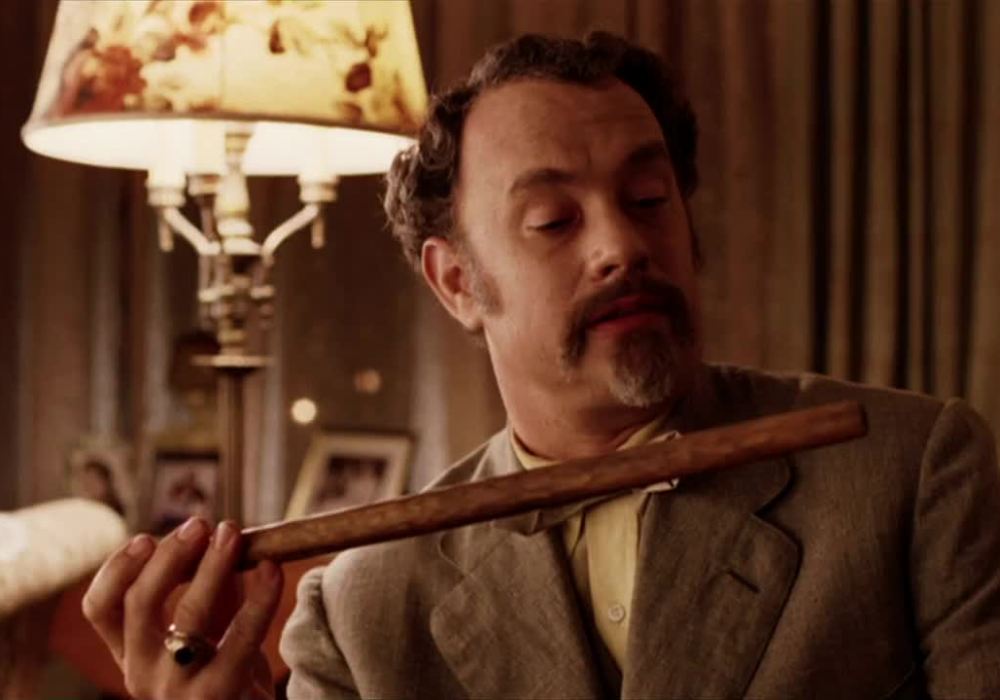
The Ladykillers and the glory days of Tom Hanks

Will we ever see another character as brilliant as Goldthwaite Higginson Dorr, PhD?

In recent years, Tom Hanks has taken a well-deserved rest from demanding roles that showcase his acting range. With a few exceptions sprinkled in (A Beautiful Day in the Neighborhood, Captain Phillips) he has largely become one of those actors who appears to play himself rather than disappearing into his roles, though we can be thankful he is still suitably picky about his roles. By no means has he sunken to the depths of the “I Give Up” club, currently populated by the likes of Robert DeNiro, Al Pacino and Bruce Willis.

Al Pacino flexing his acting chops.

But look back a decade or two, and it can be shocking to recall just how vibrant and masterful Hanks’ performances once were. Today, I want to focus on one performance in particular: his turn as a criminal mastermind in the 2004 Coen brothers film The Ladykillers.

Bewilderingly, this hilarious black comedy received a lukewarm reception from critics and audiences alike upon its release, despite being far more memorable than the brothers’ prior effort, Intolerable Cruelty. But even the critics who denounced the film for not being a carbon copy of the 1955 original had to admit that Hanks had delivered a special performance. He had taken a role that, on the page, was essentially a more refined, cynical version of Ulysses Everett McGill from O Brother, Where Art Thou? and transformed it into a delightfully surreal depiction of a man who is at once learned, stupid, and more than a little insane.

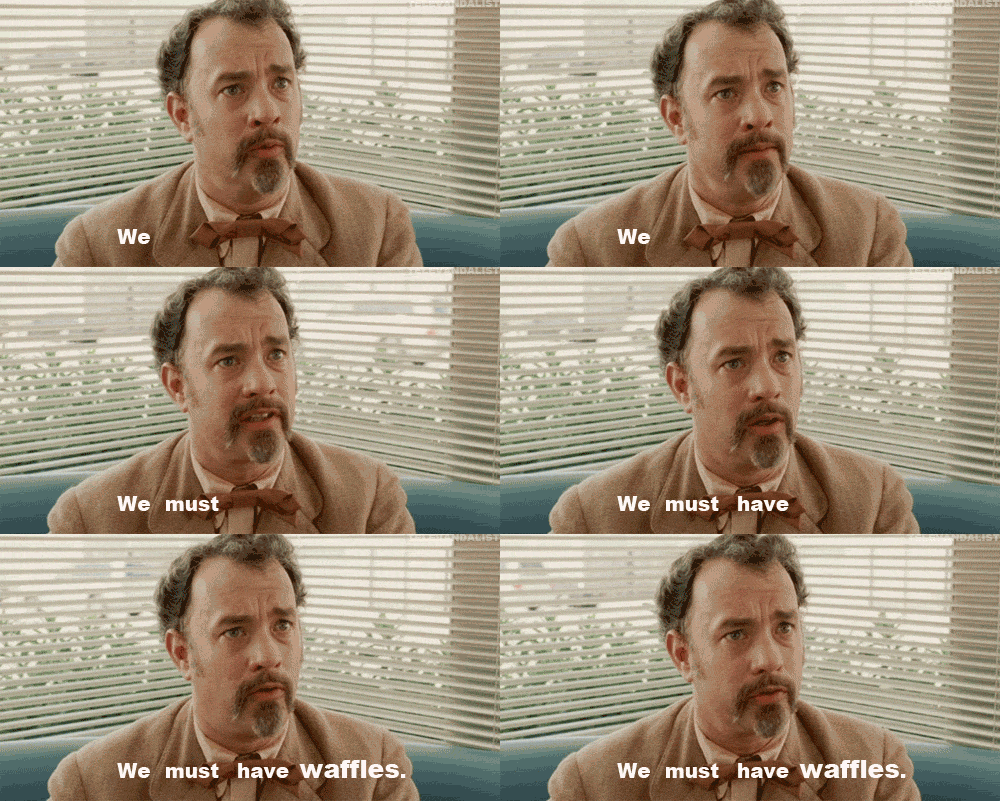
Waffles, forthwith

The film’s plot revolves around Goldthwaite Higginson Dorr, PhD (Hanks) and his bizarre crew as they endeavor to rob the underground vault of a nearby riverboat casino, which they intend to accomplish by tunneling through a root cellar in the home of Marva Munson, a devout and feisty old widow. They gain access to the widow’s home by pretending to be a troupe of classical musicians in need of a practice space, and as is usually the case in a Coen brothers film, it’s all downhill from there.

Goldthwaite and his not-so-carefully chosen team of criminals.

Hanks does not carry the film by himself, of course. J.K. Simmons has never been more perfectly cast as an explosives “expert” whose authoritative demeanor and disarming self-confidence mask his utter ineptitude, and Irma Hall’s incredible range of facial expressions in her role as the god-fearing widow makes for a comedy gold mine. But Hanks is the glue that makes them stick. His performance flaunts a syrupy deep-south accent, which is paired with the linguistic acrobatics of William Faulkner and Edgar Allen Poe—if the two had a love child who grew up to be a circus freak performing spoken word poetry at Mississippi renaissance fairs.

Hanks’ performance has been described as over the top, but Hanks does not receive enough credit for his expertly controlled execution. Whereas “over the top” implies a degree of randomness or unrestrained goofiness, the consistency and internal logic of the character’s behavior elevates the performance into the realm of genius. Goldthwaite — or “the professor,” as he is also known — is an accomplished liar, but we believe him when he says he is a student of classical literature and philosophy. He quotes Poe at will and speaks like a funhouse reflection of a character from a Faulkner novel, all the while spouting references that no one around him understands.

In fact, we come to suspect that he prefers to surround himself with people who are a few rungs short of a ladder. As we learn around the midpoint of the film, Goldthwaite’s father spent much of his life in the “state nervous hospital,” and it seems likely that the professor has taken to projecting his intelligence in order to mask the streak of derangement that runs in his family. The result is a man who wields his expansive vocabulary with all the precision of a sledgehammer, resulting in unforgettable lines such as, “Madam, we must have waffles. We must all have waffles forthwith!”

We must all think, and we must all have waffles, and think each and every one of us to the very best of his ability.

But to his team of prospective vault robbers — which consists of Simmons’ Garth Pancake (and his partner, Mountain Girl), “inside man” Gawain (Marlon Wayans), a former Vietcong general (Tzi Ma), and the brainless but strong Lump (Ryan Hurst) — he is a genius who will make them rich.

Only the widow Munson is wise to the absurdity that is Goldthwaite, and the scenes in which the two characters interact (Goldthwaite trying to thump her into submission with a barrage of classical references and Poe poetry, while she hits back with the naiveté and brutal honesty of a woman who has nothing to prove to anyone but her god) are some of the funniest in the film.

Some will disagree, but for me, The Ladykillers is a highlight of Hanks’ career. Though it lacks the narrative weight of Forrest Gump or the poignancy of Apollo 13, the film is a showcase for what he is capable of when given the right role.

Don’t get me wrong; I’ll readily admit that if anyone deserves to rest on autopilot at this stage in their career, it’s Tom Hanks. Nevertheless, whenever I watch yet another film in which Hanks plays Hanks, I can’t help but wish I was back in a theater in 2004, watching The Ladykillers for the first time. You’re a national treasure, Tom. Do what you like. But in these strange and difficult times, would it hurt to give us a Goldthwaite Higginson Dorr, PhD now and again?

Richard Donner’s Ladyhawke: Ripe for a remake

It turns out Matthew Broderick makes a great wisecracking medieval thief. Who knew?

I was saddened yesterday to hear of the death of Richard Donner, a talented director perhaps best-known today for his excellent Lethal Weapon films. Looking back over his filmography, which includes The Omen and Superman: The Movie (Christopher Reeve’s first appearance in the role), I realized I had never seen 1985’s Ladyhawke. Being a fervent admirer of both Donner and Rutger Hauer, who stars in the film as mysterious medieval knight, I pronounced this oversight a travesty and watched the film immediately.

The result was that rarest of desires in an era of never-ending sequels, reboots and remakes: I want a Ladyhawke remake.

A rare bird

As a medieval fantasy, the film occupies an expansive genre that, unlike most genres, has few consistent tropes. These films can be strikingly (and off-puttingly) modern, as in Nicholas Cage’s Season of the Witch, which feels more like an episode of Supernatural than a medieval epic. On the other hand, The Green Knight, David Lowery’s hotly anticipated adaptation of the old Arthurian tale, looks like it will opt for an approach verging on the psychedelic (à la Valhalla Rising). So it’s no surprise that Ladyhawke has a few novel elements of its own to offer.

The story initially revolves around the thief Gaston (Matthew Broderick), who, in the opening minutes of the film, becomes the first prisoner ever to escape from a supposedly airtight dungeon in medieval Italy. Oddly, the reality of the dungeon does not seem to match its legend. Gaston escapes down a sewer grate—is he the first prisoner in the history of the dungeon to be small enough to fit?

But no matter; such things are soon forgotten. As Gaston makes his escape, he maintains a more or less constant conversation with God that continues for the rest of the film—though he seems to view the relationship as an “I’ll scratch your back if you scratch mine” kind of deal. The humor derived from Gaston’s asides, which alternately thank God for a perceived miracle, scold Him for sending mixed messages, and casually rationalize questionable behavior, are one of the film’s pleasures. His sliding scale of devoutness feels like a fresh but period-faithful take on a character that would otherwise be mostly forgettable.

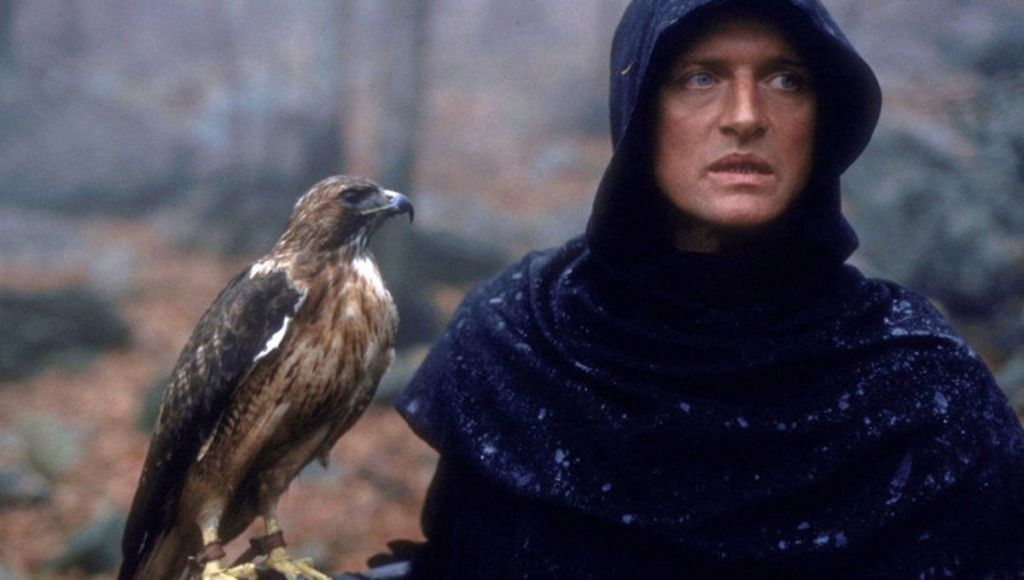
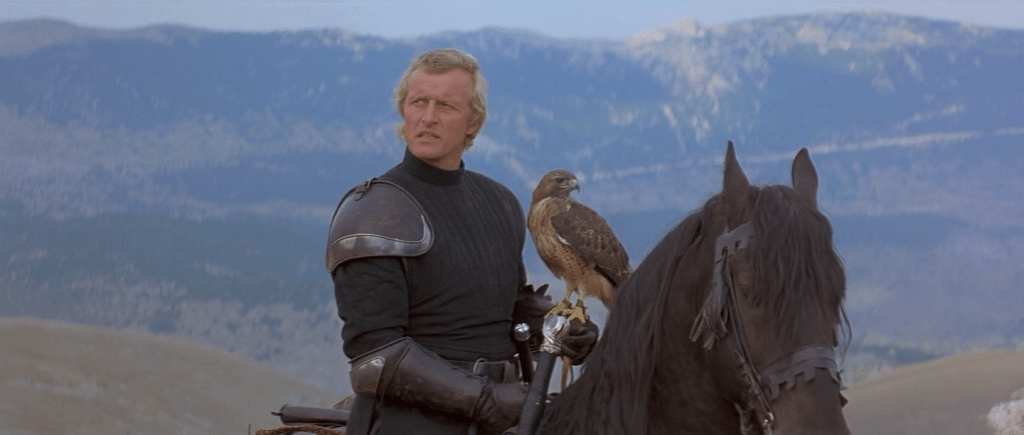
Why forgettable? Because when Rutger Hauer arrives, he steals the show. Hauer is Navarre, a former Captain in the guard of the corrupt Bishop of Aquila, and you haven’t known cool until you’ve seen him peering out from beneath a black hooded cloak atop a sleek black horse, his faithful hawk (hawke?) perched on his arm.

That’s no hawk; that’s a ladyhawke. And a…manwolfe?

Navarre recruits Gaston to lead him straight back into the lion’s den of Aquila. He aims to sneak in and kill the Bishop, who has plagued the Captain and his lover with a sadistic curse.

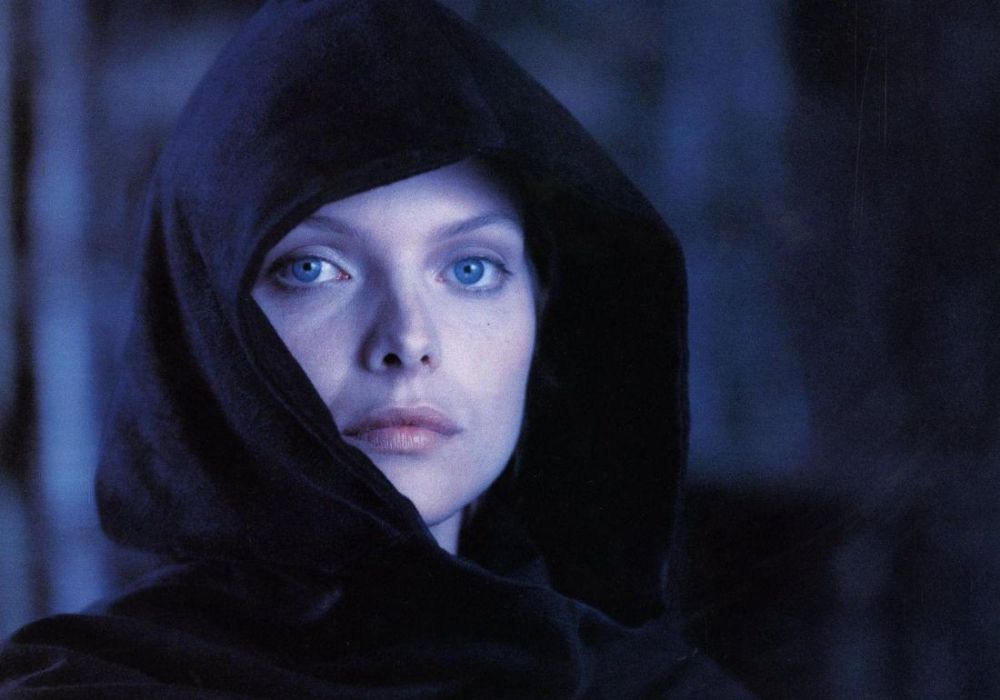
Now, anyone with half a brain will have figured out the nature of the curse relatively quickly, not least because of the film’s title and numerous hints throughout the first hour. But the film waits until close to the halfway point to finally reveal that Navarre transforms into a black wolf each night, while his lover, Isabeau, transforms into the titular hawk during the day. Consequently, the two are “always together, eternally apart,” a twisted punishment bestowed by the Bishop as vengeance for his inability to win Isabeau’s love.

This is a fascinating premise—unfortunately, Donner and the film’s three(!) writers don’t quite know what to do with it. The Bishop is not so much a character as a tall, sneering mass. Why, exactly, is he a Bishop? It seems a fitting title for a medieval villain, but nothing about the character or the narrative leans into that role in any substantial way. There is something of an inversion of morality in Gaston—a man of questionable morals and situational devoutness—ultimately winning out over the “divinely anointed” Bishop. But this feels like a relic of a previous script draft that probably had more complicated themes of religion and morality, and it’s Navarre, not Gaston, who ultimately defeats the Bishop and shatters the curse.

They’re animals in the sheets

For the human-to-wolf and human-to-hawk transformations, Donner wisely chooses to avoid directly showing the change with some kind of terrible 80’s special effect, but his solution is almost as bad. The same close-up, slow-motion footage of a hawk—which looks like it was filmed in the dark with a smoke machine and a clearly visible spotlight (ahem…the sun) in the background—is first used in the opening credits, and then again and again each time Isabeau transforms. Needless to say, it starts to feel copy-and-pasted after the second, third, and fourth times.

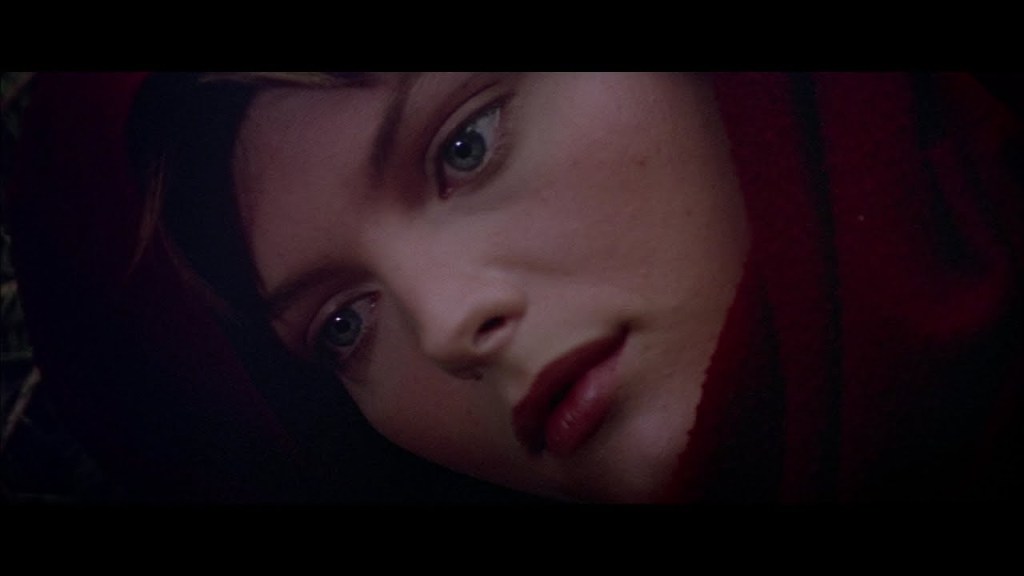
Donner’s goal with this approach is two-fold: first, he wants to create ethereal, dreamlike transformation sequences that represent the sort of “mystical femininity” (perhaps a dated concept) that Isabeau embodies. Unfortunately, the repetitive footage feels out of place each time. For Navarre’s transformations, Donner resorts to a more subtle, grounded form of visual trickery, which works better. Only once—when Isabeau’s eyes shift from human to hawk in a hauntingly tragic close-up shot—does a transformation scene reach the poetic heights Donner was striving for.

“I am sorrow.”

Secondly, Ladyhawke is a fantasy film in which magic is conspicuously absent. Yes, Navarre and Isabeau are cursed, but there is no hook-nosed witch to be found, and the curse is framed in explicitly religious terms (the Bishop, a Christian authority, called upon Satan to create the curse) rather than in the more mystical terms that are most common in fantasy films. There are no sorcerers, no wands, no beams of magic light. No one is flung across a room at the wave of a hand or the flick of a wrist. Rather than drowning the film’s magic in visual flair, Donner seeks to ground the magic as much as possible in the real world. After all, Ladyhawke isn’t about magic; it’s about love.

Once more, this is a commendable approach that sets the film apart from its peers, and it partly explains—but does not excuse—why the Bishop is such a mundane, ordinary character. It also explains why our heroes’ wild animal counterparts are not humans in animal bodies, but are in fact the animals they appear to be. The black wolf and hawk retain instinctual attachments to friends and wariness of foes, but they do not communicate meaningfully with anyone, and memories are not shared between forms.

In one scene in which the wolf falls through some ice and nearly drowns, he scrambles about indiscriminately, as any wolf would do, and nearly turns Gaston’s chest into ribbons before the rescue is successful. Later, Navarre is appalled when he sees the damage he inflicted as a wolf. The scene feels like an outlier, a dead stop in a story that was just beginning to build some pace. The scene does serve to build the necessary trust between Navarre and Gaston, but one imagines this could have been accomplished more efficiently.

Still, I like the scene because it feels like another holdover from a more complicated film, one that more deeply explored themes that only briefly surface in the final story. Where does beauty end and tragedy begin in Navarre’s and Isabeau’s wolf and hawk forms? Each gets only a single moment to fully express the depths of their pain: Isabeau, when asked who she is, responds, “I am sorrow.” We believe her. Navarre, upon seeing Isabeau transform just before he is able to touch her, unleashes a scream so profoundly soulful that we feel, in that moment, the wound left on his heart each time the lovers play out their tragic cycle. But there is more to mine. Do the hawk and wolf contain a semblance of morality? What does the answer to that question tell us about human morality? And, most importantly, does love transcend physical form?

These are depths that could be plumbed in a modern remake, and a combination of practical effects and CG trickery could preserve the grounded atmosphere while improving the cheap, dated look of the film’s transformation sequences. Whether such a film would do any of these things is, of course, an open question.

Funkyhawke

Finally, I can’t ignore the elephant in the room: the soundtrack, which consists of funky 80’s synth rock thrown up against a few random bits of traditional orchestral score. Now, I’m a fan of funky 80’s synth rock, but while the novelty is interesting initially, it quickly becomes irritating over the course of this two-hour film. To be clear, I’m not talking about a fully developed score that ebbs and flows with the highs and lows of the story. No, this funky 80’s synth rock is played in tiny little chunks whenever something exciting is happening on screen. The chunks are too small to develop into anything interesting, but substantial enough to take most audiences out of the film.

Would funky 80’s synth rock make this scene cooler? No. No, it wouldn’t.

Almost as distracting are the more traditional chunks of score, given that it seems entirely random whether you’ll get funky 80’s synth pop or some violins at any given moment. It’s not the medieval setting that makes the soundtrack inappropriate—I mean, 1927’s Metropolis has a disco edit, and it’s groovy. But Ladyhawke’s soundtrack doesn’t match the action or the story at all. It’s as if Donner was listening to some funky 80’s synth pop while he was filming and thought, why don’t I shove some of that in there? It turns out, by the way, that that’s exactly what happened.

Anyway, I’ll stop speaking ill of the dead. Ladyhawke, despite its flaws, is an enjoyable watch. Fantasy fans will enjoy the magical twist; those who don’t usually enjoy fantasy will appreciate the film’s grounded approach. Young men can find in Navarre a non-toxic male role model guided by his love for Isabeau.

Donner deserves praise for choosing the path least traveled for several of the film’s most interesting elements, even if the paths don’t always lead where he hoped they would. So when you’re reading through the obituary articles this week and keep seeing Lethal Weapon and Superman highlighted as Donner’s top credits, spare a thought for Ladyhawke.

*Don’t forget to leave a comment!

High Noon: a subversive masterpiece

For a film that has inspired so many rip-offs and re-imaginings in the past 70 years — with a title that has become synonymous with the Western genre itself — High Noon (1952) stands alone as a remarkably offbeat work of Western cinema. Yet it is largely forgotten by today’s moviegoers, who can be forgiven for assuming that once you’ve seen a John Wayne picture or “Bonanza,” you’ve seen it all.

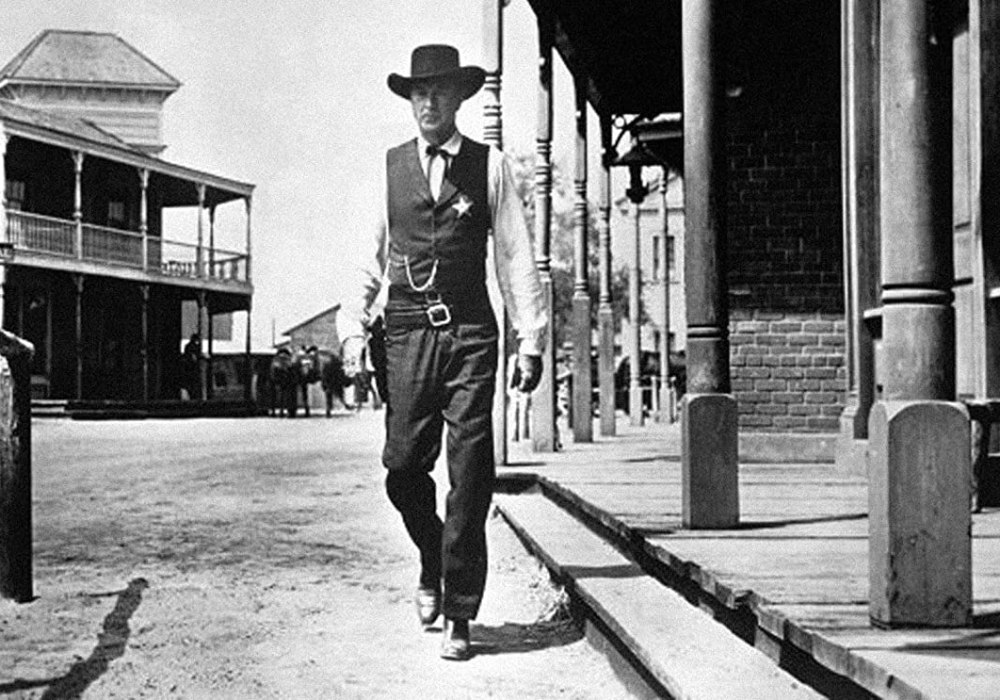
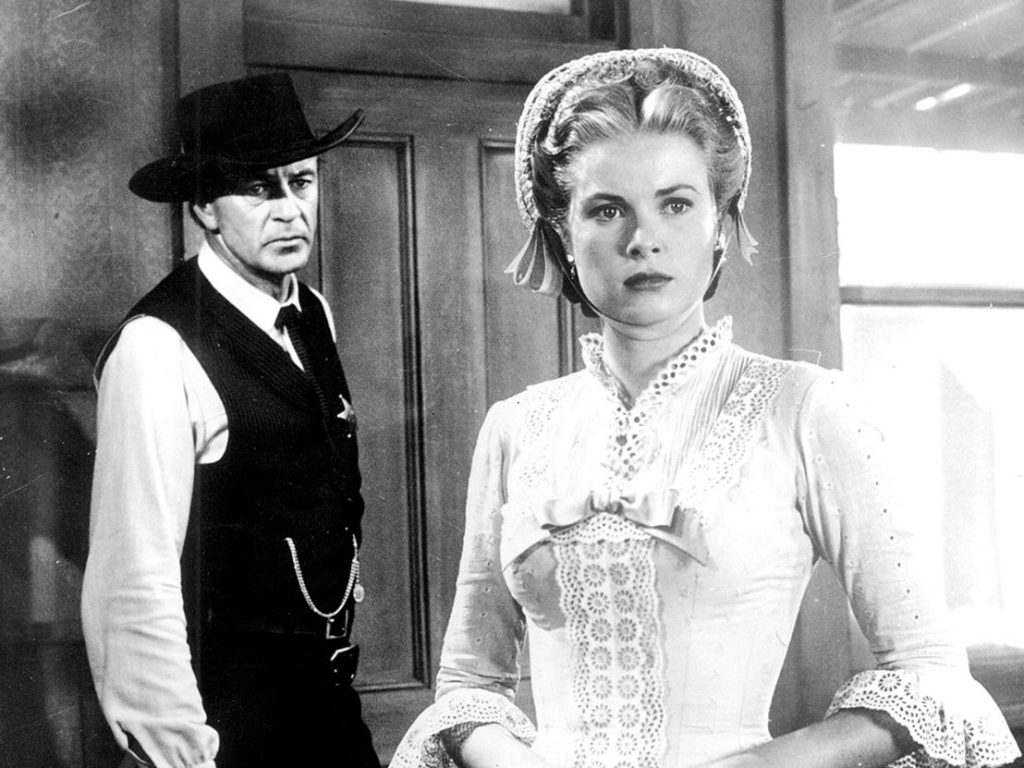
The title does the film no favors today; it recalls the gunslinging showdowns we can see in a thousand other films. But the genius of this film is not in its (single) shootout, nor in any macho bravado from its protagonist, an aging town marshal on the cusp of retirement with his new bride. Instead, the film subverts the old “team up” formula that sees the first two acts dedicated to assembling and getting to know a posse that will ultimately take down the bad guys. In High Noon, Gary Cooper’s marshal Kane starts with a room full of friends and admirers — gathered to celebrate his wedding to an alarmingly young Grace Kelly — and sees them abandon him one by one in his quite literal hour of need.

Kane’s troubles begin when a gang of outlaws rides into town, led by the murderous — but freshly pardoned — Frank Miller. Kane had put Miller away five years prior, and there is little doubt his gang is out for bloodshed.

So far so predictable, right? Well, from the opening credit shots of the outlaws gathering on the outskirts of town, we know this is no ordinary film. These shots, otherwise silent, are accompanied by a quietly haunting theme that establishes the soft-but-persistent percussion beat that will continue to appear throughout the film. As the music fades, we get a lingering, almost silent shot of the three outlaws riding side-by-side, their faces hard and unmoved, as if chiseled from stone. We don’t who they are yet, but the cumulative effect of the soundtrack and the cinematography tells us that something is wrong.

The film opens on the always-menacing Lee Van Cleef in his first film role. He doesn’t have a single line in the film.

Things only get more non-traditional from here. Instead of riding into town with torches lit and guns blazing, the outlaws head straight for the local railroad station, where their leader is due to arrive on the noon train. This gives Kane about an hour to assemble a posse, an hour that passes in real time in the film.

As I’ve already let on, the posse doesn’t materialize. One early betrayal comes from Kane’s deputy (Lloyd Bridges), a younger, dumber, and more macho lawman who quits after Kane refuses to promise him the marshal job after retirement. The deputy is a satirized version of the more traditional Western hero who speaks brashly, kisses women without their consent, and substitutes muscle for brains. He is even branded with what would have been a damning insult for a man at the time of the film’s 1952 release, when a woman tells him his broad shoulders don’t make him a man.

With his deputy gone, Kane turns to the townspeople, who earlier in the day seemed so appreciative of the work he had done to make the town safe. Now, everyone has a reason to leave Kane out in the cold. Some, like the proprietors of the bar and hotel, remember the prosperity they enjoyed when Miller and his band of carousers had frequented their establishments. One friend hides rather than admit he’s afraid to die, while others say it’s just not their problem.

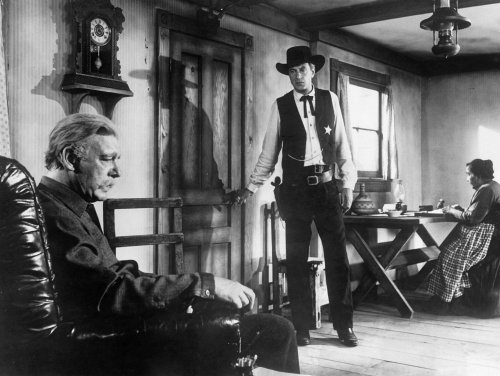
But not everyone’s excuse can be so easily dismissed as selfish or cowardly. Martin Howe (Lon Chaney of The Wolf Man fame), Kane’s predecessor as marshal, says he’s simply too old and arthritic to be of any use. Kane’s skeptical glare tells us this probably isn’t true, but the camera lingers on Howe after Kane departs, and we learn the real reason for his reticence: nihilism.

“It’s all for nothing,” Howe laments to himself. “All for nothing.”

Howe, it seems, has been down this road before. He knows the townspeople can’t be counted on, and he now believes that a career spent protecting people who will never return the favor is a waste. He has nothing left to give to others, having drained his capacity for self-sacrifice in his past life as a marshal. If you look up foreshadowing in the dictionary, Howe’s sad face will be staring back at you.

Kane appeals to Howe’s better nature, but it’s too late. Howe knows what’s in store and wants no part of it.

Then there is Amy, Kane’s bride. A Quaker ever since witnessing the deaths of her brother and father to gun violence, she threatens to leave Kane if he doesn’t leave town with her. Her refusal to stand by him is an enduring reminder of the marshal’s loneliness. Every time they meet, each hoping the other has changed their mind, a band-aid is placed on the wound, only to be ripped off anew when she reaffirms her commitment to pacifism. Yet she is never really gone; the film’s theme song, which features the refrain, “Do not forsake me oh my darling,” repeats time and time again in the background, reminding us that no matter how many times friends turn their backs on Kane, only one relationship really matters in the end.

And finally there is Kane himself, whose motivations are not as clear as they first appear. Western stereotypes tell us he is there to selflessly protect the town, but he tells his wife he cannot flee because Miller will follow them anywhere they go. Later, when asked again why he won’t just run away, he says he doesn’t know.

When he visits a church to try to round up a few volunteers, one parishioner explains that the gang is after Kane, not the town, telling him to leave because “we don’t want to see you die.” This sounds like sound advice until one considers the parishioner isn’t saying, “We don’t want you to die,” but is actually saying, “We don’t want to witness your death.”

This is the key to understanding what is going through Kane’s head. He may not be too proud to ask for help, but it turns out that he is too proud to admit that the help is more for him than for the town at large. Sure, one churchgoer cautions that the town will go to ruin if outlaws like Miller are allowed free reign, but the truth is that no one seems particularly afraid of Miller. They didn’t put him away; Kane did. They won’t have to face him in the street; Kane will.

Kane isn’t trying to rally a defense force for a town of innocents. He’s simply asking for a bit of reciprocity, a touch of empathy in return for years of dedication to the safety of the townspeople.

Kane, all alone as he awaits the arrival of the Miller gang.

Many see a political allegory in this film, and it has been a favorite of several U.S. presidents, from Eisenhower to Clinton. Certainly, while Kane sees himself as part of a community, the town’s citizens see him as an “other,” little more than a man they pay with their taxes to worry about things so they don’t have to. In short, a politician.

“I pay for the marshal and deputies to keep the town safe,” one citizen says. “This isn’t my job.”

Another points out that the fault lies with the politicians “up north” who pardoned Miller, an almost comically unhelpful observation and not a particularly convincing reason to refuse Kane’s pleas for help.

But beyond the theme of a town disconnected from the man they have hired — or elected — to represent them in the unsavory matters of the law, the emotionally resonant core of the film is the loneliness of a man who has given everything to his town, only to be abandoned when he finally needs a little help in return. It’s a refreshing turn for a genre that generally seeks catharsis through gunfights; while the film does end with a shootout, it’s not one the audience is supposed to look forward to. The frequent shots of clocks ticking throughout the film, juxtaposed with the near-constant betrayals and abandonments Kane suffers, evoke a sense of dread, not anticipation. And when we reach the conclusion, the film has one more subversion up its sleeve.

Amy, Kane’s bride, makes the last-minute decision to return to her husband when she hears the first shots ring out. Managing to get the drop on one of the gang members, she shoots the man in the back, killing him. Then, briefly captured by Miller, she refuses to be a simple damsel in distress and struggles free, creating an opening for Kane to fire and end the fight for good.

The strength of Amy’s character doesn’t fully emerge until the final scenes of the film, but when it does, we remember.

There’s a lot to unpack there. The film pairs what is traditionally an unforgivable sin for Western heroes — shooting a man in the back — with what is otherwise a positive choice to stand by Kane. Like the motivations of the townspeople and Kane himself, nothing is black and white. We know Amy made the right call, but we also see the pain the act creates in her, an exhausted sort of pain that shares a kinship with the nihilistic resignation of Howe, the former marshal. This is not a loss of innocence — Amy lost that long ago, with the deaths of her father and brother — but it’s the loss of an alternative, a way of life that doesn’t involve violence.

In breaking the mold of the helpless damsel, the character of Amy was a source of consternation among hallowed titans of the genre like John Wayne and Howard Hawkes. Wayne, who had run the film’s writer out of the country for suspected communist sympathies and saw the film as an allegory for the practice of blacklisting, called the film “the most un-American thing I’ve ever seen in my whole life.” Hawkes remarked, “I didn’t think a good town marshal was going to run around town like a chicken with his head cut off asking everyone to help. And who saves him? His Quaker wife. That isn’t my idea of a good Western.”

Indeed, the film’s depiction of masculinity feels quite modern, from its ridicule of the muscular and brash deputy to the moment when, 15 minutes before Miller is due to arrive, Kane considers giving in to fear and fleeing on a horse.

That moment is also when we get the film’s first real fight scene, between Kane and the deputy. The catalyst for the fight? The deputy wants Kane to get on the horse and leave. Like the churchgoers, he doesn’t want Kane to die in the town, right in front of him, where the moral implications of shirking his duty are unavoidable. As far as fights in Western films go, it’s not the most exciting, but the clash between the different versions of manhood the men represent is far more interesting than the drunken brawls and feuds over lovers that characterize so many other films in the genre.

Unorthodox to the very end, the film closes not with a triumphant celebration but with Kane’s scornful repudiation of the townspeople who had left him to die. He tosses his badge to the ground and rides away with Amy, leaving everyone else to reckon with their choices. We get the sense that he will be living for himself and for his family from now on, having acquired the cynicism but not the broken spirit of former marshal Howe.

Not exactly the most communist of messages, is it, Mr. Wayne?

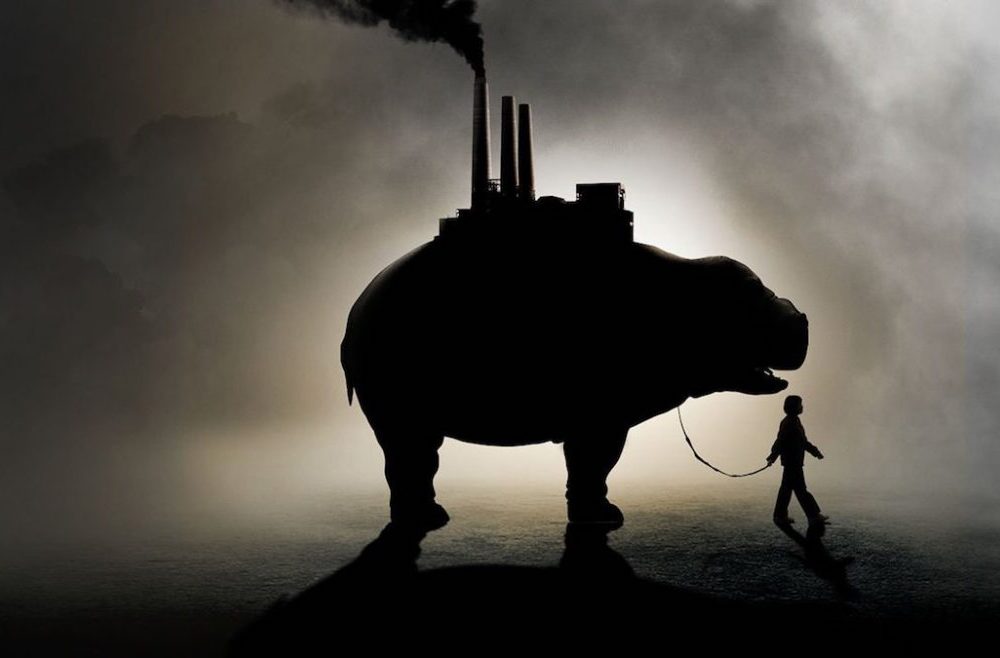
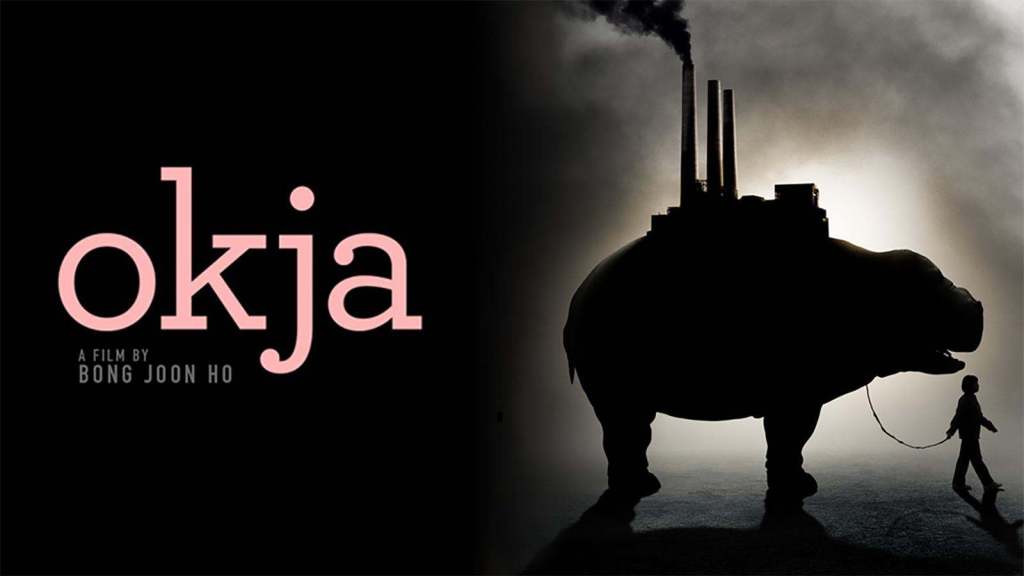
Okja: a monument to authenticity.

Okja, like much of director Bong Joon-Ho’s body of work, is a special film for a lot of reasons. It successfully blends a fairy-tale aesthetic into what is essentially a real-world film with real-world characters and real-world consequences. It manages to pull off genuine comedic moments with English-speaking characters despite being helmed and mostly written by a South Korean (comedies directed by people who speak a different language than the one spoken onscreen have a long and unfortunate history of failure).

But I’m here to talk about one particular trait of this film that makes it stand high above its peers in my view: its full-throated commitment to taking on the meat industry and issues of animal welfare.

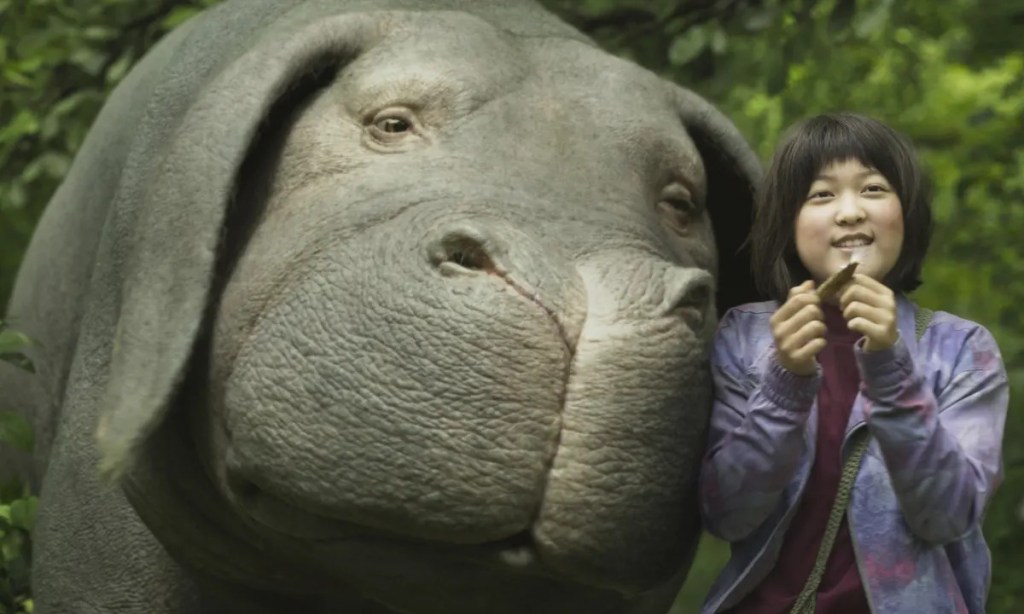
Okja is the story of a girl, Mija, who raises an unusually large “super pig” (the eponymous “Okja”) on her grandfather’s farm in South Korea and forms a close bond with the animal over the course of 10 years. At the end of that period, the pig’s owner — the pork conglomerate “Mirando Corporation” — comes calling, but finds Mija unwilling to send her friend to slaughter.

Mija with Okja, an unusually large pig that enjoys bellyflops and naps.

Plenty of films have featured themes involving environmental activism or animal rights over the years, but if those themes aren’t simply plot dressing, then they are usually watered down to preserve marketability, making them feel almost apologetic in their half-hearted activism. Take 2013’s The East, for instance, which starred Elliot Page and Alexander Skarsgård as vigilantes working to expose the ecological crimes perpetrated by a large corporation. The film is fine, but like so many other films, it portrays environmental activists as just as morally bankrupt as the corporation they are trying to bring down.

That’s par for the course in our era of antiheroes, in which a film isn’t considered realistic unless it’s slathered in so many shades of gray that you can’t tell the heroes from the villains from the victims, but anything gets old if every film is doing it.

That’s why, when a group of environmental activists are introduced in Okja, led by the charismatic Jay (Paul Dano) and working to save Okja from the clutches of the amoral Mirando Corporation, I began to get a little nervous. Jay seems to fit the template. He’s a smooth-talker and projects warmth and magnanimity to an almost exaggerated degree; much like Skarsgård’s character in The East, who turns out to be a megalomaniac willing to kill to achieve his aims.

This impression was strengthened after a scene in which Jay savagely beats a member of his group for failing to properly translate between him and Mija, who doesn’t speak a word of English at the beginning of the film. Upon further reflection, however, I realized this scene exists solely as a moment of cathartic fantasy for Joon-Ho, who had previously been pressured by Harvey Weinstein to cut 20 minutes out of 2013’s Snowpiercer and clearly had a bone to pick with inaccurate translations. The scene is never followed up on thematically and truly seems to exist apart from the film’s narrative. Odd, perhaps, but easily forgivable.

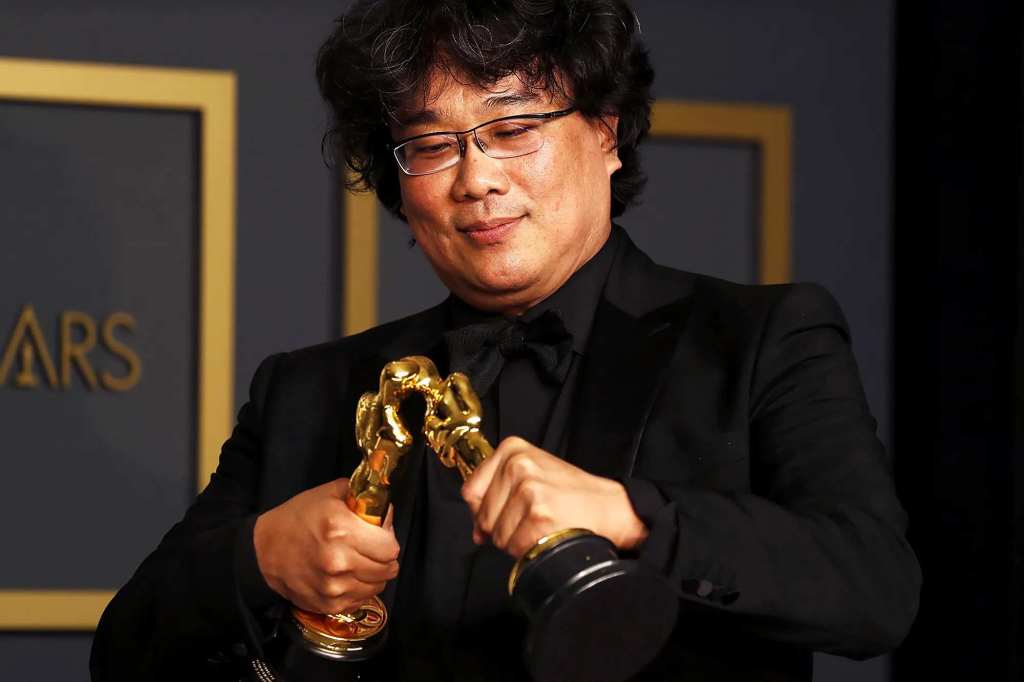
Bong Joon-Ho making his Oscars kiss after winning for 2019’s Parasite.

Indeed, there is no further wanton violence from Jay or anyone else in his group (the Animal Liberation Front, a real-life movement that has no formal leadership or structure). Aside from a genuinely funny moment when one of the activists refuses to eat anything because “all food production is exploitative,” there is no bowing to a consumer-friendly middle ground, no eleventh-hour reveal that “both sides” are to blame. From beginning to end, the corporation attempting to exploit and kill Okja is portrayed as cynical and deceptive, fronted by gleeful so-called “environmentalists” but working constantly toward only one interest: profit. And from beginning to end, Jay’s Animal Liberation Front is there for Mija and Okja.

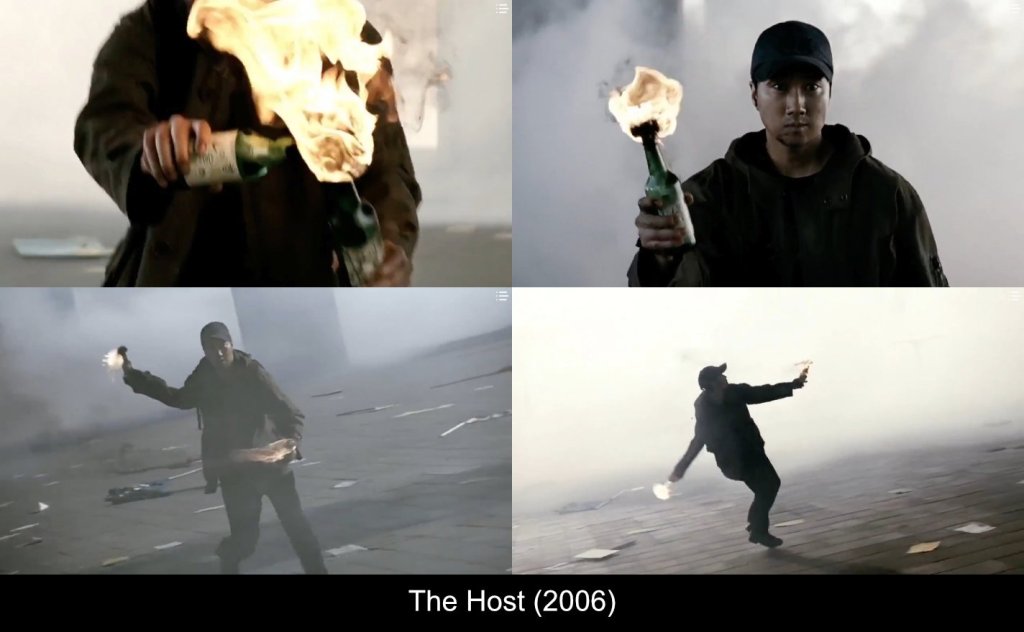
Late in the film, the activists are caught by police in a desperate attempt to free Okja, and they are mercilessly beaten in a brutal but poignant scene that removes any doubts about the group’s purity of purpose. The scene also recalls Joon-Ho’s attention to activism in his earlier films, particularly in The Host and Memories of Murder (the former had a scene in which a character mused almost mournfully about how no one uses Molotov cocktails in protests anymore). One gets the sense that Joon-Ho holds deep respect for activists, particularly those who are willing to get their hands dirty. For this director, activism isn’t lining up in neat rows and obeying all traffic laws while carrying strongly-worded signs; it’s standing face to face with authority and refusing to back down.

In this film, that “authority” is the Mirando Corporation, which convincingly — and often hilariously — embodies the modern marketing tactic of “corporate activism” or “corporate social responsibility,” wherein a company engages in activism on a particular social issue to improve public perceptions of their business practices. For the Mirando Corporation, that means masquerading as an environmentalist, “earth conscious” company while conducting horrific genetic experiments on pigs away from the public eye. And in a true masterstroke that could only be the product of American Capitalism, it’s those very experiments that are repackaged and spun to the public as a revolutionary cure for world hunger.

Tilda Swinton turns in a deliciously goofy performance as a pair of sibling CEOs heading the Mirando Coporation, but that goofiness exists only to bring the amoral conniving of the corporation to the surface rather than burying it under softball satire as so many other films would have done. Mirando could have easily been a much more cartoonishly evil company, but the attention paid to the calculated hypocrisy of its leadership and marketing reflects the same commitment to thematic authenticity that we see in the unrepentant “goodness” of the Animal Liberation Front. Joon-Ho clearly did not want to make a film that watered down its message by turning its villains into caricatures, any more than he wanted to make a film that traded its moral compass for mass appeal.

Indeed, that authenticity made the leap from the screen into the life of the director himself. Making the film prompted Joon-Ho, once a lover of South Korea’s street barbeque culture, to become a temporary vegan and — as far as I can tell — a permanent pescatarian. That’s a kind of sincerity rarely seen in the film industry, and it shows. This is a film made by someone who cares, and regardless of your opinion about the meat industry, it’s worth seeing for that reason alone. Take it from me: you just might shed a tear.

The Dead Zone (1983) and the heroic struggle

One day, during my freshman year of college, my Literature professor asked the class a seemingly simple question: What is a hero? I raised my hand. This was a question I had thought a lot about while working on my own writing, so I felt qualified to answer, even if I knew my answer wasn’t going to be exactly what the professor was looking for.

“A hero is someone who suffers, whether through a tragic flaw in their own character or through an external force,” I said. “The heroic struggle is not only against an antagonist or villain, but against the suffering itself. In the end, the hero manages to perform an act of good in spite of — or even because of — that suffering.”

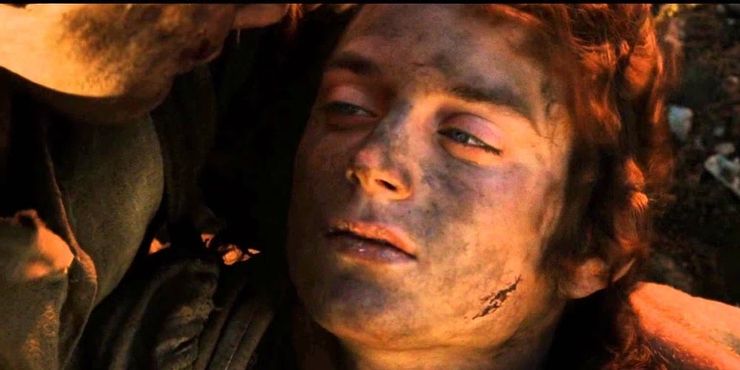
Frodo goes through hell to destroy the One Ring in “The Lord of the Rings.”

I had a few examples in mind, both from literature and personal experience, when I said this. There was Frodo Baggins, who experiences physical and mental anguish, loss, and betrayal on every step of his journey before committing a selfless act to save those who, in a sense, have inflicted that pain upon him. There were the tragically flawed heroes of Shakespeare, whose Hamlet is plagued by his own indecisiveness and suffers for it at every turn through the horrific consequences of his impulsive but well-meaning actions. There were the doomed heroes of Ken Kesey’s “One Flew Over the Cuckoo’s Nest” and “Sometimes a Great Notion.”

There was my own father, who toiled in a nightmarish, oven-like blade factory for decades to give his sons the opportunities he felt he never had. He had his own “tragic flaws,” to be sure, but more than anything, he faced the great Enemy Without a Face, the menacing but untouchable fog of a society that wanted nothing more than to pound him into the ground (the same fog, perhaps, as that glimpsed by Chief Bromden in the opening scene of “Cuckoo’s Nest”). But for all the suffering that followed him from childhood into his final days, he succeeded in giving me the skills I would need to survive the world that haunted him.

Unfortunately, my vision of heroism as tragedy did not sit well with the professor.

“No no no,” he replied, waving his hand dismissively. “I’m talking about heroes in the literary sense. The classical sense. A hero is a character of noble birth and unnatural talent who performs great deeds in pursuit of honor.”

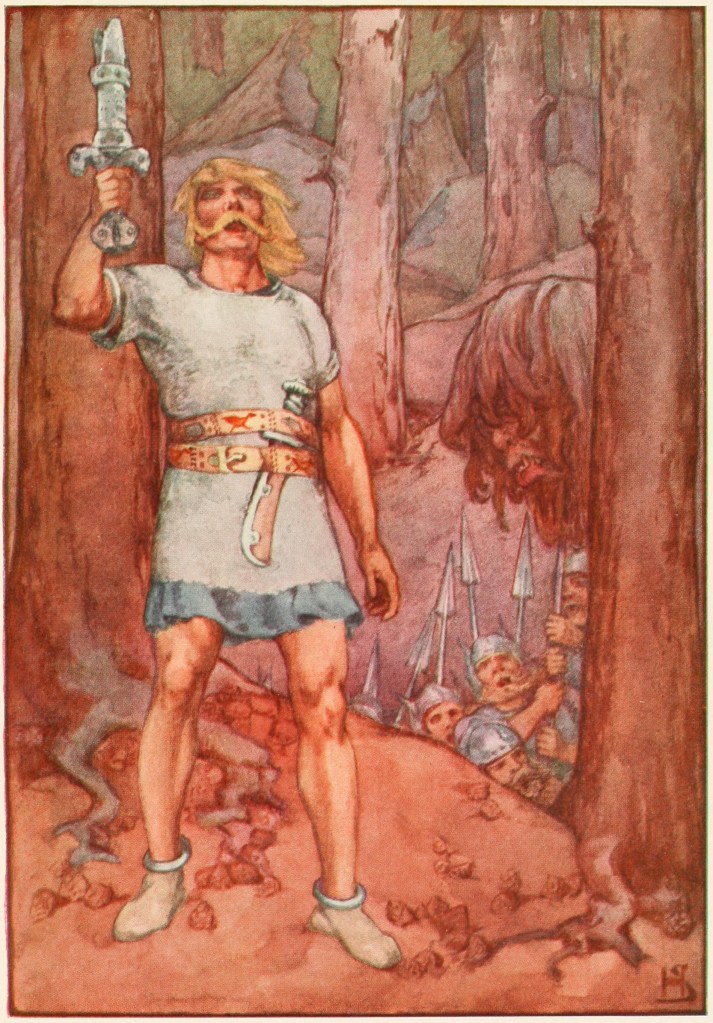
This is a picture of Beowulf.
Beowulf, a “hero in the classical sense.”

Technically, he wasn’t wrong. And I can’t say I was surprised by his reaction; In 5th grade, I answered an essay prompt about “Heroes of the 20th Century” by writing about a Holocaust victim and was similarly “corrected.” But the professor’s dismissive attitude was also representative of what I saw — and still see — as restrictive cultural ideas about what constitutes heroism.

The Dead Zone — Tragedy as Heroism

When it comes to film (this is supposed to be a film website, after all), this sort of suffering hero is as rare as they come — The Lord of the Rings being a notable exception. It’s important to clarify that I’m not talking about films like The Last Samurai, Avatar, or Dances with Wolves, which, despite having tragic elements, tend to depict legendary martyrs pursuing — you guessed it — honor and glory. They also tend to transpose historical and cultural suffering onto white saviors, which has been discussed adequately elsewhere (for the record, I still like these films). Nor am I talking about the murdered-wife-and-kidnapped-child trope that fuels tragedy-chic violence from a neatly manicured but oh-so-depressed bad boy.

No, I’m talking about real suffering. The kind that overwhelms the hero physically and mentally, the kind that isn’t overcome merely by defeating a villain or learning a life lesson that could have been gathered from a Saturday-morning cartoon. This is suffering that can only be defeated by the sheer power of the human will, almost always leading to an emotional climax that I believe is unmatched in its power by any other type of story.

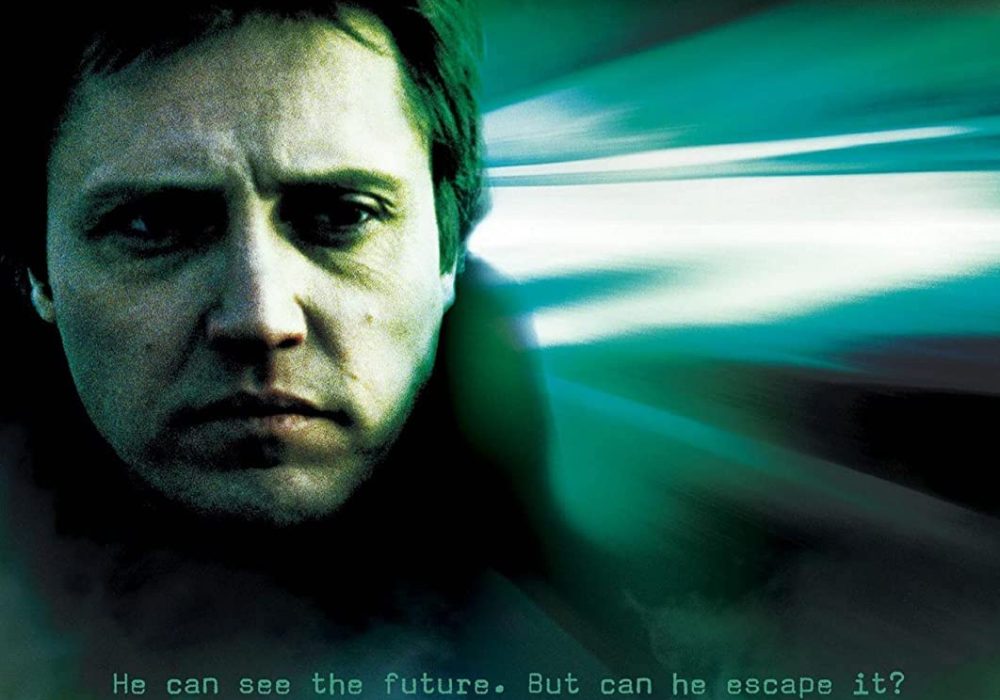
That’s why I was pleasantly surprised when I recently re-watched “The Dead Zone,” a film from 1983 that was somewhat popular upon release but has been largely forgotten by today’s moviegoers. Directed by David Cronenberg and based on a novel by Stephen King, “The Dead Zone” is not a typical horror film. Rather than relying on gore, jump scares or a cackling, mustache-twirling villain, Cronenberg grounds the film’s horror in the suffering endured by the film’s main character, Johnny (Christopher Walken).

WARNING: SPOILERS AHEAD

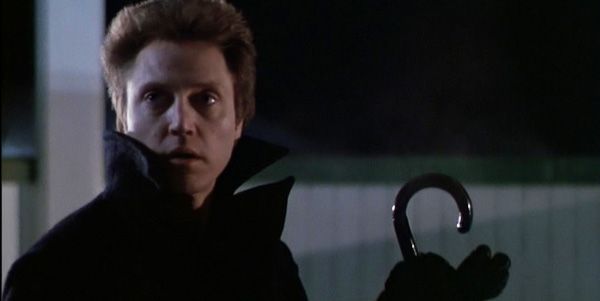
Johnny (Christopher Walken) with his cane, an ever-present reminder of the painful price of his “gift.”

After a serious traffic accident, Johnny, a mild-mannered schoolteacher in rural Maine, experiences the following series of unfortunate events, in order:

  • A coma that lasts for 5 years, during which his girlfriend marries someone else. No, she does not have a change of heart after he wakes up — they remain separated despite the love they share.
  • The emergence of an ability to sense tragedy in the past, present or future of anyone he touches. This quickly becomes a painful burden, as he cannot touch anyone without receiving unwanted information through shocking, violent flashes. He is forced to become a social pariah by skeptical reporters and an ever-needy public desperate for his help.
  • The death of his mother, due at least in part to stress caused by negative media coverage of his newfound abilities.
  • The discovery that he is not recovering from the coma, but is in fact slowly dying.
  • A bullet wound in the shoulder, sustained while helping the police track down a serial killer.
  • Death.

With a list like that, one might expect the film to be hopelessly dour, even pointless. But the immense suffering Johnny endures affords the film tremendous emotional weight as it builds toward its climax, when he must choose whether to assassinate a U.S. Senate candidate he knows will eventually become a tyrannical president who will start a devastating nuclear war.

Fictional characters are often presented with a weighty moral decision, but they are usually in a position that makes that decision relatively easy. Perhaps they are the “chosen one,” surrounded by an adoring cast of sycophants that will honor their heroism with joyous whoops or an ecstatic parade. Perhaps the hero is so uncommonly intelligent that he “defeats” the choice itself, finding a way to do the right thing without suffering any consequences.

In Johnny’s case, only he knows what Greg Stillson (Martin Sheen) — a shrewd politician whose violent vindictiveness and borderline insanity is unknown to the public — will do in the future. Going through with the assassination means being known not as a hero, but rather as a black mark on the history of the nation. That makes “the right choice” the ultimate act of selflessness from a man who has every right to be selfish.

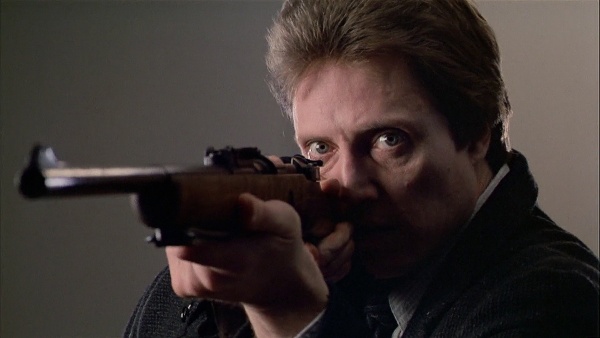
Johnny, making his choice.

Indeed, Johnny receives no material reward for his final act. While he misses the kill shot, he does manage to end Stillson’s political career, effectively preventing nuclear war. But he is mortally wounded in the process, and though he is comforted by his former girlfriend — whose love for him still lingers — she will be forever confused, perhaps even angered, by his actions. There are no convenient fantasies of martyrdom, no adoring masses. No easy outs. Only one true source of solace exists for Johnny as he dies: he did the right thing.

If that doesn’t bring a tear to your eye, I don’t know what will.

In a culture that punishes outcasts but hails disingenuous modesty as heroism, here is the black sheep of heroes who just wants to be left to die in peace. Here is a hero who claims victory over the cruelest adversary of all: pain.

-AF-

A tribute

When we prance stupidly in the sun
The darkness coils into shadows
Beneath our feet
And we pretend we have escaped.
And when those shadows slither around our legs
And bring us to our knees
We cry out, “They’re back!”
As if they had ever left.

Suffering is transient
Eternal
But the middle way is a lie
Transcendent numbness.
Darkness and light
Not twins
Mother and child
Snakes, all.

Day and night, I hear them hiss.

You loved me
But I did not love you
Enough
Until now.
You gave me winding scars
That I might cut off their heads
And you cried when you were happy
Because you knew the price.

Death was not kind to you
But it freed you from the sliding, slinking things
That cling to us all
From birth to earth.
Maybe now, father
Without light or dark
Without a road in the middle
There is only peace.

If you’re new here:

Thanks for stopping by. Visit the archive in the top left menu to browse all my movie reviews to date, or if you’re more patient than me, just scroll down this page!

What ‘Blade Runner 2049’ means to me

We often hear that films, like all forms of art, are “subjective.” But what does that actually mean?

There is a deeply personal side to watching movies that we rarely acknowledge. Reviews, for good reason, generally address the more “objective” qualities of a film—the quality of its camerawork or soundtrack, for instance, or whether or not its actors were convincing in their roles. Then there is film criticism, which, like its literary counterpart, delves into the themes and background of the work. But even if you combine these, as Roger Ebert often did, you still have only half the picture of the true experience of a film.

How were you feeling when you entered the theater? Were you still thinking about how your boss chewed you out earlier in the day? Maybe the film triggered a long-forgotten childhood memory, or a character’s voice sounded just like your mother’s. Perhaps a comic relief sidekick everyone hated was your favorite character, if only because you once knew someone just like him.

These are not objective measures of a film, but we should not discount them, either. After all, there is a reason few critics agree on their favorite films. What pushes a film from great to magnificent is not perfect technical precision or classically trained actors; it’s the moments when something inside us connects with something in the film, and for a time, the line between reality and performance fades away.

With that said, let me tell you about a time when, for me, a great film became magnificent.

I saw Blade Runner 2049 four times when it entered theaters in October of 2017. I like to watch great films more than once, but four times in the span of a few weeks was unusual even for me. I’ve already written an analysis of some of the film’s themes, which provides plenty of reasons why I should like it, but that’s not the whole story. You see, in October of 2017, I was working as a manager at a big-box retailer (if you would like to know which one, consider that the experience of working there felt like repeatedly banging my head against a brick wall, and its name references that same wall). Despite several positive developments in my life (including marriage), I was languishing in depression. I have always had something of a morose personality, but the deeply cynical realities of working in this particular environment were driving me into the ground at an alarming rate.

Along came 2049. Somewhere around the scene where K (Ryan Gosling) learns—or thinks he learns—that he is more than your average replicant, I began to sense a working-class parable in the making. K is essentially a slave at the beginning of the film, and he is closely monitored for any signs of dissatisfaction with his role via a “baseline test.” He is an arm of the State, which could just as easily be a megacorporation, and his identity is tied to that entity. Developing his own sense of self is forbidden for two principal reasons: First, it would affect his ability to do his job. Hunting replicants depends on accepting the narrative that they are inferior and unworthy of free will, because denying that narrative means empathizing with those he is supposed to kill or capture. Second, a sense of self, with all the emotions and aspirations that come with it, would rob the powerful of much of their hold on society. Consider Niander Wallace (Jared Leto), a rock star of an entrepreneur who derives his immense wealth and power from the assumption that his replicants are completely under his control. Lt. Joshi (Robin Wright), K’s boss, also alludes to a figurative wall separating humans and replicants that must remain in place to prevent all-out war between the oppressors and their slaves.

I connected with K immediately, because I felt similar pressures to conform and defer to questionable authority. Staff meetings were thinly-disguised baseline tests; Incomprehensibly stupid instructions were sometimes given for seemingly no other reason than to ensure I would blindly do as I was told. Employees with difficult home lives or mental issues were steamrolled unceremoniously by an unsympathetic system run by traumatized nutbags. A certain deceased entrepreneur (you might say he contributed a “ton” of bricks to the “wall” I mentioned earlier. Gosh, I’m clever) was practically worshipped as a prophet for his pure and altruistic motives, even as the corporation he founded raked in monstrous profits by terraforming local economies to suit its business model. Wallace would have been proud.

It felt good to see K realize, all at once, that he had far more potential as an individual than he had been allowed to believe. The rage and sadness he felt at simultaneously understanding the extent of his oppression and becoming aware of his own capacity for free thought made me think about how I might have been limiting myself in my depressive haze. As tears streamed from K’s face, I recalled a time when I had broken down in tears in the middle of an aisle at work, having dwelled a moment too long on the vast difference between what I wanted to do with my life and what I was doing with my life. I felt trapped on a path I had never intended to take. I sensed that K, too, felt his life had been guided by a malevolent hand.

Of course, K eventually realizes that he is not, in fact, the “chosen one” he believed himself to be. This is the film’s most brilliant touch, because by the time this happens, K has already steered himself onto a path of self-actualization. As it turns out, the idea that he was the first natural-born replicant was never his primary motivator. It was simply a push in the right direction, a red pill that allowed him to see past the life society had built for him. His true motivation is the knowledge that he is an individual, that he serves no master but himself.

This internal drive is underlined by his rejection of the replicant freedom fighters, who seem at first to be saviors but treat him as just another cog in the machine, a pawn to be sacrificed, an arm of the rebellion. He defies their orders to kill Rick Deckard (Harrison Ford), saving the old hunter instead. Rather than swapping one set of overlords for another, he serves only his own will.

The scene in which K fights to save Deckard, battling against the ocean’s inexorable tide and Wallace’s replicant minion, struck me more powerfully than any other part of the film. It has been noted by many critics that the enormous waves thrashing into K in this climactic scene function as a nod to Rutger Hauer’s final rain-drenched scene in the original Blade Runner. While this is certainly true, the waves meant something far more profound to me. As I watched K struggle to hold his ground against the unstoppable elements, I began to feel a perverse sense of pride. I know what that feels like, I thought. I’ve been doing that every day.

The waves represented every outside force conspiring to weigh me down. They represented internal forces like doubt, mental exhaustion, and fatalism. They represented the overwhelming power of a society that wanted to cram me into a corner and leave me there to rot. And yet, dealing with these same forces, K fought on.

Maybe I could, too.

From that day forward, whenever I began to slip into despair, I would remember K standing firm as waves whaled into him on the shore, and I would find the strength to keep going. I had never had what you might call an “idol” growing up, but suddenly K, a fictional character, fit into that slot perfectly. In less than two months, I found a job that was better in every way, a job where I could use my degree and where the work environment did not make me feel like I was competing on “Survivor.” This was no coincidence. Crazy as it may sound, Denis Villeneuve’s film inspired me to climb out of the quicksand and better myself. 2049 understands what it is like to be dehumanized by a power structure consumed with its own self-interest and corrupt, insular morality. It understands how people become machines, and how machines become people. Regardless of whether or not Villeneuve and the writers fully intended to create a story about a working-class drone rising up to defy the dictates of society, that was the film I saw, and I will forever be grateful for it.

‘Bird Box’ squanders its potential

[Note: I haven’t read the book, so please consider this a review of the film and only the film. Also, SPOILERS ABOUND.]

Bird Box, the new Netflix original film, is a waste. It’s a waste of a concept, a waste of a tremendously interesting visual motif, and…well, I can’t exactly say it was a waste of time to watch it. After all, I’m writing about it.

Let’s start with the concept. Unknown creatures have ravaged earth’s population by causing mass suicides, which they apparently induce merely by allowing themselves to be seen by their victims. I say “allowing themselves to be seen” because they seem awfully camera-shy. Even at moments when we are clearly told that one of the creatures is creeping up behind an unsuspecting character, the evidence of their presence is limited to spooky sound effects, mysteriously levitating leaves, and sometimes a shadow that reminds me of the 8-bit ghouls from Ghost.

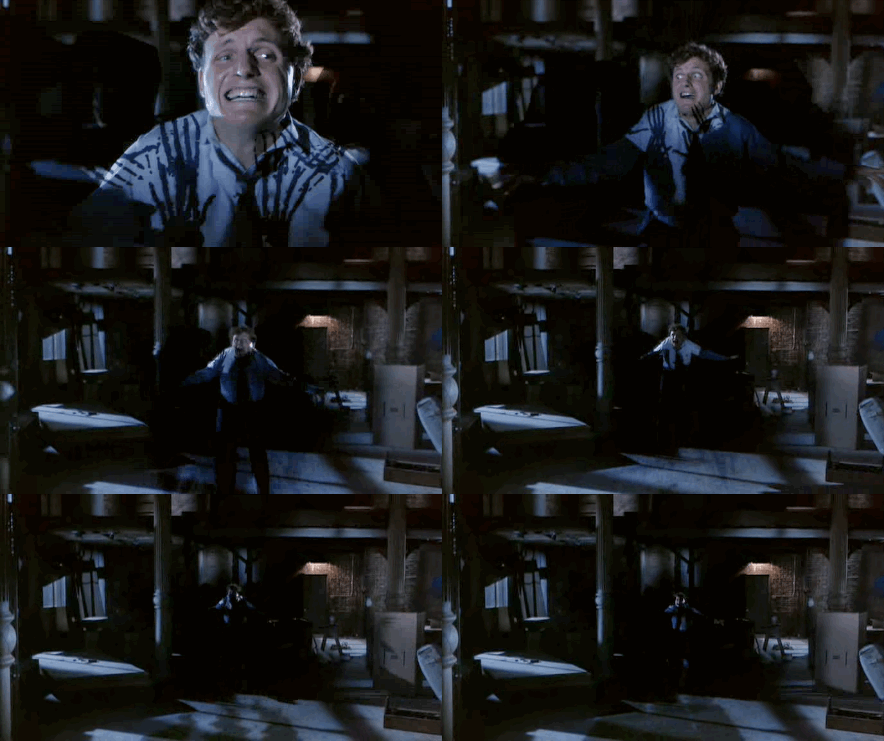
Carl gets dragged away by demons in 1990's "Ghost."
Poor Carl.

And let’s be clear: apart from a single instance that I can recall, these aren’t creeping, corner-of-the-screen affairs. When the leaves levitate, they do it right in the center of the frame. This creates—unintentionally, I think—the impression that the creatures are frequently turning themselves invisible for no apparent reason.

Regardless, the idea of an unknown force causing people to commit suicide isn’t inherently a bad one. The premise does bear some resemblance to “The Happening,” M. Night Shyamalan’s…thing?…but the performances here are more committed, and the tone is darker despite far less gore than Shyamalan’s film. Unfortunately, this team of capable actors—including Sandra Bullock, John Malkovich, and Trevante Rhodes of “Moonlight” fame—can’t save a film that doesn’t know why it exists.

The film’s “arc,” such as it is, intends to trace Malorie’s (Bullock) path from nervous and rather unwilling soon-to-be mother to brave, loving, and accomplished mother of two children, all while traveling down a perilous river toward the promise of safety. But the film wastes so much time on a completely irrelevant series of flashbacks that we simply don’t see Malorie and the children together enough to form much of an emotional investment. Even when they are together, Malorie’s stern consternations and survivalist mentality usually come off as the sort of tough love you would expect in a post-apocalyptic environment, rather than as the excessively cold or harsh attitude the film seems to believe it is portraying.

Early on, I thought things were going in a much more promising direction with the theme of motherhood. Malorie’s initial conversation with her sister implies an unhappy upbringing and a fear of inheriting a similarly distant relationship with her own child. This is a very relatable, real-world issue. Not all mothers immediately connect with their children, and many more have deep fears and anxieties about becoming mothers.

If the film had built upon this groundwork at any point during its two-hour runtime, we might have been able to identify with a mother who is not only fighting to keep her children safe, but is also struggling with learning to love them. I mean, come on. Malorie literally names the children Girl and Boy. The characters seem ready-made for that story, but the one we got instead is far more concerned with developing John Malkovich as an ultimately irrelevant villain within a pointless cabin fever storyline.

The resulting experience is like watching two separate films that have been crudely mashed together, with plot and character threads that simply fall into nowhere land. Why are the creatures (or demons, if one of the clunkiest exposition scenes ever put to film is to be taken literally) killing humans, and why now? Why are we immediately shown that Malorie is an artist in the second scene of the film, only for that trait to never be referenced again in any capacity? Why, if Malorie’s upbringing is so important to her character, is that background not further developed beyond a throwaway line that explains why she knows her way around a shotgun? This is to say nothing of the numerous plot holes, of which I will mention only one: the creatures are inexplicably afraid of the interiors of buildings, and each and every character seems to implicitly know they are safe indoors despite clear evidence that the creatures are physical entities that can interact with physical objects. In other words, why can’t the creatures open doors?

Then there is the most baffling question of all: Why does the film place so much importance on the “revelation” that Girl is not Malorie’s biological child? Again, the film seems to have thought about going in several directions and decided, in the end, to choose no direction at all. You can almost see the wheels turning late in the film, when Malorie and the children are approaching dangerous rapids in their canoe while blindfolded. Malorie surmises that someone must remove their blindfold and expose their eyes to the creatures in order to help guide the canoe through the rapids. It must be one of the children, because if Malorie dies, they all die. The film clearly wants us to think she is leaning toward choosing Girl, and in a different film, even the suggestion of that possibility would be compelling. We have been told quite emphatically that Girl is not her biological daughter, and even the most idealistic among us can empathize with Malorie choosing to keep her son safe.

But like the film itself, Malorie decides that no choice is better. She rows blindly through the rapids, the boat predictably capsizes, and everyone makes it out okay despite being unable to see (Malorie’s superhuman ears manage to hear Girl ringing a bell while she is floundering half-submerged in roaring water).

The film completely sidesteps the dilemma it has raised, perhaps thinking Malorie’s admittedly brave refusal to choose is a key moment in the motherhood arc it forgot to develop. Worse, her decision carries no consequences. She risks everything rather than choose one child over the other, but all she sacrifices are a few moments of fear.

What could have been

I mentioned at the beginning that Bird Box had more going for it than an interesting concept. One of the reasons this film has surged in popularity across social media is its utterly original (and meme-able) images of a blindfolded family struggling through a wilderness. Yet cinematographer Salvatore Totino, a frequent collaborator of Ron Howard whose credits include big-budget tentpole films like The Da Vinci Code and Spider-Man: Homecoming, seems to be phoning it in. The blindfolds worn by almost every character in the film, which are usually repurposed household items like dishrags, add a welcome pop of color in the scenes on the river, which are otherwise muted. Their rough-hewn, handmade look is wonderfully evocative of the world in which these characters live, and at times, it almost seems as if Malorie’s very life force is tied to her blue blindfold.

But the camera never seems aware of the power of these characters’ faces when their eyes are covered. In fact, the film’s poster does a better job of capturing this imagery than the film itself ever does. Even the frequent POV shots through Malorie’s not-quite-opaque blindfold, which could have added an element of danger and suspense, seem randomly placed and obligatory. The film never stops to admire the grim, windswept beauty of these characters and the environment they traverse, even managing to make a scene in which two women go into labor laughable in its matter-of-fact mediocrity.

Not all of this is Totino’s fault, of course. A few shots are even made needlessly ugly by wardrobe decisions, a typical example of the film’s lazy approach to its gold mine of potential visuals. In fact, it’s hard to pick anyone to blame. Susanne Bier, the director, won an Academy Award in 2011 for her film In a Better World. The screenwriter has also been previously nominated for an Academy Award, and Totino’s prior work proves he knows what he’s doing. In the end, the film’s failure is its lack of a passionate vision from anyone involved. The production quality and all-star cast might have been enough to lead Bird Box to success on Netflix, but in time, the film’s only real legacy will be to lead frustrated artists everywhere to mutter, “I could have done it better.”

How ‘Blade Runner 2049’ Trumps ‘Interstellar’ When it Comes to Love

[Note: This article contains spoilers]

“Love,” as a theme, has been thoroughly wrung out by Hollywood. It’s been rebuked by decades of dark, cynical films; cheapened by rom-coms; mythologized by fairy-tale fantasies. There is nothing wrong with any of these approaches in measured doses — I love films in all three categories — but, until recently, we seemed to be getting nothing but iterations on these same three points of view. For a fresh perspective, it seemed you had to look to indie films (Ain’t them Bodies Saints, for example, is a love story that defies convention at every turn).

Then Christopher Nolan came along. He gave us Interstellar, a gorgeous sci-fi epic that attempted what Henry David Thoreau accomplished in his daily journal almost two centuries ago – to unite science with emotion, to be at once technically accurate and lavishly passionate. Unfortunately, Nolan failed to convince us in at least one respect. In the film, Dr. Amelia Brand (played by Anne Hathaway) delivers a speech that seems to suggest love, like physics, is a constant, tangible force in the universe. Faced with the dilemma of saving either Matt Damon’s Dr. Mann or Brand’s lover, Brand argues that love, not logic, should inform the decision.

Nolan’s direction and the emotive strength of Hathaway’s performance make it clear to us that we should see Brand’s speech as a blueprint for understanding the arc of the film. Love is stronger than space, time, or gravity, Nolan wants us to believe – and in the end, it’s strong enough to physically unite a father and his daughter across space and time.

I didn’t buy it. Ultimately, Interstellar is weighted too far towards science and rationality to support the other end of the spectrum, and Brand’s speech comes off as little more than the mad ravings of a lovesick teenager. In creating a film that paid admirable attention to scientific detail, Nolan invalidated the philosophical side of his film.

After seeing Blade Runner 2049, I realized I had seen something different. Unlike Interstellar, Denis Villeneuve’s incredible sequel to the 1982 classic Blade Runner had managed tell a serious science fiction story that relied as much on philosophy as on science, and much of that philosophy centered around love.

Of course, “love” may not immediately jump out at you as a central theme of the film. It wasn’t until my second viewing that I began to understand the arc of K’s story in the context of love, and that understanding hinges upon K’s relationship with the three main female characters in the film: Joi, K’s AI assistant-turned-lover; Lt. Joshi, his boss at the LAPD; and Luv, essentially an “enforcer” for the Wallace Corporation.

Let’s start with Joi, portrayed by Ana de Armas with a peculiar sort of vulnerability that is by turns touching and horrifically unsettling. This dichotomy is exemplified when she steps out into the rain, ‘feeling’ the water against her ‘skin’ for the first time. We are drawn to her in this moment, willing to believe that somewhere underneath her simulated exterior, she may contain a spark of humanity. But then, just as she and K begin to kiss, she freezes, instantly dehumanized, transformed into a text message delivery system that has more in common with an iPhone than a human being. We are reminded that Joi is a product – designed, simulated. The transition is so sudden it becomes tragicomic; more than a few people at my screening laughed.

But when K is forced to flee the city, Joi does something surprising. She asks to be disconnected from K’s home-bound entertainment system and placed into a device that he can carry with him, leaving her vulnerable to death if something should happen to the device. This is a fundamentally irrational decision on her part (even if we are to believe her hasty explanation that this will prevent Wallace Corp. from data-mining her system) – she is placing the safety of K above her own self-preservation, a decision that seems more human than synthetic. Love, after all, is irrational. We don’t typically say the same about computers.

In her final scene, Ana de Armas manages to pack more emotional nuance into the character and strengthen the idea that she is truly in love with K. After K inadvertently leads Wallace’s goons to the hideout of original Blade Runner Rick Deckard, Luv (don’t worry, we’ll get to her) seizes the opportunity to destroy the device that Joi is now bound to. Realizing she is about to die, Joi declares her love to K with tears in her eyes. Now, it isn’t just the declaration itself that’s important here. Why does she wait until the moment before her death to express her feelings? Even after consummating the physical side of their relationship with a freaky sex scene that seems almost too inspired by Ghost, the timing implies she has been holding back, perhaps uncertain of K’s reaction or of the validity of her own feelings (given that she is evidently fully aware of what she is and what she is designed to do, it’s certainly possible she is having her own internal conflict about what is or isn’t real). At the moment of her death, Joi is concerned with the most human of all preoccupations: her legacy. She wants K to know her feelings, even if there is no time left to act on them. None of this seems like artificial behavior, though we know she was created artificially. These seem like the motivations of a woman in love, with all the complications and uncertainties that go along with that.

There is, of course, an obvious counterpoint to the idea that Joi is in love with K. If she was designed to serve as some kind of virtual “pleasure model” (as is suggested by the holographic ad for “JOI” K encounters later), then she was probably designed to simulate love. Does this invalidate her feelings? I think the film answers that question with an emphatic no, but to understand why, we need to look at the other characters.

Lt. Joshi, K’s boss, is unfortunately given very little screen time – probably less than Deckard, when all is said and done. But the incomparable Robin Wright makes the most of what time she has. Outfitted in sleek, militaristic black, she presents a cold and business-like demeanor. Her words put on a similar front, but their inclination towards the poetic, combined with her tendency to contradict herself, speak to a more emotional and empathetic mind beneath the veneer. She speaks of a “wall” between replicants and humans, while acknowledging the wall is an illusion, preserved in law and in the structure of society to prevent all-out war; she constantly reminds K of his inferior, subservient status as a replicant, but when they sit down to have a chat at K’s home, it is clear she admires and respects him. She asks him for a childhood memory, and appears to understand that even if the memory never actually happened, it’s K’s experience of it that counts. “Little K, protecting what’s his,” she says, perfectly summing up the function of the memory in K’s psyche. Though he acknowledges it isn’t real, he clearly values it, having mentioned it to Joi countless times. The memory is a symbol of his capacity for independence, for rebellion, for protecting what’s his. The fact that Joshi understands the superiority of experience over programming (or feelings over facts) suggests she knows K has the capacity to love.

Furthermore, after having a drink (but clearly not drunk), Joshi implies being open to having sex with K. His refusal is an early indication of his loyalty to Joi, and Joshi’s invitation is another sign that for all her talk about walls and the soullessness of replicants, it may be she that feels lonely, soulless; trapped in a cold, emotionally desolate society, she is drawn to K, perhaps sensing a streak of self-determination behind his dead expression. Interestingly, the way sex is brought up and quickly dismissed also raises the possibility that these two do love each other – not as lovers, but as mother and son. Joshi is much older than K, even if we were to pretend K did have a childhood, and she exerts withering authority over him. Yet, when he crosses a line that cannot be crossed, she gives him an opportunity to escape. Her words are obviously important to him, and she is the first person to whom he betrays a spark of free thought when he admits to being conflicted about hunting down a natural-born replicant. Even Joi picks up on a bond between them and references it more than once.

Then Joshi dies. On my first viewing, I found this scene random, even gratuitous. It seemed to function only to establish how far Luv was willing to go, and maybe to give Joshi a punctuated send-off rather than let her disappear unceremoniously from the film. But the second time around, I grasped the threads that lead these two characters together. Both seem to have feelings of some nature for K. Early on, Luv waxes poetic about how personal questions can inspire desire, only to follow up by asking K a personal question. K shoots her down instantly. Later, her destruction of Joi seems like an explicit act of jealousy. The killing is hard to justify any other way, given that she leaves K alive.

Her killing of Joshi, too, seems motivated in part by unrequited desire for K. When Joshi stands firm while Luv ruthlessly crushes a glass into her hand, it’s easy to see the encounter as nothing more than Man versus Replicant, but as we’ve already discussed, there is no reason to think Joshi has any real problem with replicants. In refusing to submit to Luv, she isn’t standing up for her species; she’s standing up for K. The glass Luv crushes into her hand is a wine glass, after all. She has been drinking, likely consumed by guilt over believing she has forced K to kill an innocent, biologically-born replicant. This guilt would certainly be severe if she does, in fact, feel maternally responsible for him. Her acceptance of death rather than selling out K suggests that she does love him in some fashion, just as Joi’s death proved the same. But the scene makes the most sense if we see her as a mother figure. Her willingness to die for K is a final act of devotion to him and what he represents: an ideal of love as an experience, not genetic programming or a summation of hormonal responses. Joshi is not K’s mother biologically, but her experience of their relationship amounts to the same thing; she loves and protects him as she would a son, and her final act of death is her version of Joi’s declaration of love.

Villeneuve makes the motherhood parallel visual by showing Luv slicing open Joshi’s womb. Earlier in the film, Wallace makes the same cut on a female replicant after failing, once again, to create a replicant that can give birth. By the time Luv kills Joshi, the tormented replicant has been twisted by Wallace’s deranged philosophizing and her unrequited feelings for K. When she confronts K for the final time, those feelings have been tinged with hatred and jealousy, and her understanding of what love is has also been irreparably damaged by Wallace’s tendency to conflate love with power. Wallace essentially uses the word as a term of endearment for his underlings, which falls in line with his self-perception as a godlike figure. The very act of giving Luv her name was an example of this. Thus, when Luv finally kisses K, she does so at the apex of her percieved power over him, right after she has stabbed him (seemingly fatally). After the kiss, she declares, “I’m the best one!” She, too, conflates love with power.

Here is where Villeneuve’s film rebukes Nolan’s. Where love in Interstellar was an emotional stroke of philosophy in a film grounded in scientific theory, love fits perfectly into the thematic and stylistic landscape of Villeneuve’s film. Replicants are people too, he says – they deserve to determine their own destinies. But why? Because their experiences are valid. Genetics can be predetermined. Looks, skills, preferences are all programmable. But experiences, regardless of their triggers, are organic. Love, for Villeneuve, is not a constant force. It does not reside on the same semi-tangible plane as physics or gravity, ruled by mysterious but ironclad laws. It is, itself, an act of creation, brought to life and governed by the subjective experiences of an individual. Love opens up a new world for Joi. Love grants purpose to Joshi. Love destroys Luv.

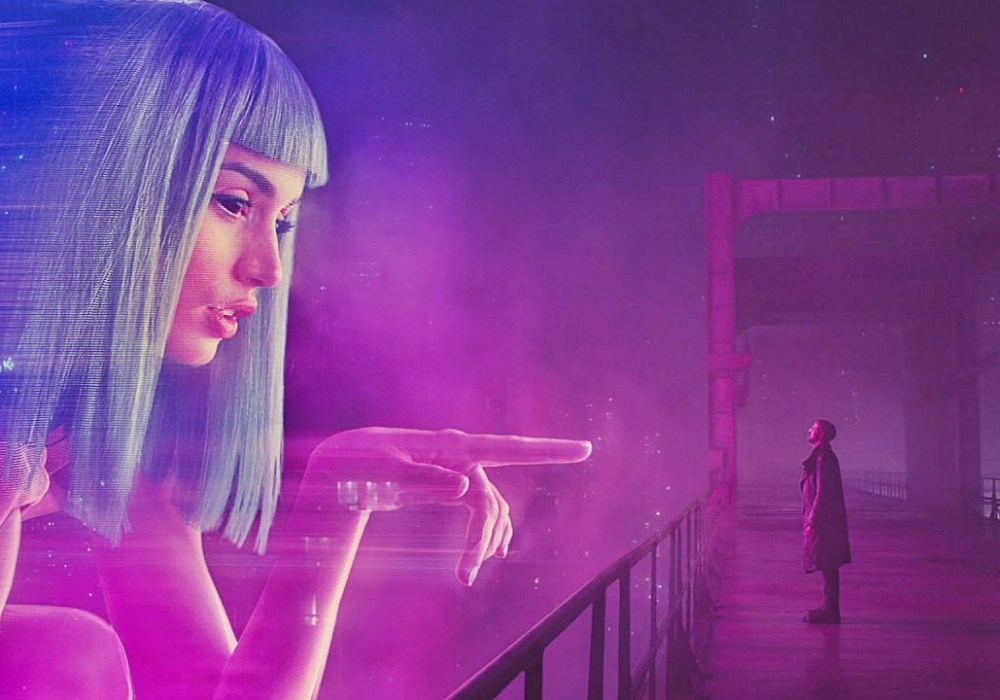
And what about K? It’s easy to overlook love as the real cause of his ultimate rebellion, looking instead to his belief that he is special, natural-born, the star of yet another “chosen one” narrative. But his belief is mistaken. If belief in his uniqueness were his primary motivator, learning the natural-born was a girl would have destroyed him. Instead, he comes across a gigantic hologram advertising a version of “JOI,” ostensibly the same “entertainment program” he had fallen in love with. The hologram is empty, apparently aware but without any substance beyond her programmed seductiveness. Suddenly, K is enlightened. If Joi had come from that, then there is a will inside him, too. He need not cast away his memories because they belong to someone else. His experiences are his own, and they are what give him his individuality. Nor should he cast away his love. Joi’s final declaration – her legacy – lives on inside him, the fire that propels him to take control of his destiny.

“What am I to you?” Deckard asks him near the end.

K doesn’t answer, but I can guess what he is thinking: Deckard, like K himself, is motivated by love. In the end, love is the only master K is willing to serve.
Go back

Your message has been sent

Warning
Warning

Warning.