As always, spoilers abound. Watch the film first or consider yourself warned.
I am not typically the target audience for modern Godzilla films. Removed from the context of a shell-shocked post-World War II society, into which Godzilla was born in the original 1954 film, I find him to be a little ridiculous. I was astonished, then, to discover that “Godzilla Minus One” is a phenomenal film. Not “good for a monster movie,” but a real, honest-to-goodness film with compelling characters and substantial things to say.
The film revolves around Kōichi, a kamikaze pilot in 1945 who finds himself unable to go through with his mission — not once, but twice, leading to the annihilation of an entire garrison at the hands of a (relatively) small, not-yet-mutated Godzilla. The creature, of course, goes on to become a colossal, indestructible terror after being exposed to nuclear bomb testing at Bikini Atoll in 1946.
We follow Kōichi’s life for several years after the war as, like Japan as a whole, he strives to rebuild his life while struggling with the demons wrought by the conflict: demons like guilt, trauma and loss that are handled with intensely moving gravitas. An impromptu family unit springs up around him when a woman called Noriko and her adopted baby, Akiko, find shelter in his homestead. They proceed to live like a family, though Kōichi is hesitant to make it official, perhaps feeling that he is unworthy of happiness given his actions during the war.
Kōichi and Noriko come together to care for a baby orphaned by the war.
About 30 minutes into the film, I found myself realizing that I would be happy to watch these characters even without the presence of a giant, irradiated prehistoric monster. The story feels, during this early stage, like a slice-of-life picture documenting the post-war struggles of people who seem to have been caught in the middle of something far bigger than themselves and well out of their control.
“Come back alive — isn’t that what you said?” Kōichi asks aloud at one point, addressing his parents after their deaths in the bombing of Tokyo. How does one live with themselves when it feels like a crime to be alive?
These are not questions asked in the likes of the recent spate of stateside “Godzilla” movies, and this degree of depth has been rare even in Toho’s Japanese films over the last half-century. If it feels like I’m cheerleading the film’s intellectual and emotional power a bit too earnestly, it’s because I recently read a review by Simon Abrams of RogerEbert.com that makes me wonder whether the quality of storytelling in “Godzilla Minus One” was so unexpected to some folks that it induced a kind of hysterical denial.
In this scene, critic Simon Abrams foolishly fires on Godzilla, unaware that Godzilla is indestructible.
Abrams, at various points in his review, decries the “nationalistic passion [that] is apparently essential to fighting Godzilla,” reduces the film’s themes to “reviving Koichi’s (sic) ultimately patriotic mojo,” bafflingly describes it as “the most conventional Godzilla movie in recent memory” and, with unaccountable scorn, calls this anti-war, anti-nuclear and intensely humanistic film a “saber-rattling melodrama” with “conservative” politics compared to previous films in the franchise.
Abrams seems to have fallen off his rocker, and while his views are just a drop in a sea of positive views, they irk me for their haughty flippancy. His criticisms seem to largely revolve around the view that the film somehow glorifies or endorses war, despite its entire thematic thrust revolving around Kōichi’s eventual realization that he can make a difference without sacrificing his life needlessly. The climax of the film is based around inventive logic and the minimization of casualties, with an empty ship used to draw Godzilla’s devastating (and explicitly nuclear) “heat ray” so as to avoid mass deaths in the final battle. While a lesser film might have resolved Kōichi’s struggle with survivor’s guilt and the conflict between his perceived cowardice and sense of duty by having him sacrifice his life to defeat Godzilla, he instead rights a wrong of the war by making use of an ejector seat in his plane, challenging his government’s narrative that the ultimate self-sacrifice is necessary to serve his country.
Furthermore, these themes, combined with the film’s anti-nuclear sentiment — finally explicit again 70 years after the original’s strident messaging — is important in an era when the Japanese government is slowly but steadily creeping toward more nuclear development and a stronger military over the opposition of much of its populace. This is a powerful film at an important time, and if Abrams has a problem with the politics, he would do well to describe his issues more specifically rather than sprinkling his review with vague asides.
Godzilla bites into a train before realizing it, like Simon Abrams’ review, is insubstantial, tasteless and… not very nutritious.
Putting Abrams aside, there is a lot to love here beyond the themes presented. The score is relatively simple but incredibly effective, amplifying the emotive power of tragic or psychologically intense scenes that already leap off the screen from the performances alone. Godzilla is given the majesty he deserves, and there is a nice touch when, having become a giant, radioactive menace, he walks more stiffly, more robotically than before, as if he has lost a piece of his soul in transitioning into the king of war machines. In fact, when compared to his more animalistic appearance pre-mutation, he almost looks more…human.
A few contrivances toward the end feel a little obvious or convenient, but they don’t derail the proceedings, and they enable the film to end on an exalted note of hope after two hours of intense emotional labor. If I have one bone to pick, it’s with the fate of the eponymous monster. I understand that this is a franchise and that provisions must be made for the future, but this story feels so self-contained in its own perfectly-crafted world that I can’t help but wish the loop had closed here.
I’ll leave you with this: If you feel exhausted by the big-screen monster mash wrestling matches we’ve been subjected to over the last decade, give “Godzilla Minus One” a try — it’s finally available on Netflix. I think you’ll be pleasantly surprised.
Ray Bradbury first published the short story A Sound of Thunder in 1952. It’s a brief, economical piece of storytelling with a fantastic idea and the kind of voluptuous prose that made Bradbury famous. The idea? When time travel is invented sometime around 2055, people with too much time on their hands take the opportunity to hunt the ultimate predators: dinosaurs.
Unlike the makers of the 2005 film adaptation of the same name, Bradbury realized his story was all about the idea, not the characters or even, necessarily, the world he created. Of the five men who journey back to the cretaceous period to take down a Tyrannosaurus Rex, only two receive any meaningful characterization: the safari leader, Travis, who serves to explain the rules and pitfalls of time travel, and Eckels, our unfortunate hero.
An illustration from the story’s 1952 publication in Collier’s Magazine.
Eckels is a dolt who overestimates the size of his cojones, and Travis is too smart to be leading such a ridiculous indulgence of the whims of the rich. That’s it. That’s all we know about these characters, because the ideas in the story are too absorbing to cut away from.
Most of those ideas have to do with how the time travelers endeavor to leave no trace on the past. A levitating path keeps the group off the ground, as one wrong step onto a blade of grass could — if the company’s prevailing theory is correct — create a cascade of changes over time that would make the future unrecognizable. For similar reasons, any bullets expended must be retrieved, and the participants must wear gear that keeps human bacteria from entering the ancient atmosphere. The only dinosaurs hunted are those that are about to die by natural means anyway.
Then there is the T. Rex itself, which is depicted as a monstrous creature covered in wriggling parasites and stinking of raw meat. It’s no wonder Eckels loses his nerve, inadvertently falls off the path and crushes a butterfly, causing the mother of all domino effects that ultimately leads to the rise of anti-intellectualism and a fascist president in the future.
“Give that man Eckels a medal!”
Now that we’ve covered the original story, let’s talk about the film adaptation that gets just about everything wrong in the funniest ways possible.
The 4400-word story doesn’t offer nearly enough character or plot elements to sustain a feature-length film, so the first major addition comes right off the bat, when we learn that Charles Hatton (Ben Kingsley, in a performance that can only be described as goofy), the CEO of Time Safari, is a money-grubbing narcissist who has exploited time travel for its financial potential.
Hatton has a government inspector in his pocket and a safari leader, Travis, who is willing to debase himself in order to advance his animal cloning research (in this version, all animals aside from humans are apparently extinct due to some kind of virus. If you want more of an explanation than that, too bad, the movie doesn’t care).
Ben Kingsley is clearly not meant to have this much hair.
The time machine and levitating path seem cut-and-pasted right out of Stargate, but so far, Hatton is the only outright silly element of the film. That soon changes when Travis leads a pair of idiots back in time to hunt an Allosaurus and we realize that after Ben Kingsley’s salary, the film’s budget probably didn’t have a lot of breathing room.
Created more than a decade after the stunning majesty of Jurassic Park, the Allosaurus in A Sound of Thunder looks like something out of the Tron era. This is the only dinosaur represented in the film, as Time Safari apparently brings all their clients back to hunt the same dinosaur at the same point in time. Why aren’t all these safari groups running into each other? Too bad, the movie doesn’t care.
A bit later in the film, Travis returns to the Allosaurus with a new group of ding dongs, and when something goes wrong, the scene devolves into an unintentionally hilarious game of Benny Hill-style tag with a supposedly fearsome predator. The scene defies description, but suffice it to say that if you were to replace the Allosaurus with Barney, nothing would appear out of place.
Yikes.
We’re off the rails now, but there’s a long way to fall before we hit the bottom. As in the short story, someone steps on a butterfly, but rather than causing the subtle-yet-horrifying changes that Bradbury described, Travis returns to a world that experiences progressively more ridiculous transformations in a series of “time waves” that hit the planet like some kind of energy tsunami, causing the growth of supernatural vegetation and — you guessed it — reptilian baboon bats.
Why do these changes only affect the present rather than altering the entire timeline? What, exactly, is a time wave and why do the characters never ask this question? Why do two characters jump out of the window of a skyscraper to avoid an explosion, land in the vines of a tree that breaks their fall, then stand up and ask, “When did this tree get here?”
Too bad. The movie doesn’t care.
From here on out, the film is comedy gold. I amused myself (and annoyed my wife) by muttering “classic time wave” or “yup, that’s a textbook time wave” any time a new round of changes swept through the city. Your mileage will vary, but this was still funny by the time we got to the pterodactyl rat bats, the giant angler fish snake and the amphibious alien person.
Looks like your basic time wave.
It’s also worth mentioning that entire city, from the beginning of the film to the end, and from the cars on the street to the exteriors of the buildings, is a CGI creation. Scenes are frequently filmed as if to highlight the computer effects, which feature such innovations as backgrounds that move at different speeds than the characters in the foreground and vehicles so haphazardly placed that, at times, it appears characters are looking through them at something that should not be visible.
But one should not make the mistake of thinking that this film would be a masterpiece if not for the poor CGI. After all, I still have questions, such as:
Why, if what happened when the safari went awry is such a mystery, do the Time Safari employees wait for at least half the film to review video footage of the event that they have had the whole time?
Why does Travis claim that his safaris go to the Cretaceous period when the Allosaurus lived 50 million years earlier, during the Late Jurassic period?
And in regards to the ending, to paraphrase the immortal words of George Costanza: does coffee mean sex?
If you haven’t seen A Sound of Thunder, now is the time to give this unintentional comedy a watch.
When we call a film a Rorschach Test for the audience, we usually mean people will interpret it based on their own preconceptions and beliefs. My favorite film of this type is “Oleanna,” a David Mamet production that has had men and women at each others’ throats since its release in 1994 (it premiered as a play two years earlier).
“The Banshees of Inisherin” is a different kind of Rorschach Test, one in which we are dissuaded from making gut judgments and are instead asked to evolve our thinking as the inkblots rearrange themselves over the course of the film. “Inisherin” won’t tell you what kind of person you are, but it just might spur you to think about the kind of person you want to be.
The film wastes no time laying out its premise: the very first scene involves Pádraic (Colin Farrell), an Irish cattle farmer on the fictional island of Inisherin, discovering that his lifetime drinking buddy — Colm (the incomparable Brendan Gleeson) — no longer wants anything to do with him. It’s 1923, and the Irish Civil War is coming to a close, but Colm’s sudden refusal to put up with Pádraic’s dry and uninspired conversation ignites a war of another kind between the two men.
Who you side with initially will, of course, depend on your own biases and life experiences. I sympathized with Colm’s desire to free up some of his time to focus on his own pursuits, in part because that fatalistic feeling of never having enough time was an attitude I grew up absorbing from my father. And in comparison to Colm’s talent for writing and performing music, as well as his propensity for deep introspection, Pádraic’s daily routine of going to the pub, returning home to take his cattle to pasture, then going back to the pub for a nightcap doesn’t seem particularly interesting.
Colm with all ten fingers!
Still, even if you find yourself attached to Colm as I was, it’s hard to say he’s blameless. The two men have evidently been friends for decades (at the very least, Colm went through the motions for that long). The sudden refusal to engage, as dim and annoying as Pádraic can be, seems a bit cruel and illogical after such a long time. As the pub’s proprietor remarks at one point, they have always made an odd match; even putting aside their personality differences, Colm is clearly significantly older than Pádraic, begging the question of how this so-called “lifelong” friendship took shape in the first place. If this odd couple has stayed together for so long, why break things off now with such vehemence?
As you’ll know if you’ve seen the trailer, Colm soon ups the ante after Pádraic continues to ignore the line in the sand: for each unwanted interaction, he’ll cut off a finger. And dear reader: you’d better believe he follows through.
At this point, it becomes clear that Colm is dealing with more than the accumulated annoyances of a life lived in close proximity to a simpleton. He’s depressed, perhaps in the throes of a “late-life crisis” that is forcing him to confront what he sees as an unproductive life. At its root, his thinking isn’t as logical as he’d like Pádraic to believe: each finger cut off makes it more difficult for him to perform music on his violin, the activity he claims will benefit from the extra free time gained by ending the friendship.
Still, it’s not so easy to simply switch to Team Pádraic. He’s what people today like to call an “emotional vampire,” someone who tends to use people as emotional backstops and on-call comforters rather than engaging with them on a meaningful human level.
This is probably the time to talk about Siobhán, Pádraic’s sister and the film’s third major character. For much of the film, Siobhán is the aforementioned on-call comforter, tending with increasing frustration to her brother’s emotional and social needs while seemingly taking care of nearly every household and farm duty. In other words, she might as well be Pádraic’s mother.
Siobhán sometimes seems at odds with the pace and nature of life on Inisherin; her red jacket contrasts sharply with the trademark green of the Irish countryside.
For a while, director Martin McDonagh seems to be establishing her as a kind of middle path, someone who sympathizes with Colm’s frustration at her brother’s inane existence but prioritizes treating everyone with compassion. Fortunately, Siobhán is more complicated than that.
She spends much of her free time reading, and when the opportunity presents itself to escape Inisherin for a job on the mainland, she leaps at the opportunity. Just as the conflict between Colm and Pádraic is escalating to an insane pitch, she leaves her brother alone, choosing — much like Colm — to focus on her own goals and personal fulfillment rather than sacrificing her time and energy in the service of others. There are at least two important differences, of course: Siobhán isn’t chopping off any fingers, and to her mind, no one person is responsible for the chaos on the island. Everyone on Inisherin is crazy.
She isn’t wrong. Almost every incidental character in the film is either exceedingly nosy, rude, abusive and self-important, or otherwise insufferable. And despite her departure, she never stops offering her love and compassion, even in the letter she sends later. Nevertheless, her departure signals a turning point. Without the rules and structure she provided, Pádraic starts to become untethered. He lets horses and his beloved pet donkey into the house, one of many instances in which the film suggests he is more comfortable around animals than when navigating the intricacies of human connection — though he retains an almost painful need for friendship and support.
Pádraic and his beloved donkey.
The film had me tightly in its grasp at this point. Pádraic, in despair at his isolation, is an increasingly sympathetic character, while Colm’s actions are beginning to look more like mental illness.
But then the film throws a curveball: Pádraic’s pet donkey chokes to death on one of the freshly-severed fingers Colm has been throwing at Pádraic’s door over the course of the film, marking a tonal shift away from an ingenious mixture of dark hilarity and deep, painful sorrow toward a bleaker home stretch.
When this happened, I didn’t know what to think. Every other event in “Inisherin” is motivated, even if those motivations are sometimes difficult to decipher. But here was an event ruled purely by chance, a cosmic joke played on both characters.
Understandably, Pádraic is infuriated; for the first time, we see him shed his need for affection and companionship. The accrued hurt and anger from Colm’s rejections, coupled with the traumatic loss of his donkey, burst out in the form of violence. He sets Colm’s house on fire, taking care only to ensure that Colm’s dog is safely out of harm’s way.
Some images don’t need a caption.
One of the worst feelings a filmgoer can experience is the sensation of watching a brilliant film fall to pieces in its final minutes, and as Colm’s house erupted in flames (with oddly CG-augmented fire??) I feared that was happening to me. In a film almost single-mindedly occupied with motivations — of human relationships, of daily life, even of suicide — what was the meaning behind such a strikingly unmotivated event, other than to draw the film toward a bombastic conclusion?
But as I have thought about the ending in the days since, I have come to the realization that the donkey’s death, so tied to the characters’ central conflict and yet apart from it, is emblematic of the film’s attitude toward conflict and tragedy. Colm’s initial actions are intended only to protect his own interests, but they ultimately accomplish the opposite, robbing him of his ability to play music and engulfing those around him in a gradually widening circle of chaos. Siobhán, in declining the advances of one side character while treating him like the unimportant comic relief figure he appears to be, unwittingly serves as at least a partial motivation for that character’s suicide. And Pádraic, in doing everything he can conceive of to repair his most treasured relationship, sends Colm over the edge into self-mutilation. Motivations, it seems, don’t really matter. In the end, our actions always cause pain to someone. But amidst this pain and suffering, what we can control is our ability to show compassion (Siobhán was right!).
Perhaps this way of looking at the film, which sees conflict not as the collision of differing motivations but as a series of non-sequiturs with consequences that are wholly disconnected from intentions, explains its strangest and funniest dialogue: the final lines of the film.
“Thank you for looking after my dog anyway,” Colm says after surviving the house burning.
“Any time,” says Pádraic.
Other ravings
There are a few aspects of this film I wasn’t able to fit into this discussion. Dominic (Barry Keoghan in a characteristically off-kilter performance), the character who commits suicide, is probably worth an analysis all his own. However, I mostly see him as a foil for Pádraic’s self-absorbed neediness and ineptitude and as a late-film symbol of loneliness and unintended consequences. He isn’t quite a fully-formed character in my view, and I don’t have a lot to say about him. But coming back around to the film’s nature as a kind of Rorschach Test, I’m sure there are people who will identify with him and use him as their anchor for understanding the film.
The film’s setting is interesting but a bit odd — I’m referring to the repeated references to the Irish Civil War. I’m not a native Irishman, so perhaps this makes more sense to people who have a stronger sense of the culture and history of the island (though I don’t think I’m a slouch in that regard), but the connection between the plot and the war seems to be little more than “here is a reference to a large-scale conflict, and here is that conflict (supposedly) in microcosm without any direct parallels that would seem to justify that connection.” Other than the fact that war happens, I’m not sure what we’re supposed to make of that. The film does not seem to have anything to say about war specifically, so while I suppose a gentle correlation to the civil war adds a bit of intriguing background noise, I don’t see any depth there that rivals every other aspect of the film. (Side note: I wrote this before spotting this article, which strives to explain the significance of the war within the story but doesn’t really say anything more complex than what I’ve written here. Points for both of us using the word “microcosm,” though.)
One other bone to pick — not with the film, but with the commentary from critics. This film has received the acclaim it deserves, but most critics spend a lot of time hyping its status as a kind of reunion for McDonagh, Farrell, and Gleeson, who last worked together on 2008’s “In Bruges,” without acknowledging the film’s kinship to another Gleeson and McDonagh joint: “Calvary,” released in 2014.
Gleeson and Kelly Reilly in “Calvary.”
The McDonagh who directed “Calvary” is actually Martin McDonagh’s brother, John Michael McDonagh. As in “Inisherin,” that film features Gleeson as a tired, increasingly fatalistic man with a good heart who finds himself in conflict with residents of his small Irish town. His home doesn’t burn down in that film: his church does (he plays the town priest) after a disgruntled parishioner sets it ablaze. Suicide and depression are prominent themes in both films, and both films feature a central conflict between two men, one of whom is largely in the dark about the extent of the conflict for much of the runtime. Both films end in a beachside confrontation. At their core, both films are set in motion by a seemingly arbitrary decision by one character to make an enemy of the other. Both films also take pains to avoid hamming it up with traditional Irish music, a decision that Martin and the press seem to be selling as a unique, defining feature of “Inisherin.”
I’m not saying there is any funny business here; despite their similarities, these are different films with different things to say about the world. But a little appreciation for John Michael’s superb work wouldn’t be out of place. It would be absurd to say Martin was not inspired in some way, shape or form by his brother’s film, just as it would be absurd to ignore Calvary as an early evocation of the world-weariness that Gleeson so expertly portrays in “Inisherin.”
I mean, come on. John Michael’s own (brief) Wikipedia entry can’t help but refer to him right at the top as “the older brother of playwright and filmmaker Martin McDonagh.” Must we continue to render him invisible in his brother’s shadow?
Most people have a favorite movie. Fewer have a favorite director, and even fewer actually like most things their favorite director has made.
For me, that director is Michael Mann. From the emotionally shattering finale of Manhunter to the tiniest ingenious details in the first episode of Tokyo Vice, Mann is an artist who crafts every frame with purpose, which makes rewatching his films a delightful experience of finding new traces of beauty and intent.
But I’m not here to talk about Heat, which attracts film reviewers like mosquitos to a zapper. Not Miami Vice, either. Today, I want to focus on The Last of the Mohicans.
Mohicans isn’t exactly underrated (it’s sitting at a 93% on Rotten Tomatoes, if the Tomatometer means anything to you). Rather, it’s mostly ignored, shelved in deference to Mann’s other works. It is rarely mentioned in retrospectives of his career, despite being the only Oscar-winning film in his oeuvre (for Best Sound).
So today, we’re going to talk about Mohicans — and only Mohicans.
Daniel Day-Lewis and Michael Mann on the set of The Last of the Mohicans.
Mann on the frontier
Daniel Day-Lewis stars as Hawkeye, the adopted son of aged Mohican patriarch Chingachgook (Russell Means, exuding a quiet calm that was a far cry from his real-life, headline-grabbing activism). Hawkeye’s stepbrother, Uncas, rounds out the family, which almost always appears in scenes together, an unusual but inspired choice that drives home how devoted these characters are to each other. It’s a choice that dates back to the original source material, James Fenimore Cooper’s series of novels about frontier life (though this is one case where I definitely do not recommend reading the books. I hacked my way through “Deerslayer” in high school, and I trust Mark Twain’s opinion as to the quality of the rest. In fact, the film specifically credits the screenplay for the 1936 film adaptation, rather than any of the novels).
While tracking a Huron war party during the early years of the French and Indian War, Hawkeye and family find themselves looking after the two daughters of British Colonel Munro. The daughters are essentially a pair of Jane Austen characters dropped into a violent warzone without the requisite mental or physical fortitude, though the eldest, Cora, proves more durable than the naïve, shell-shocked Alice. What follows is a struggle to keep the daughters alive, one that builds slowly over the course of the film until the finale explodes in a masterful chorus that represents some of the finest 10 minutes in filmmaking history.
I first saw the film as a young child, and I’ve found that the memories forged from that viewing draw special attention to the ways that Mann elevates material other directors might have made boring or rote. I will never forget how Magua, the supposedly Mohawk guide leading the daughters and their military escort through the woods, casually turns and walks against the flow of the march before burying his tomahawk in the neck of an unsuspecting soldier. As with everything in the film, this betrayal doesn’t simply “happen.” There is a build: we see him turn, see the soldiers look slightly puzzled but completely oblivious, see Magua surreptitiously ready his tomahawk.
Magua just wants to bury the hatchet.
Though we don’t really understand Magua’s motivations until late in the film, this scene gives us an early window into his character beyond the barely-contained rage he expresses almost constantly. There is a theatricality to him, a tendency to delight in confusing his enemies. We see this again later, when his band of rogue warriors terrorizes a battalion of British troops before massacring them.
Speaking of massacres of British troops, one notable aspect of the film is that it does not take sides in the conflict (other than what must have been an irresistible urge to turn one of the British generals into an aristocratic oaf). I’ve found that when I bring up Mohicans in casual conversation, some people tend to remember it as the film that presents “the other side” of the conflict, as if portraying British soldiers massacred (repeatedly) by Huron is somehow in opposition to the wave of revisionist westerns and historical epics, still going strong at the time of release in 1992, that depicted the many crimes committed against native populations throughout America’s history.
Let’s be clear: Mohicans is not presenting “the British side” of the conflict. In fact, the film isn’t really about war in any meaningful sense. Rather, it’s about chaos, about personalities and histories that lead characters into inexorable conflict with each other. If there is a statement about war here, it’s that on the ground, wars are not about countries or politics but about people — people whose allegiances and motivations often have little or nothing to do with the war itself.
The British infantry is ambushed by Magua’s band of renegade Huron warriors.
That’s certainly the case for Magua, whose alliance with the French is purely a means by which to exact revenge on Colonel Munro for the murder of his family. The same goes for his status as an adopted Mohawk, which is simply happenstance. Intellectually and biologically, he is Huron, though even that is murkier than it seems: his vision of what it means to be Huron is twisted by his own tragic experiences and by his long absence from the tribe.
Hawkeye, on the other hand, has no interest in participating in the war and is dragged into it only because he wants to protect Munro’s daughters — specifically his love interest, Cora.
Sounds of silence
It should be clear by now that the plot is nothing spectacular or revolutionary. It’s Mann’s handling of the material that elevates it into a masterwork. Take, for example, the silent romance between Uncas and Alice, in which not a word is spoken onscreen between the characters, and yet — through only a few brief scenes — we understand their relationship and are heartbroken when, in the finale, Uncas is killed and Alice throws herself off a cliff after him, having lost the only thing keeping the trauma of her shell-shock at bay.
Uncas’ lifeless body winds down the cliffside like a snake, recalling the tattoos on his father’s face. Alice seems to fall with the grace of water, which has stained and grooved the cliff faces over millennia and flows with a mixture of beauty and brutal, unsympathetic force. Mann makes a point of repeatedly cutting to waterfalls, big and small, during the final sequence, as if to remind us that water flowed here before any of these characters were born and will flow long after they are gone.
Uncas, grievously wounded, gazes at Alice before his death at the hands of Magua.
I mentioned the film won an Oscar for Best Sound; the finale makes use of a stirring Celtic melody that repeats while gaining momentum throughout the sequence, meshing brilliantly with the visual motif of relentless, unstoppable water while also matching the increasingly frenzied pace of Hawkeye and Chingachgook as they race to rescue and avenge their loved ones. This is only one example of a score that seems to fit the film and its striking visuals perfectly, complementing rather than guiding our emotional reactions to the story.
This is all the more incredible when one discovers that Trevor Jones originally composed electronic pieces for the film, then had to come up with a brand new orchestral score in a mad dash when Mann decided he wanted something more traditional. That score had to be reworked again when the film was cut down to its 112-minute runtime, necessitating some additions from Randy Edelman. What could easily have been a rushed, haphazard mess turned out to be one of the most memorable film scores of the 1990’s.
So why, then, did the film win for Best Sound rather than Best Score? Well, the Academy does have a history of conflating and confusing different categories, but in addition to the more-than-deserving score, the film does make some other interesting sound choices. Most noticeably, it’s one of only a handful of modern films that does away with hokey sound effects for blades and hand-to-hand combat. Weapons, even sharp ones, make realistic thuds rather than squishy metallic noises, drawing attention to the weight and sheer brutality of the tools people use to kill each other.
Paradoxically, the other major sound choice is mostly a lack of sound. The score is a canvas against which Mann lays out his majestic visuals, and everything from dialogue to incidental sound effects often takes a back seat. And when there is a break in the score, it’s usually to emphasize — you guessed it — silence. That’s certainly a sound design choice, and it works great for the film, but in the end, I don’t think there is any real explanation for the Academy’s decision to honor sound design over the score.
Regardless, The Last of the Mohicans is a masterpiece, almost peerless in its seamless convergence of poetic visual storytelling and a complementary orchestral score. Though not everyone would agree with that assessment — The Washington Post’s Desson Howe branded it “the MTV version of gothic romance” and “the Cooper pulp of its day” in one of the most idiotic and superficial film reviews ever printed by a major newspaper — the film has mostly received the appreciation it deserves. But within the context of Mann’s career, it is a forgotten magnum opus, an overlooked departure from the gritty neo-noir for which he is better known. So let this article be a monument to the film’s rightful place as a standout accomplishment in a remarkable career. Don’t let this one fade into obscurity — dig it out and give it a watch.
Today is an odd time to be a film fanatic. There was a time when we knew almost nothing about a film until it was released, other than a notable name or two. Certain landmark events, like Tim Burton’s Batman or the disastrous pre-press surrounding Waterworld, were exceptions to the rule.
To this day, headlines about Waterworld are more concerned with the film’s budget overruns than anything else.
Now, we pore over every bit of information, from early casting decisions to the pedigree of the writer and director. We examine the public comments of everyone involved in search of something anti-social or otherwise objectionable. It doesn’t matter if it’s a big-budget tentpole or direct-to-Roku; we’re all over it. And if something doesn’t meet with the approval of the masses, By God! someone’s going to be held accountable.
By the time the film — for which we already know the storyline, thanks to “sneak peeks” and leaks on the cast’s twitter pages — is released, it’s an anti-climax. And don’t even get me started on today’s exhaustive trailers, which function basically as complete plot summaries.
But something happened recently that sent me backwards in time into an era when all we knew about any given film was that it starred a name actor and had a lame tagline: I became a father (lame tagline, you say?).
Speaking of lame taglines…did Yogi Berra write this?
As any parent knows, trying to watch a movie with an infant is like being offered a piece of cake, only to have it snatched away at the last moment. Repeatedly. So the television and everything attached to it has become less important in the last few months, which means I’ve gone from being someone who knew the casts and plotlines of just about every film in development to living “off the grid.” And as far as actually seeing new releases in a movie theater…well, that’s a distant dream.
Sure, some things slip through. I know each and every twist in Spiderman: No Way Home just from the occasional innocent scroll through Facebook, though I won’t actually see the film until its Blu-ray release. But by and large, I have no idea what’s in theaters right now, or what’s coming down the pipeline, or who went on a racist, sexist, homophobic tirade on which set. And it’s nice.
The last film I saw in a theater without knowing anything about it was “Under the Skin,” one of my favorite films of all time. I love the experience of being guided down the rabbit hole into a story I don’t already have mapped out in my head. The films that made me love cinema in childhood — Road to Perdition, Legends of the Fall, The Last of the Mohicans — were experienced like this. I was not plugged into the entertainment industry. I didn’t know who Michael Mann or Thomas Newman were; I just knew I liked things they were involved in.
Manhunter, a Michael Mann film mostly known today as “the first Hannibal Lecter film.” In reality, it’s one of Mann’s masterworks.
Simply put, I received films as they were meant to be received. Plot misdirection meant something. Twists meant something. Tragedy meant something. There was no voice in my head yelling, “Good writing! Bad writing! This should have happened instead!”
I’m back in that sweet spot again. I saw Midnight Mass on Netflix without having read a single thing about it (and promptly spoiled it in my review. As goes for everything on this site, don’t read it if you haven’t seen it!) and, coincidentally or not, I found it to be a masterpiece.
The point is, there’s a lot of (justified) talk these days about the uninformed masses, but I’m also of the opinion that everyone knows a little too much about everything. It doesn’t matter if we’re talking about films, or comedy, or painting, or literature; knowing too much about how a thing was made and who made it, especially before the thing is even experienced, can ruin said experience. Even for those of us who enjoy studying how a film is put together — listening to the audio commentaries, watching the crappy behind-the-scenes featurettes, pausing the film to point out to our significant others the symbolism hidden in the lead actor’s tie — there is a limit. Too much, to quote Stephen Fry, is “precisely that quantity which is excessive.” And ladies and gentlemen, it’s out of control.
I shouldn’t know that Jordan Vogt-Roberts is planning a Metal Gear Solid film that will never get made (the rule, after all, is that only video games with shallow, dull, and derivative narratives — or no narratives at all! — get made into films). I shouldn’t know that Ben Affleck was once attached to a hilariously ill-conceived Paradise Lost film adaptation. The list of unnecessary information is almost infinite.
What I’m happy to know, instead, is that as my daughter grows up, she will have a small window of incredible opportunity to see films — or whatever art she prefers — without the added baggage of a hyperactive, hypercritical society that insists we be fully pre-briefed about absolutely everything before we get out of bed in the morning. And I can’t wait to share that experience with her.
From Father and Daughter, a Dutch animated short and winner of the 2001 Oscar for Best Animated Short.
Melodrama is firmly out of fashion in today’s Hollywood. Films like The Last of the Mohicans, Legends of the Fall, or Road to Perdition, which pit characters of mythical proportions against one another in emotionally-charged epics against the backdrop of pivotal eras in history, would be considered naïve or simplistic by today’s army of cynical film audiences if released now. Instead, films are routinely slathered in shades of gray, and the antihero protagonists are sometimes morally indistinguishable from the villains. What began as a movement toward realism or an acknowledgment of moral relativism has become a simplistic farce in its own right, with writers and filmmakers apparently laboring under the assumption that more vices equals more complexity.
That said, I want to highlight a film from 1991 that indulges both extravagant melodrama and a genuinely unlikeable antihero protagonist, merging both components into a stirring film that today seems far ahead of its time.
Jeff Bridges as Jack Lucas in The Fisher King.
Back when the archetypal antihero was Taxi Driver’s Travis Bickle rather than the pseudo-depressed, alcoholic supermodels of today, director Terry Gilliam chose Jeff Bridges to play Jack Lucas, a Howard Stern-esque shock jock who inadvertently goads a psychopath into committing a horrific murder spree and finds himself in a gut-wrenching, almost hallucinatory journey of self-discovery.
Capitalizing on the good will audiences would have had for Bridges, whom they associated with lovable goofballs and charismatic charmers, Gilliam wastes no time in the opening minutes of The Fisher King establishing that Lucas is a selfish prick whose fall from grace has only made him more self-obsessed. Lucas takes his loving and hardworking girlfriend (or is she an emotional backstop?) for granted, openly scorns just about anyone he comes into contact with, and constantly relives the circumstances of his downfall in a grand display of self-pity. Gilliam pushes the character to the limits of unlikeability, gambling that Bridges’ innate allure and star power is enough to keep audiences in their seats for the first half hour or so. Remarkably, the gamble pays off.
Bridges acting like a douche and looking like one, too.
We’re relieved when Robin Williams enters the picture as Parry, a vagabond who lost everything when the aforementioned mass-murderer shot and killed his wife before his eyes. To the credit of Gilliam and writer Richard LaGravanese, the story does not devolve into a conflict between the two men and their roles in the traumatic event that changed both of their lives. Rather than seeking vengeance or some other tired trope, Parry rescues Lucas from a band of violent teenaged hoodlums and ushers him down the proverbial rabbit hole into a world of homeless and mentally damaged outcasts, believing Lucas will help him steal the Holy Grail from a billionaire’s New York compound. (And really, if there were a Holy Grail, where else would it end up but in the possession of a New York fat cat?)
From here, the film shifts gears several times, drifting from antiheroic struggle to buddy comedy to rom-com and back again. But regardless of the particulars of the plot, the central relationship between the cynical, self-loathing narcissist Lucas (does that sound like an oxymoron? Then you haven’t met a self-loathing narcissist) and the downtrodden but astonishingly kind Parry draws us in, addicting us to the magic that happens when they share moments of grief and genuine, mutual understanding.
One of the all-time great pairs.
And despite the narrative swings, the tone never flies off the rails thanks to a strikingly original visual motif that appears several times throughout the film: the Red Knight, a ghostly but unsettlingly tangible medieval knight bathed in red and riding a red steed. The knight is Parry’s trauma personified; it strikes at a moment’s notice, always triggered by some small reminder of Parry’s wife and the violence that took her from him.
Scenes that should be silly and utterly unbelievable — the knight chasing Parry through the streets of New York, or appearing amidst a gang of hoodlums to slash him figuratively through the heart — are instead some of the most emotionally absorbing sequences of the film. Rather than seeing grief and pain conveyed through subtle facial expressions or weeping, Gilliam throws the full brunt of Parry’s trauma-induced madness in our faces, intercutting the knight’s relentless pursuit with shockingly graphic scenes of the wife’s death at the hands of the killer Lucas unwittingly egged on over the radio.
The Red Knight.
As a result, we never forget that the film, while funny throughout, is not a comedy. At its height, it’s a full-blown melodrama about the way that grief infects our emotional wounds and keeps them from healing. At the same time, it’s a doggedly sincere film about how an authentic friendship with another human being can ultimately heal those wounds.
They don’t make ‘em like this anymore — in fact, they haven’t ever made ‘em like this, before or since. While The Fisher King is not quite as distinctly…weird?…as Gilliam’s other films, it still firmly qualifies as a Terry Gilliam original. Watch it for that reason alone, or perhaps to see Jeff Bridges scale a very real medieval-style building in the heart of New York while dressed as a medieval thief. Or to see the Red Knight, a haunting product of practical effects. Whatever draws you, it will be worth your time.
If you’re a film buff, a fan of Gilliam/Williams/Bridges, or just a fan of quality, get the Criterion Collection edition of the film. It’s worth it for the new commentary from Gilliam alone.
“Sometimes a Great Notion,” in both book and film form, divided me and my father for years. Now, I’m beginning to suspect we were both right.
I once wrote an article for this site about my personal interpretation of “Blade Runner 2049,” which drew not only on the film’s many layers of meaning and visual storytelling, but on my own experiences and state of mind at the time of the film’s premiere. I purposely distinguished this write-up from my separate, more traditional analysis of the film, but I still felt my interpretation — no matter how unabashedly subjective — had merit.
Now bear with me. Recently, I found myself thinking about “Sometimes a Great Notion,” which is both my favorite novel (authored by Ken Kesey of “One Flew Over the Cuckoo’s Nest” fame) and a middling 70’s film adaptation directed by, and starring, Paul Newman. Coincidentally or not, the book and film were also very important to my late father, but for completely different reasons. While I see the book as a deeply affecting tragedy about a family’s streak of stubbornness (or “pathological grit“) over the generations, told in an absorbing stream-of-consciousness style and granted mythical proportions by its setting in the Pacific Northwest on the banks of a beautiful but menacingly encroaching river, my father saw it as an endorsement of the family’s obstinate “Never Give a Inch!” motto, an interpretation that fit neatly into his own personal narrative of a world determined to persecute him every step of the way, but one that always seemed to me to be a misunderstanding of nearly every element of the story.
Henry Stamper’s middle finger to the world: triumphant moment or tragic irony?
Like Henry Stamper, the patriarch of the story’s Oregon logging family who refuses to shut down his family business in the midst of a union logging strike, my father believed himself to be a rare Good Man with Principles, beset on all sides by a society that wanted to trip him up at every turn and run him into the ground.
In some respects, it was probably this sentiment that drew him to Kesey in the first place. Kesey’s more well-known “Cuckoo’s Nest” is a fiery rebuke of a mechanistic and remorseless society that ruthlessly discards people who don’t fit the mold, so there’s no doubt the author had a certain affinity for those who refuse to compromise on their ideals.
The problem is, “Notion” is far less black and white than “Cuckoo’s Nest.” Henry Stamper’s enemies, the union and its striking loggers, constitute a whole army of people who refuse to compromise on their ideals, and it’s their welfare, not that of the Stampers, that will determine the fate of the local town that depends on a thriving logging industry. Complicating matters further is the prominence of the logging industry itself, which Kesey regards with ambivalence as dangerous and environmentally damaging, and yet awe-inspiring for the majesty and grand scale of the natural surroundings in which the work takes place. In short, the story has no easy heroes or villains, only outsized personalities going to war against each other with tragic consequences that unfold over the course of generations. Along the way, the book also has a lot to say about generational suffering, fathers and sons, and the way pivotal events echo and repeat themselves throughout time.
Cover art for the Penguin Classics edition of the novel, emphasizing the mythic proportions of the Stamper family’s struggles.
But here’s the thing: that’s more or less an academic reading of the book. The closest I’ve ever been to Oregon is Washington, and then only for a week, which makes it hard to imagine what growing up and living with the logging industry is really like. I’ve never worked with trees, much as I admire them. But my father, inspired by the film version of the story, traveled to Oregon and lived there for a time as a young man. He didn’t cut down trees, but he did plant them for a living — for a little while, at least. Over the course of his life, he probably lived the lives of many characters in the book, from the young, depressed, educated misfit of a grandson to the conflicted and rebellious but ultimately loyal son Hank, and finally the stubborn old man Henry, who believes he’s seen it all and has no patience for anyone who gets in his way.
In that sense, it’s only natural that my father would see the story in a different light. But there’s more to it than that.
My father had little academic interest in films or literature. Whereas I would break things down in my head, trying to understand why a director would frame a shot in a certain way or an author would linger on a description of the landscape, he would react to the characters as if they were real people. He would hate the evil characters — and I mean Hate. He would sometimes scream and curse at the villains onscreen as if they had personally offended him — and quite literally weep with joy when good characters he truly respected would prevail.
This would even manifest itself at perhaps the most basic version of a good versus evil matchup: a college basketball game. He would fly into an authentic and sometimes unsettling rage if the team he was rooting against took the lead, because that was the “bad” team, and the good guys were losing.
In some ways, that made him a writer’s dream: He took the characters at face value, and if the narrative involved a good man prevailing against the forces of darkness, he was probably going to like it.
Sometimes the “good guy” loses.
But this attitude also made it difficult for him to tolerate more complicated depictions of morality. Antiheroes, for example, were a tough sell. A protagonist usually wasn’t worth following if his vices competed with those of the “villains.” And if the story involved aliens or superheroes, he was out, because he had no desire to suspend his disbelief.
In contrast, though I probably owe some of my enjoyment of emotionally engaging stories — melodramas, in particular — to my early memories of sharing tearjerker epics like “Legends of the Fall” with him, my experience of art has always been divided in two, between the analytical observer and the laid-back spectator who just wants to have a good time. So while I understand that art can mean many things to many people, I also know that, like a carpenter building the frame of a house, a writer builds a story piece by piece in order to convey specific information in the form of themes and emotions. Even the most open-ended works of art are made with intent, and I want to understand that intent. But that’s only one type of understanding, the kind that schools encourage while frowning on more imaginative or personally-informed interpretations that are, in fact, a form of art unto themselves.
For a long time, I thought my father was simply wrong about “Notion.” His conception of Hank Stamper as the unquestionable hero of the story would have probably caused Kesey to raise an eyebrow — just as he likely balked at Newman’s earnest but hopelessly simplified adaptation — but that’s beside the point; my father had a strong connection to the story, and that was his to treasure. Of my interpretation of Blade Runner 2049, I wrote, “Regardless of whether or not [director] Villeneuve and the writers fully intended to create a story about a working-class drone rising up to defy the dictates of society, that was the film I saw, and I will forever be grateful for it.” This is the same dynamic at work, the willingness to fuse one’s own personal experiences and philosophies with the experience of art. Is this tendency wrong or misguided? Maybe, maybe not. But I’ve come to respect that it’s real.
__________________________________
In closing, here is one last anecdote about my father. When I was little more than a toddler, Ken Kesey came to town for a book signing. The book in question was one of his final efforts, the aptly-titled “Last Go Round,” but my father brought with him two children’s books Kesey had authored several years before: “The Sea Lion” and “Little Tricker the Squirrel Meets Big Double the Bear.”
Both were signed and dedicated to me, and they are some of my most prized possessions. I was far too young at the time to know who Kesey was, but he kept the books safe for me until I could enjoy them, and I will keep them safe for my daughter. That is perhaps the most profound lesson in “Notion;” as humans, everything we have is generational in nature. Our flaws, our knowledge, our pain, and our journey toward becoming better. In my family, what Kesey built, and what my father shared with me, will not be lost.
Ken Kesey’s message to one-year-old me, echoing Big Double the Bear: “For Austin. ROOOAHAR!!”
Why is Midnight Mass so affecting? Why is a story about a vampire descending on an isolated town — a description that would fit 30 Days of Night or any number of inferior genre films — the best work of Mike Flanagan’s career?
Never mind that vampires do not “descend” on the town so much as coalesce out of the town itself. Never mind that the story is more a meditation on where our beliefs come from and the innate fallibility of human interpretation than that of a traditional horror film. Writers and directors remix horror elements all the time, so what makes Midnight Mass different?
The answer, I think, is that the show is true. No, “Crockett Island” does not exist and vampires do not stalk remote caves in Jerusalem (as far as I know. I haven’t checked any caves in Jerusalem). But this is a rare, almost singular story in which, despite the presence of a supernatural entity, its themes and emotional power ring completely true in the real world. That sounds deceptively obvious and simple, but let me try to explain.
The show is not based on a tired gimmick, such as showing what might “really” happen if a “real” vampire showed up in the “real” world. Such films ultimately create their own universe, trapping anything they have to say about the human experience within that bubble. You can even make the vampires Nazis, CEOs, or United States Senators, but ultimately the analogies and metaphors and satire will only really make sense within that world, because it isn’t “our” world.
A scene from 30 Days of Night, which teaches us the valuable life lesson that a UV lamp can kill a vampire. Also, vampires love, too. Relatable!
And yet, as a side effect of brilliant storytelling, Midnight Mass creates a convincing depiction of what might really happen if a real vampire showed up in the real world. Huh.
That’s because the story isn’t making a point about vampires, figurative or otherwise. The film’s trio of main characters — Riley (Zach Gilford), Erin (Kate Siegel), and Monsignor Pruitt (Hamish Linklater) — are not primarily metaphors or satirical stand-ins. They are human beings wrestling with how to see the world in the face of unimaginable horror: the horror of guilt, of miscarriage, of an untested system of beliefs being truly tested for the first time. Nor is the vampire a symbol in the show’s eyes. It is a humanoid creature with the wings of a bat; the characters, not the camera, interpret the creature, a dynamic that forms the crux of the show’s power.
Indeed, the mystery surrounding the vampire’s existence is one of the show’s masterstrokes. Flanagan never stoops to the stereotypes of the genre, which would usually demand that a character googles “vampire” and reads from someone’s blog as if it’s the Encyclopedia Britannica, or else visits a renowned “vampire expert” who is inexplicably paid by a major university to research vampires for a living. In Midnight Mass, the word “vampire” is never mentioned — I use it here only for convenience — and a muted, vague, two-second reference to “myths” in this 7+ hour show is the closest we ever get to a confirmation that these characters are familiar with the concept of a vampire. This frees up the show’s more logical characters to speculate about scientific explanations while the mostly kind-hearted Pruitt and his manipulative, hypocritical scumbag of an apostle, Bev, work overtime to convince themselves that the vampire is a biblical angel.
To Flanagan’s credit, despite the show ultimately becoming one of cinema’s most savage takedowns of religion’s susceptibility to erroneous interpretation, Pruitt and his flock are not dismissed as idiots, nor is religion and spirituality as a whole tossed out with the bathwater. Pruitt’s story — from the moment he meets the vampire in that cave in Jerusalem and feels, for the first time, that confusing mixture of fear and reverent awe that he will struggle with for the remainder of the show, to the moment he awakens to his mistakes and tries to set things right — is told with empathy, not mockery. A few inspired scenes of wood blocks depicting Pruitt’s meeting with the vampire and his subsequent tribulations are infused with the same contradictory blend of earnestness, tragedy, grandiosity, and humility that Pruitt himself feels. Despite knowing better, we want to believe in his conviction that all things, no matter how horrific, have a grain of goodness within them.
Pruitt comes face to face with a vampire. Or is it an angel?
On the other side of the philosophical divide is Riley. As an atheist myself, Riley initially struck me as a Christian’s idea of an atheist, given that his worldview as expressed in the first few episodes can be boiled down to something like, “a kind god wouldn’t let children starve in Africa.”
But as the show progressed, I realized that the point of Riley’s character is not his atheism, but his refusal to compromise on his belief that certain things in this world are simply bad. No silver lining, no redeeming truth, just evil and bad luck and mistakes. It’s this rigid moral compass, forged by his accidental killing of a young woman in a drunk-driving accident, that Riley’s simplified philosophical musings early on are supposed to express. This sets up a clear confrontation; not between Catholicism and atheism, but between moral elasticity and a clear-eyed appraisal of good and evil. While Pruitt bends, hiding behind his belief system when his moral fiber is tested, Riley chooses to die rather than lie to himself and become the very evil he cannot ignore. In death, Riley sets into motion the events that will ultimately lead to Crockett Island’s salvation.
Finally, there is Erin, who falls roughly in the center of this ideological divide. With Riley’s death occurring in Episode 5, Erin becomes the de facto protagonist, and the conversation she has with him only days before his death becomes the emotional and philosophical core of the show. In that conversation, which takes place quite informally in Erin’s living room — a purposeful decision that I think makes the scene all the more relatable to anyone who has experienced the most challenging conversations of their lives on a couch beside a friend or family member — Riley describes what he imagines death will be like. His speech pairs a strictly biological description of the body’s death with a mystically tinged interpretation of the body breaking down into its elemental particles and seeding the universe, representing a blend of rationality and non-specific spirituality that a good portion of viewers will relate to.
Erin and Riley have a couch convo about life and death.
Erin, who has just discovered that she has miscarried — a consequence of the vampire blood Pruitt has been mixing into the sacrament at mass — opts for a comforting fantasy in which she meets her unborn daughter in something like Heaven. In a scene of incredible emotional complexity, Flanagan projects both empathy and hope for her take on death while also subtly suggesting that she doesn’t really believe everything she’s saying. Erin’s speech, in which she constantly teeters between extreme sadness for the loss of her child and happiness at the prospect of seeing her again, is the first example of a recurring question in the show: why does death, whether our own or that of others, cause so much grief and fear in people who believe they will live on?
Flanagan’s answer seems to be that belief isn’t real until it is tested. That’s true of Riley, whose prior religiosity broke under the weight of his mistakes, but whose subsequent moral convictions did not falter when faced with death. It’s true of Pruitt, who finds his faith morphing exponentially to account for a monstrous being that grants him seductive gifts, only to discover a more resilient and honest faith near his end that sees him through his death with grace. And it’s true of Erin, who, as she dies after essentially saving the world, realizes that what she really believes is a happy medium between Riley’s rationality, Pruitt’s hopefulness, and even the stunningly beautiful way that vampires perceive stars. She is energy, the same energy that burns within stars and vibrates with the constant, invigorating thrum of life. And that constancy, that ever-cycling and ever-expanding flow of energy, is hope.
Hope. Riley rejects it, Pruitt is seduced by it, and Bev preys upon it. But only Erin accepts it.
In the show’s final seconds, as Bev tears at the sand beneath her, flailing frantically for any way to escape her death, we ask ourselves what she believes. But perhaps we should be asking ourselves a different question:
What do I believe?
Note: There is so much going on in Midnight Mass that I can’t possibly talk about it all — not in this analysis, anyway. In the interest of economy, I did not mention the incredible performance of Rahul Kohli as Sheriff Hassan (Yes, Hassan. Apparently some people have missed that “Sharif” is a racial jab — a reference to actor Omar Sharif and a bastardization of “sheriff” — used by characters in the show to belittle him; it’s not the character’s name). Nor did I mention Robert Longstreet as Joe Collie. Longstreet plays a sad, lonely man better than anyone on the planet. I didn’t even mention my favorite scene in the film, which I will probably write about in the near future. I could go on and on, but the point is: it couldn’t all go here. Sorry about that.
Some songs wow us with powerful, strident lyrics that take a political or emotional stand. Others lead with instrumentation, letting the lyrics take a back seat or omitting them altogether. Sometimes — quite rarely — the lyrics and instrumentation come together seamlessly, creating an unforgettable experience that speaks both to our minds and ears.
Yet for a form of art that has its roots in poetry, popular music is rarely literary. Songs are usually too short, too sparse, too hurried or just too simplistic to develop the rich threads of figurative meaning that can be found in novels, in the visual arts, or even — in a sense — in symphonies. Songs that attempt to “make a point” often do so in clumsily direct fashion, leaving us with surface-level screeds that do a good job of telling us what the artist thinks, but fail to make us think. Songs are not interpreted so much as they are received — passively, while we are driving to work or drifting off to sleep or (for the true multitaskers) reading. So the exceedingly rare piece of popular music that nests its themes in metaphors, symbolic imagery, poetic language and ambiguity, all while engrossing the listener in a masterful sonic landscape, is a towering accomplishment.
Love or hate? Avalanche has both.
Today, I want to talk about one such accomplishment: Avalanche by Leonard Cohen, released in 1971 on his Songs of Love and Hate album. Before I say anything else, I’ve included the lyrics below. Do yourself a favor and give it a listen before continuing. In this age of YouTube and Spotify, you have no excuse!
Well I stepped into an avalanche It covered up my soul When I am not this hunchback that you see I sleep beneath the golden hill You who wish to conquer pain You must learn, learn to serve me well
You strike my side by accident As you go down for your gold The cripple here that you clothe and feed Is neither starved nor cold He does not ask for your company Not at the centre, the centre of the world
When I am on a pedestal You did not raise me there Your laws do not compel me To kneel grotesque and bare I myself am the pedestal For this ugly hump at which you stare
You who wish to conquer pain You must learn what makes me kind The crumbs of love that you offer me They’re the crumbs I’ve left behind Your pain is no credential here It’s just the shadow, shadow of my wound
I have begun to long for you I who have no greed I have begun to ask for you I who have no need You say you’ve gone away from me But I can feel you when you breathe
Do not dress in those rags for me I know you are not poor And don’t love me quite so fiercely now When you know that you are not sure It is your turn, beloved It is your flesh that I wear
This is a song that will mean something different to everyone who hears it. A Christian will identify with its apparent references to Jesus, while a Jew might recognize “the golden hill” as a reference to Jerusalem’s Dome of the Rock. A closer listen will suggest that what at first seems to be a conversation between God and a lowly vagrant might actually be the vagrant talking to himself, a reading that might appeal to an atheist or agnostic. Seizing on that reading, a Buddhist might interpret the song as a struggle between a man’s worldly self and the true, universal nature of his being. And, of course, anyone with any belief system might subscribe to all or none of these approaches — Cohen himself explored Judaism, Buddhism, and elements of Christianity throughout his life.
But despite the wide variety of potential interpretations, do not make the mistake of thinking Avalanche is copping out by avoiding a straightforward reading. The song, after all, is about uncertainty. The narrator is an “ugly hump” and a “cripple” one minute, and the next he is an enlightened being with no need for such concerns as food or warm clothing.
The cripple here that you clothe and feed Is neither starved nor cold He does not ask for your company Not at the center, the center of the world
The narrator himself is engaged in the act of interpretation, though in this case he is interpreting his own body, his own soul, his own personality.
If it’s not clear by now, I’m in the camp that believes the narrator is one man, divided in two. There is the god-like, spiritually fulfilled man (some might prefer to call this his soul) who issues commands with the authority of a higher being:
Do not dress in those rags for me I know you are not poor
Then there is the physical person, the body, which the narrator constantly disparages and degrades until, in the penultimate stanza, he makes a surprising admission:
I have begun to long for you I who have no greed I have begun to ask for you I who have no need You say you’ve gone away from me But I can feel you when you breathe
Again, there are many ways one could interpret this section. But we can also make a few eliminations: If this is God’s voice, references to longing and asking don’t seem to make much sense. Conversely, if this is a man talking to God, the man’s claims that he has no greed or need seem oddly divine, or at least awfully prideful, and they don’t square with the self-loathing manner in which he disparages his body. But if this is the figurative soul talking to the body, the fog clears. Spiritual fulfillment, it turns out, is not enough for the narrator. He needs the body, even though spiritual discipline has supposedly rid him of greed or need. Quite literally, he feels his body when it breathes, which reminds him that he can never truly free himself from the constraints of a physical existence.
This is also one of the most emotionally resonant parts of the song; no matter your interpretation, hearing Cohen’s delivery of I can feel you when you breathe, followed by the gentle but unstoppable undercurrent of classical guitar, conjures an indelible image of something important and hopelessly delicate floating just out of reach on a breeze — or, perhaps, on a breath.
Moving onward, my interpretation is backed up by the final two lines of the song, which are also its most ambiguous:
It is your turn, beloved It is your flesh that I wear
If the narrator is indeed two halves of the same man, then it makes sense to say that his soul is “wearing” the flesh of the body, as oddly horrific as it sounds on a first listen. Carrying on the admission of need from the previous stanza, the man’s spiritual self has decided to allow the body to coexist — not as a “hump” or “cripple,” but as a partner, if not an equal.
This is all to say nothing of the orchestration of the song, which perfectly uses Cohen’s voice as its own instrument. Cohen’s steady but angry growl projects both hope and despair in equal measure, and a subtle but powerful violin backing helps the piece build emotional momentum as it approaches its conclusion. And the fragile strumming of classical guitar always seems close to falling apart under its own weight, suggesting (to the imaginative, perhaps) the frailty of the body as a container for the mind and spirit.
The sum total is a masterpiece, a song that traverses the depths of human existence with all the skill of an epic poem, and I’m skeptical that we will ever see its equal.
What’s your favorite example of literary songwriting? Let me know in the comments!
With The Green Knight, David Lowery’s adaptation of the old Arthurian tale, set for release on July 30 in the US, I’m revisiting Valhalla Rising, a violent but meditative Viking tale that features a similar infusion of psychedelia, nature and a medieval setting. The following is as much analysis as review, so — as usual — spoilers abound.
Like many of Nicolas Winding Refn’s films, Valhalla Rising has a reputation as a “love it or hate it” kind of film. For some, its vicious yet matter-of-fact violence is a non-starter. For others, the film’s almost eerie stillness, both sonically and visually, makes for a strange and off-putting experience. But for me, these elements and more make for one of the most original and absorbing depictions of Vikings ever put to film.
Released in 2009, Rising stars Mads Mikkelsen fresh off his claim to superstardom as a Bond villain in Casino Royale. Mikkelsen is a mysterious, one-eyed Norse warrior known only as One-Eye, who is kept as a slave in the Scottish Highlands and forced to fight other slaves to the death. He does so with brutal efficiency. His moniker is given to him by a boy (Maarten Stevenson) — who belongs to the clan but often seems more like a fellow slave — because One-Eye is mute.
“The boy” speaks for One-Eye, but Maarten Stevenson’s greatest contribution to the role is the way he convincingly builds a relationship between the two characters without the help of two-way dialogue.
Despite being the most straightforward part of the film in terms of narrative, the opening is also quite mysterious. Why is One-Eye being forced to fight like some kind of Viking Mandingo? We learn from the opening title card that this is a time of religious persecution, in which Christians have brought the fire and brimstone of the ongoing First Crusade to Scotland and are violently persecuting the “heathen” Scandinavians. It is also implied that the money earned from betting on these Viking brawls is the only defense the tribes of the Highlands have left against the Christians.
Truth be told, this opening setup is never given a satisfactory explanation, and it doesn’t need one. It exists to show us that One-Eye is an odd kind of savage, ruthlessly effective in combat but curiously unmoved by the violence he creates.
From the outset, we know there is something different about One-Eye. Even those not versed in Norse Mythology might recognize the missing eye as a reference to Odin, the venerated god who often appeared to humans in the guise of a one-eyed wanderer (the eye having been exchanged for the gift of wisdom). One-Eye also experiences red-tinted visions that turn out to be accurate visions of the future.
Soon enough, One-Eye makes his escape with the boy in tow, and the film becomes something that is less concerned with plot than with an allegorical descent into Hell. But rather than show this descent through hellish imagery, Refn chooses to depict consistently beautiful — if unforgiving — landscapes. Much like One-Eye himself, the land plays host to violence but keeps it at a cold distance, remaining stoic and picturesque regardless of the madness and bloodshed that plays out in its domain. Indeed, one gets the sense over the course of the film that One-Eye shares some kind of connection with the natural world.
Hell on Earth
The descent begins when One-Eye and the boy meet a troupe of Christian Crusaders who intend to make the journey to Jerusalem. Interestingly, the Christians do not reject the obviously heathen One-Eye, instead speculating that he might bring them luck on their journey to the Holy Land. Like the omamori charms of Japanese Buddhism to an American Christian, One-Eye is an exotic curiosity to the crusaders. Though they are aware of his brutally effective reputation as a warrior, they underestimate him. But One-Eye, who appears to have no particular destination of his own, agrees to accompany the crusaders on their journey.
Understandably, this is where the film begins to lose some viewers. The group embarks in a simple canoe, seemingly ill-prepared for a journey of this magnitude, and we are made to feel their lethargy and desperation as the canoe sits on dead water in the middle of a dense fog for days on end. We already have a silent protagonist and a mostly-silent score. The canoe journey, then, is a kind of visual silence, a stillness that settles over us as viewers much like the fog that drapes over the crusaders.
More time rowing, less time praying?
As filmgoers, we are used to seeing visual cues that let us know when something important is happening. A stagnant image, then, reflects stagnation. But while the ever-present fog around the canoe blocks out any evidence of a transition, there is a transformation happening under our noses all the while. The crew begin to regard One-Eye with distrust, suspecting that he has cursed them to be stranded for all eternity or, worse, is leading them to Hell (Hel in Norse terms), where the boy says One-Eye is from.
Eventually, after a few ill-fated outbreaks of violence against One-Eye, the group arrives in a new land, though the not the one they had set out for. Refn’s direction pays such exquisite attention to the details of the landscape that we need no obvious cues to tell us they have arrived in North America, even as feathered arrows begin to fly from the treeline.
All of a sudden, we recognize the toll the journey has taken on the crusaders. One of them wanders off, only to return covered in reddish brown clay and with the apparent ability to hear One-Eye speaking. Others seem to regress into something like a vegetative state, their heads lolling to the side, their eyes staring into the distance. The leader of the crusaders is convinced that they must conquer this land in the name of the Lord, and he is almost comically persistent in this belief no matter what misfortunes befall the crew. Only One-Eye seems relatively unaffected, though his visions seem to increase in frequency and intensity.
It’s tempting to assume the group has literally arrived in Hell, especially when a chapter title seems to announce as much, but the truth is that the crusaders have found themselves far outside their element. They are in a land they neither know nor are capable of conquering, a land filled with unfamiliar artifacts and funeral pyres that seem satanic to their eyes. To make matters worse, arrows sometimes zip through the air from out of nowhere, striking them down without a moment’s notice. Now more than ever, the film’s carefully considered cinematography emphasizes that the land is so much bigger than these characters, so full of secrets they can never hope to penetrate.
A crusader ponders his future in this strange new land.
This segment of the film feels heavily inspired by Dead Man, Jim Jarmusch’s so-called “acid western” that also features disembodied arrows appearing from nowhere like divine karmic forces. Even the soundtrack, which begins to rise in intensity as madness overtakes the group, seems to echo Neil Young’s dark, improvised score to that film. Dead Man is a fitting influence, given that both films set their protagonists marching toward an inevitable destiny of sacrifice and death. In this case, One-Eye’s visions tell him he will soon meet his end at the hands of the local natives. Rather than attempt to avoid his fate, he stays the course with all the calm certainty of a man who knows more than he will ever let on.
By now, it’s obvious that One-Eye is more than a man, especially when it’s revealed that he has been speaking to the boy the whole time without actually speaking. One-Eye is clearly some kind of god or higher spirit; as one character says quite early in the film, “the Christians have but one god. We have many.”
It seems a bit too on the nose to assume that he is Odin, though his act of sacrifice in the film’s final moments echoes Odin’s sacrificial hanging from the sacred tree Yggdrasil. The boy’s claim that he comes from Hell (which now has some authority, given that we can assume he heard this from One-Eye himself) also complicates his origins.
Regardless, it’s his purpose, not his name, that is important. The film’s finale finds him and the boy surrounded by natives — the same natives that appeared in the vision of his death. He touches the boy’s arm tenderly, perhaps the first genuine display of emotion he has shown in the film, and then he offers himself to the natives unarmed. The message is clear: take me, leave the boy. One-Eye’s purpose, it turns out, is to protect the boy.
Only now, as One-Eye is beaten to death and his spirit walks peacefully into a lake, do we fully understand the arc of the film. The crusaders, who are mostly converted Vikings that drop their faith the moment things begin to get dicey, are bereft of purpose. Promised riches by their devout leader, they had been more than willing to set out for Jerusalem, but North America has nothing to plunder, nothing to ravage. There are only trees, grass, and the hot sun. Robbed of their thin motivations, the minds of the crusaders rot.
Good luck with that.
The boy, on the other hand, finds purpose in One-Eye, who he comes to regard with the respect and deprecating humor one reserves for a father. Even in death, we sense the boy will be protected; One-Eye’s face appears in the clouds as the film ends, his spirit having been taken back into nature.
Most of this is communicated to the audience through quiet glances and near-silent images, adding up to a film that ultimately feels profoundly peaceful. That’s a novelty, sure, but it’s more than that: to watch Valhalla Rising is to regard humanity — in all its violence, pride, greed, fear, and love — through the serene eye of that ever-present, silent witness: the landscape.

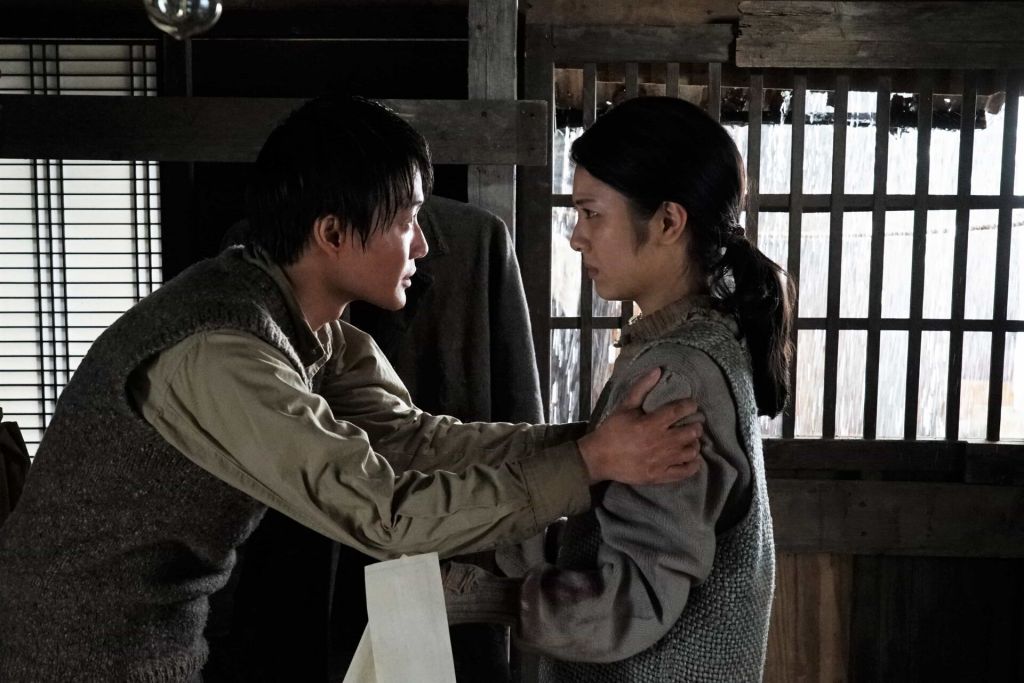


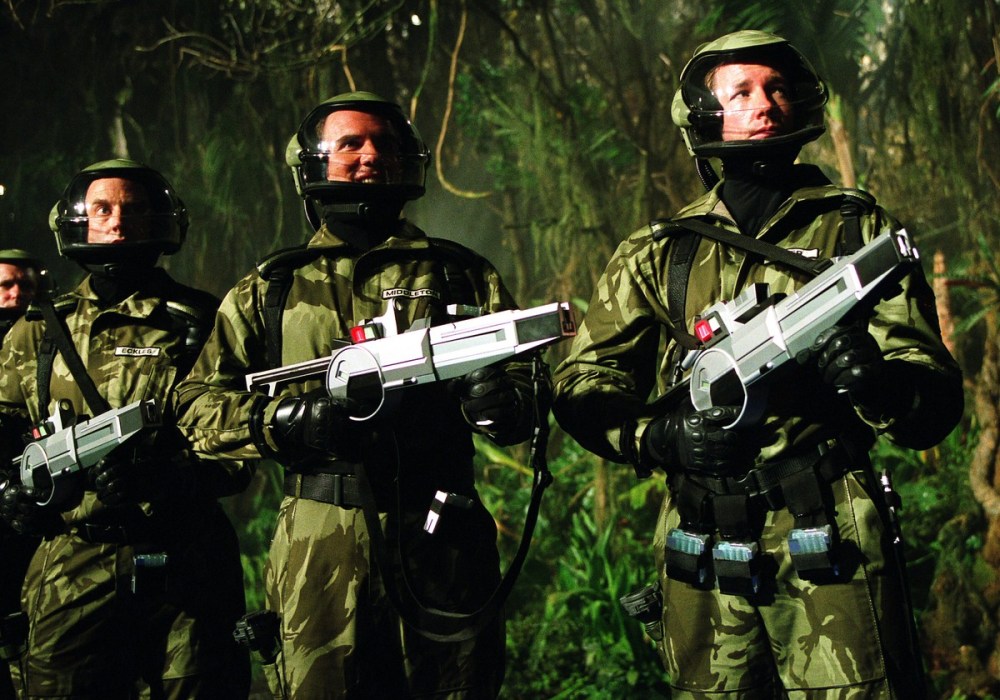
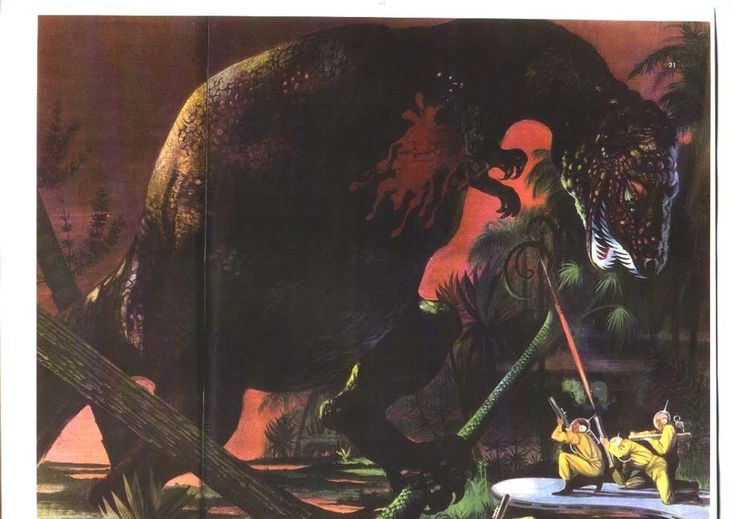

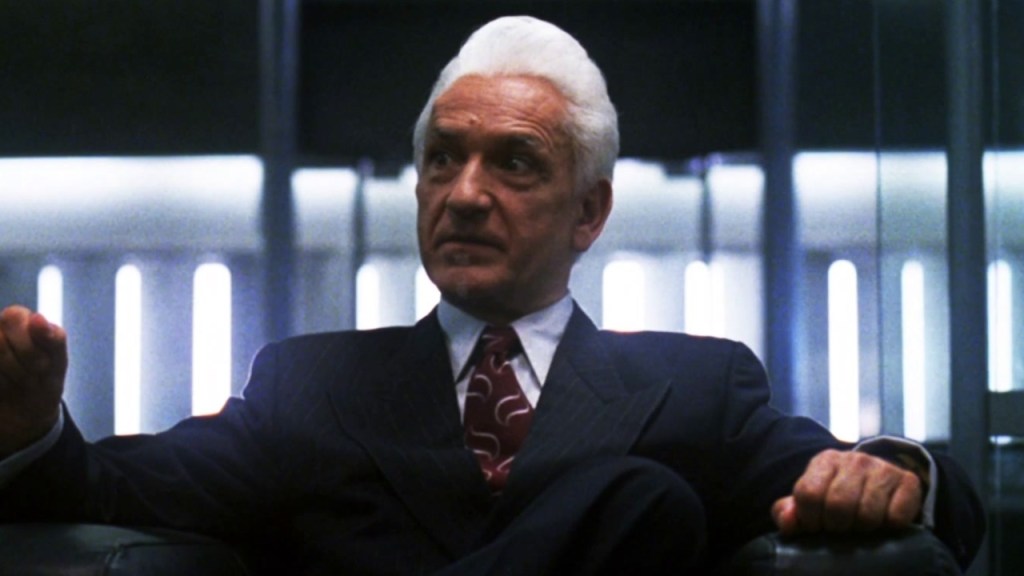

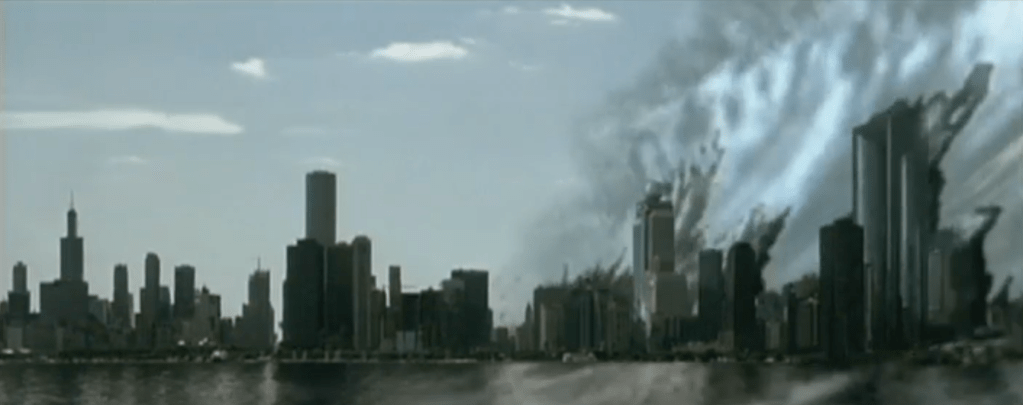
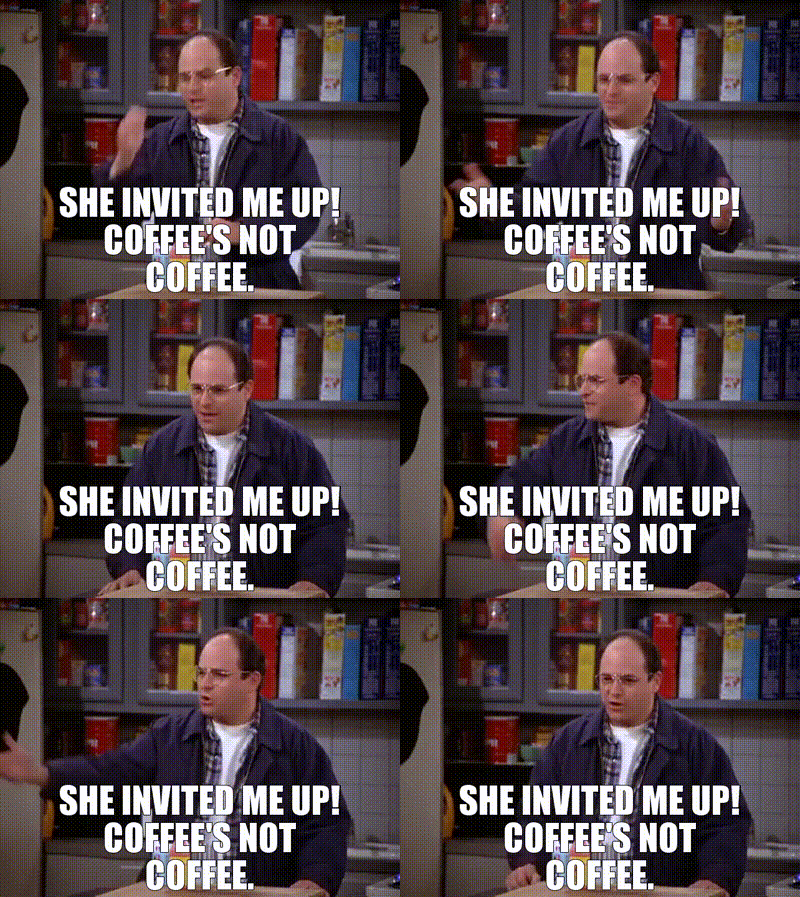
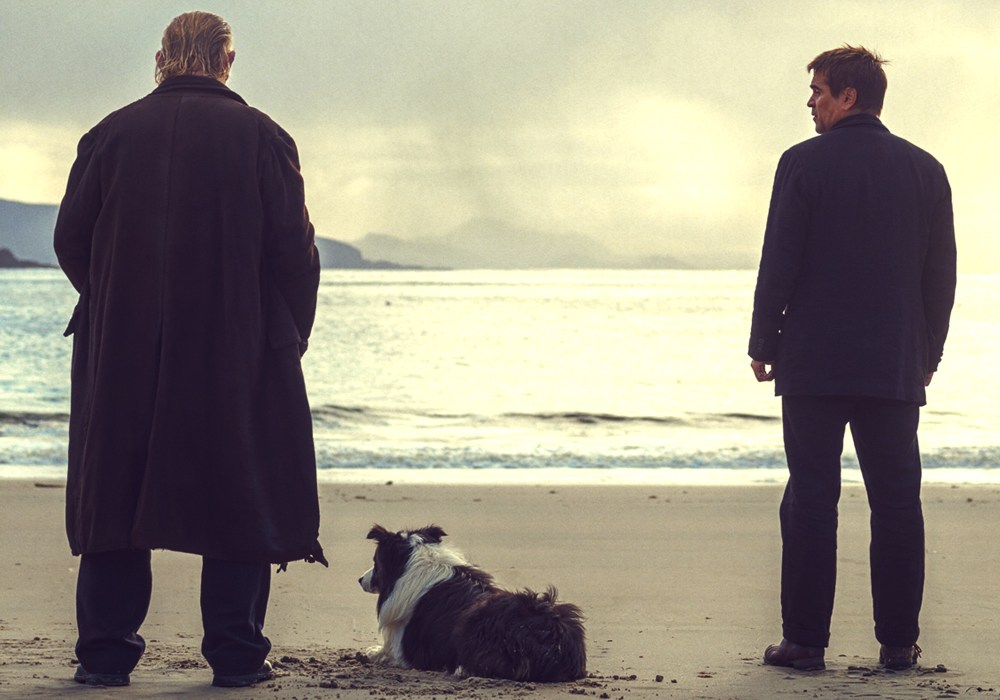
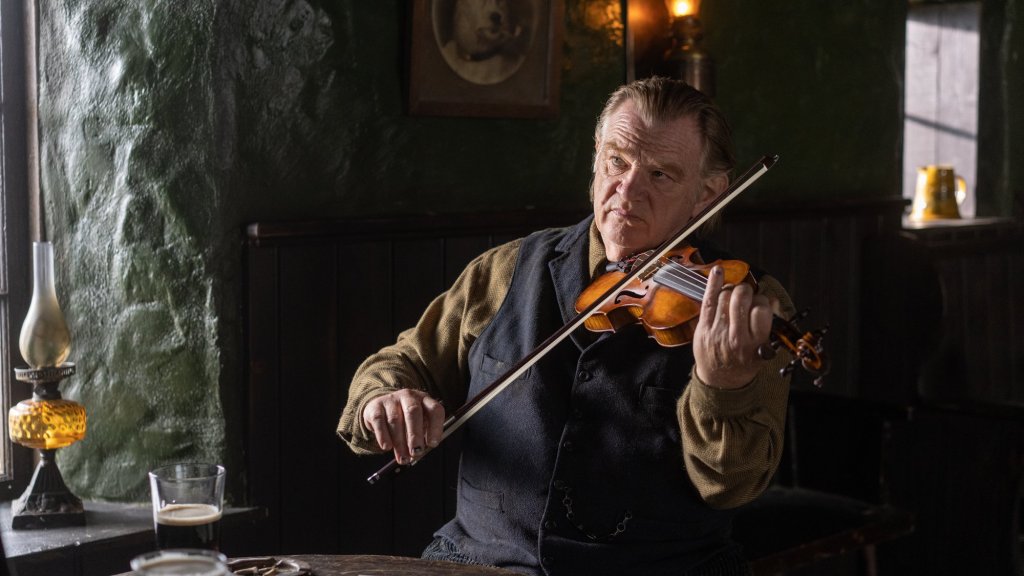
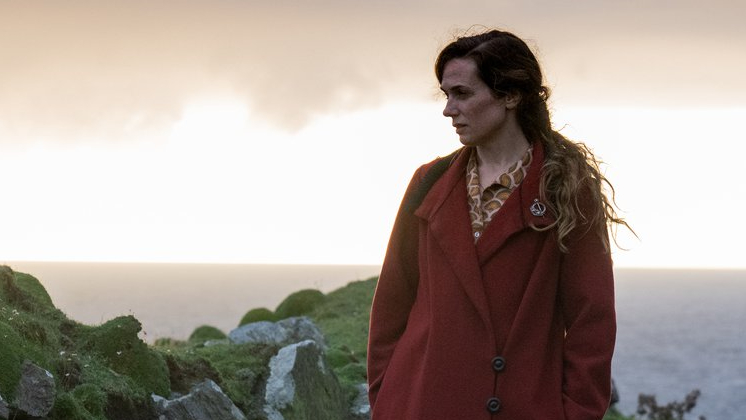
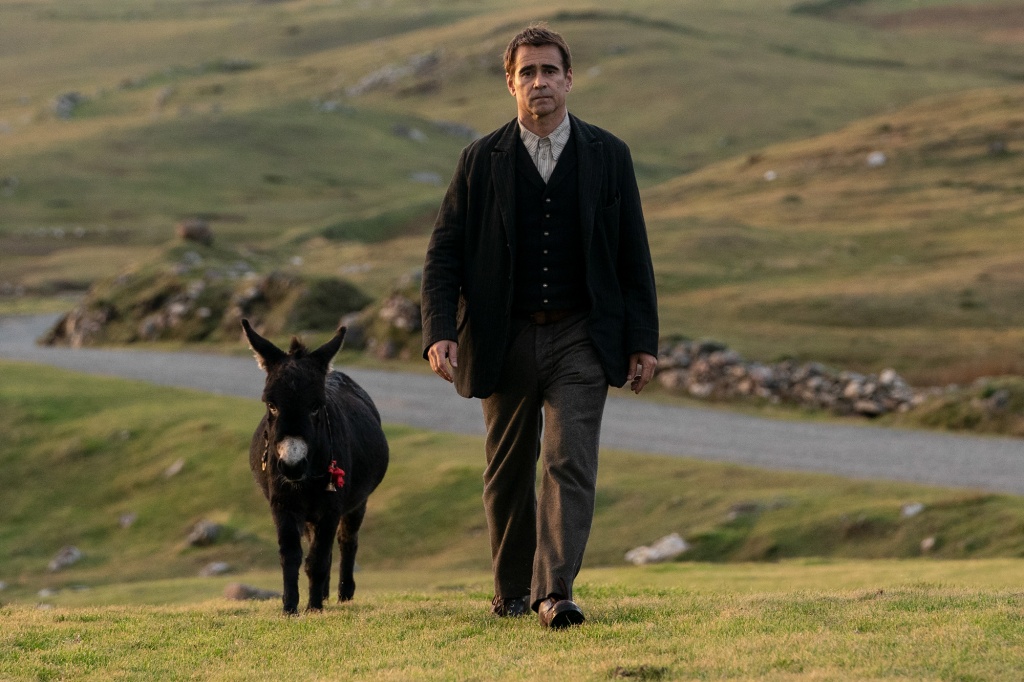
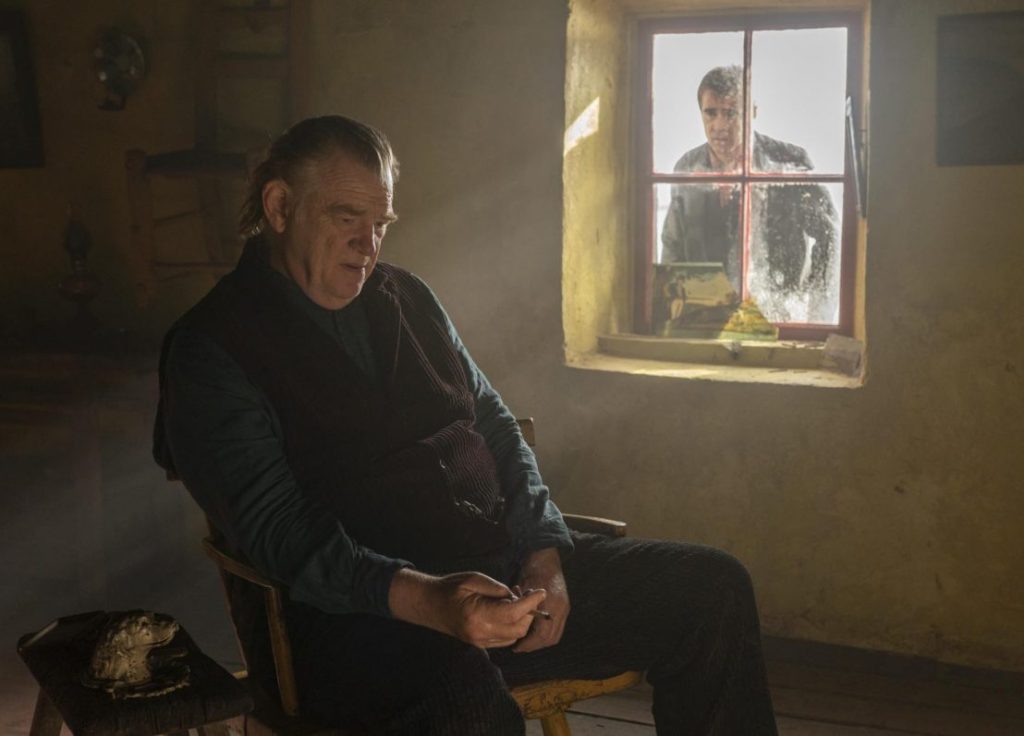


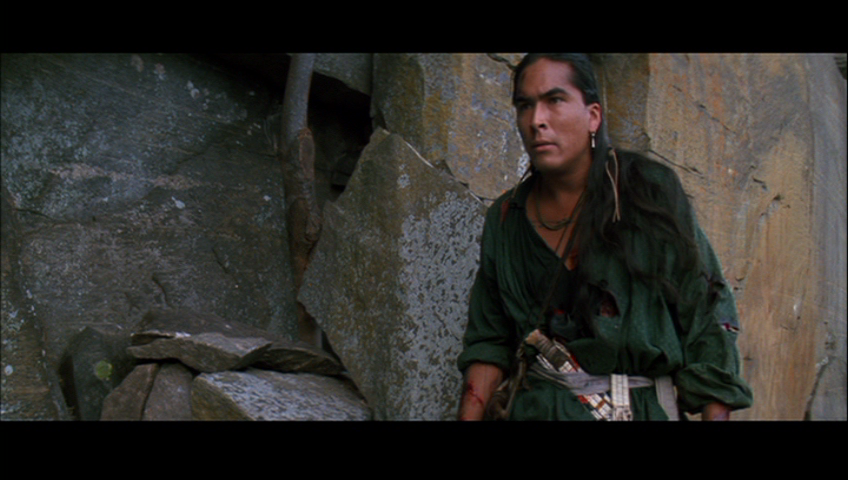

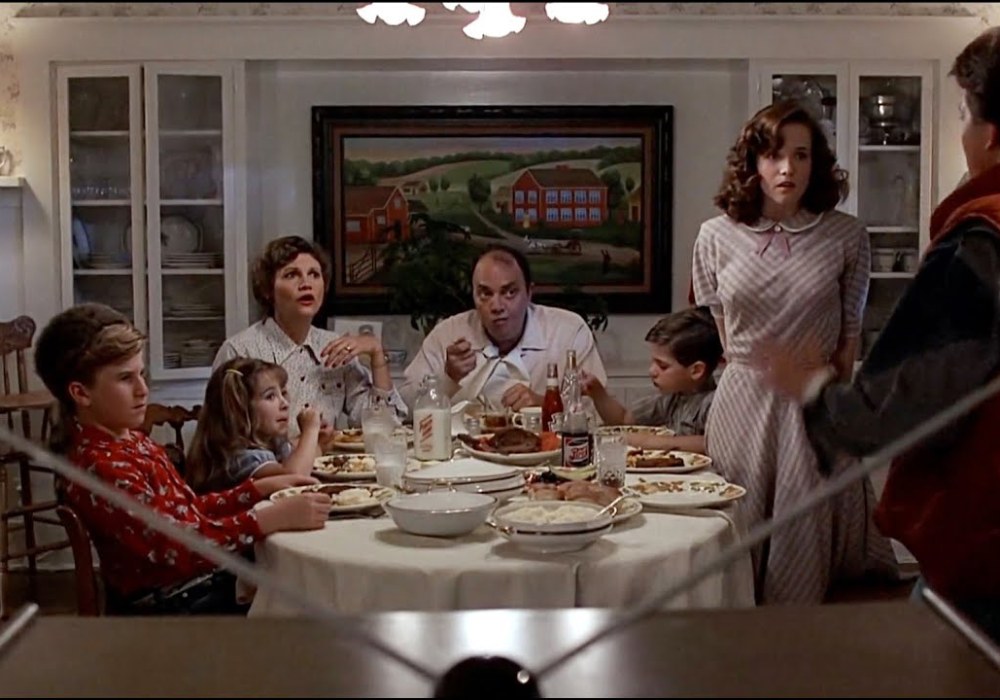
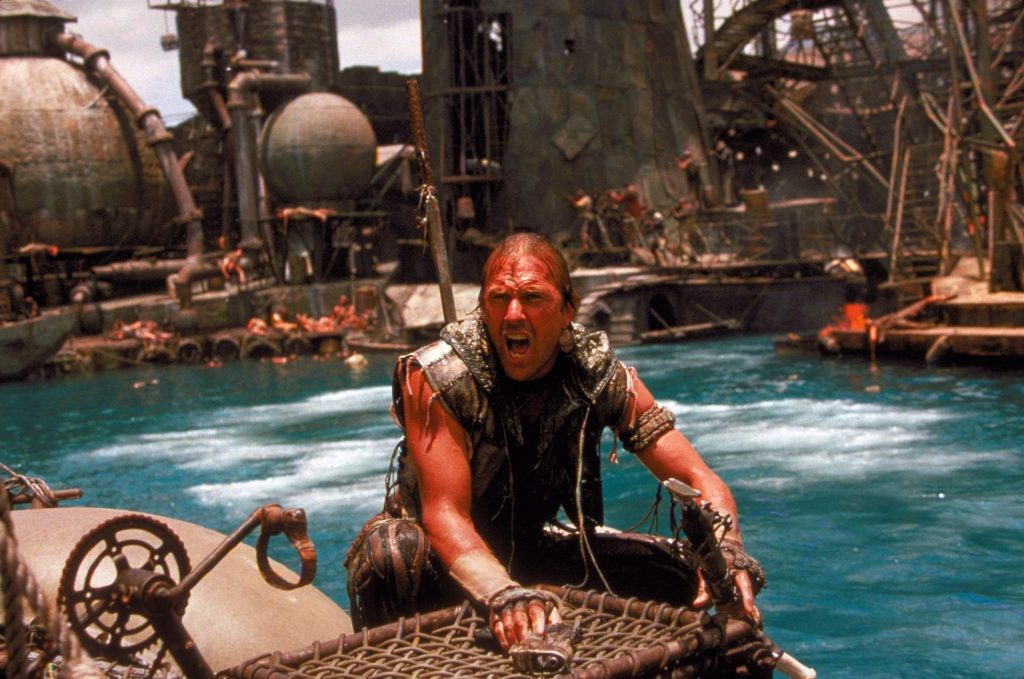

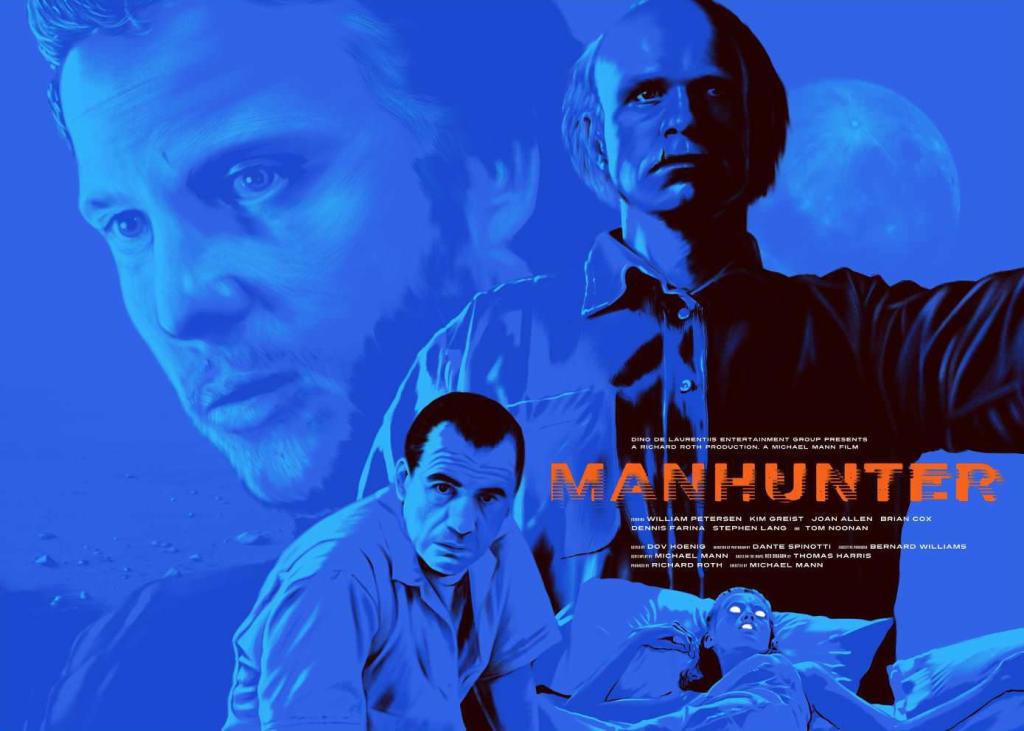
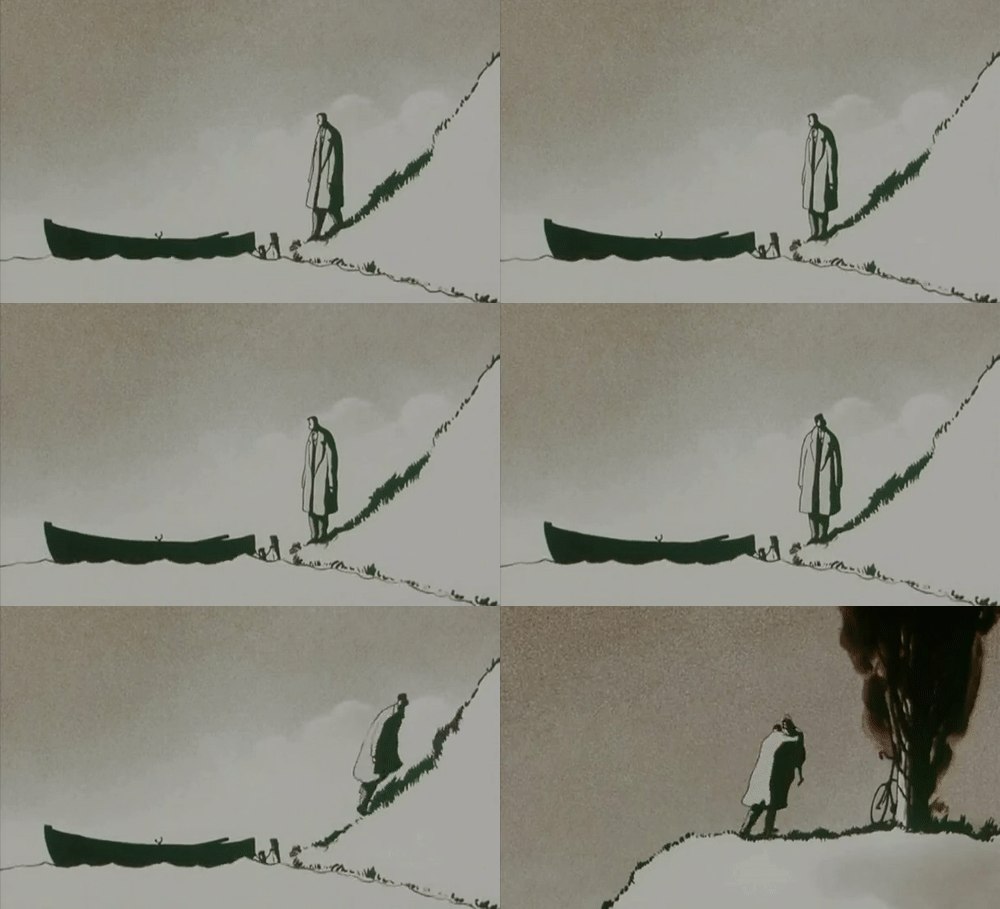

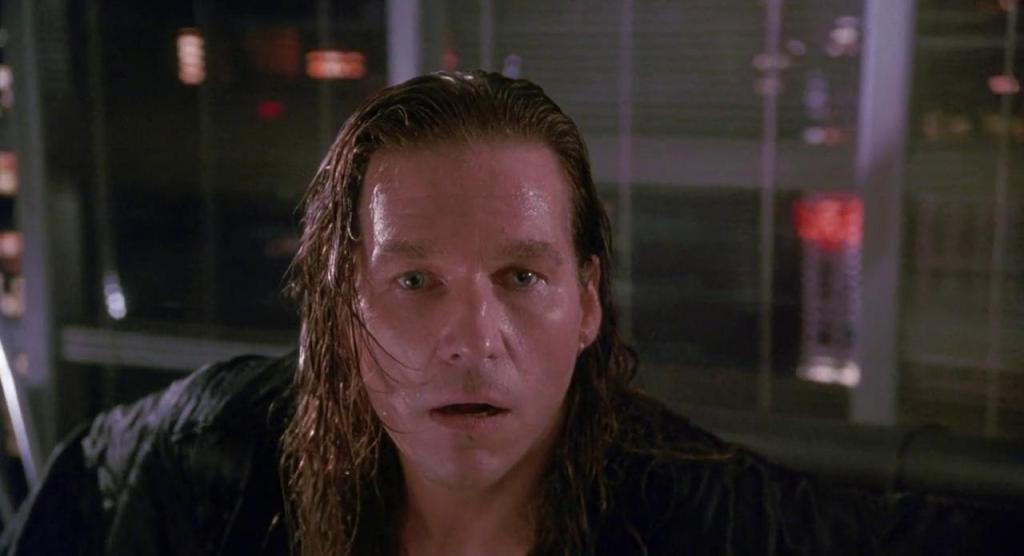
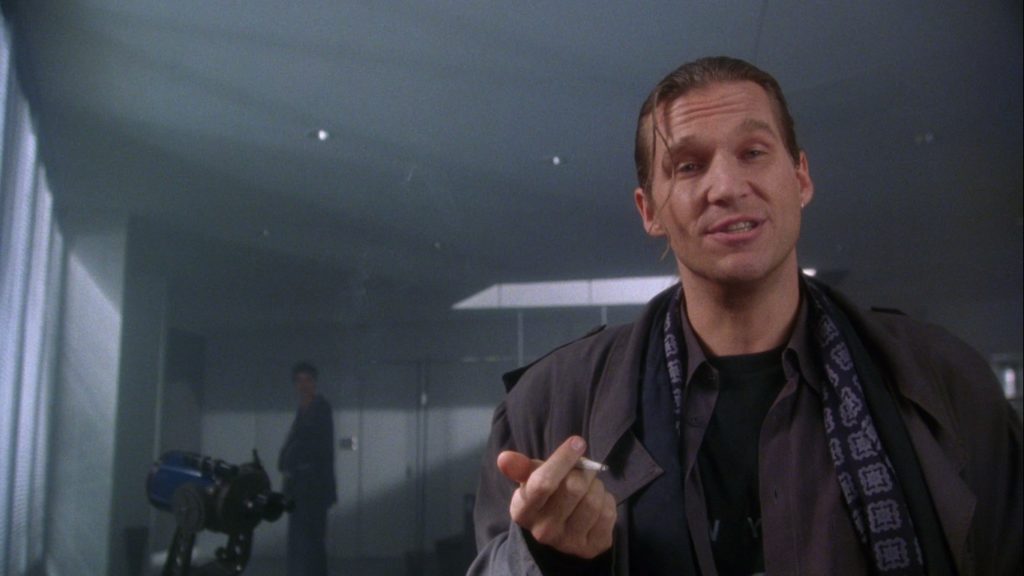
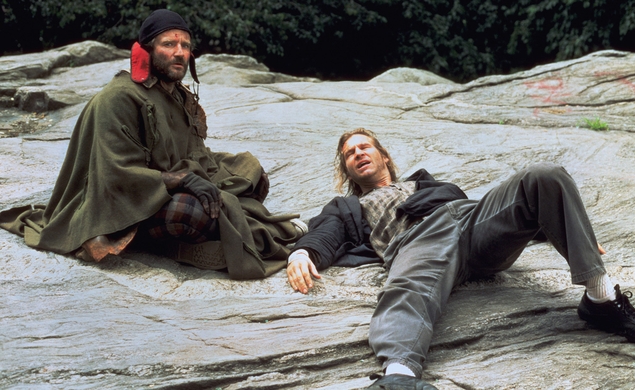


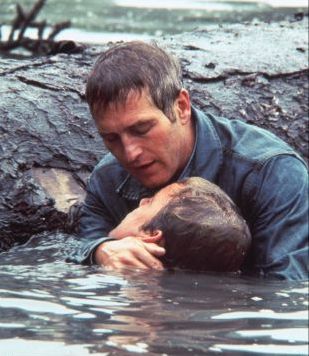
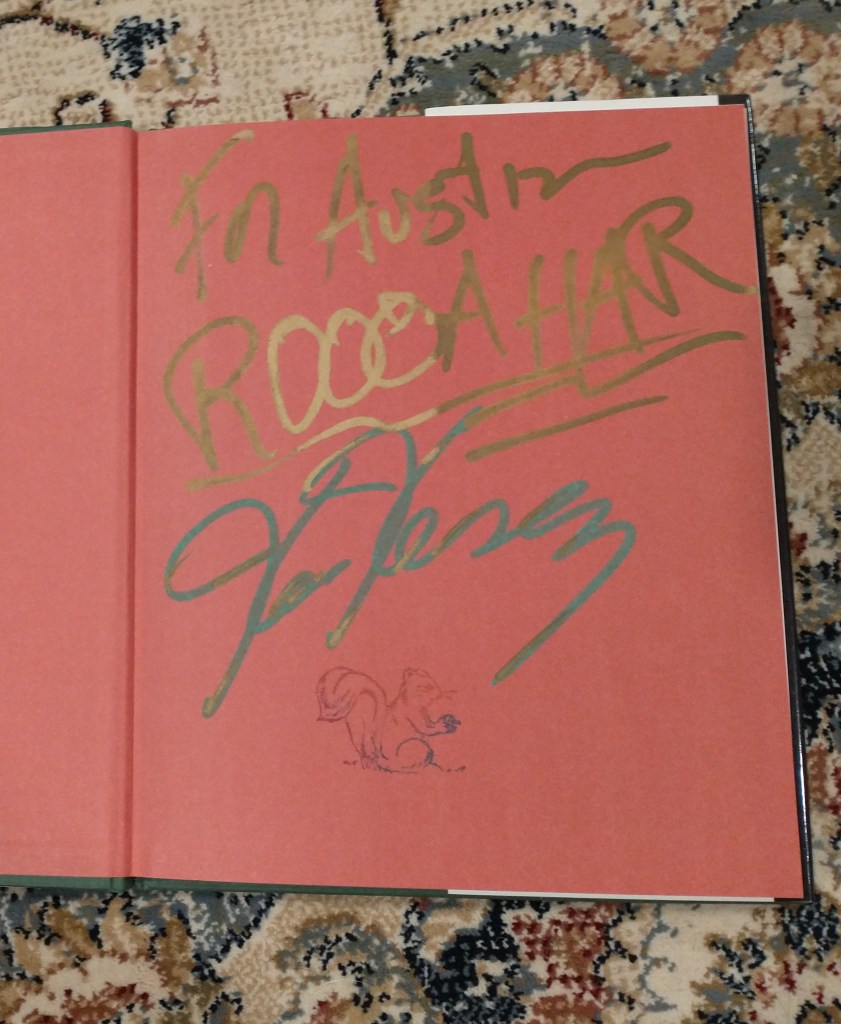
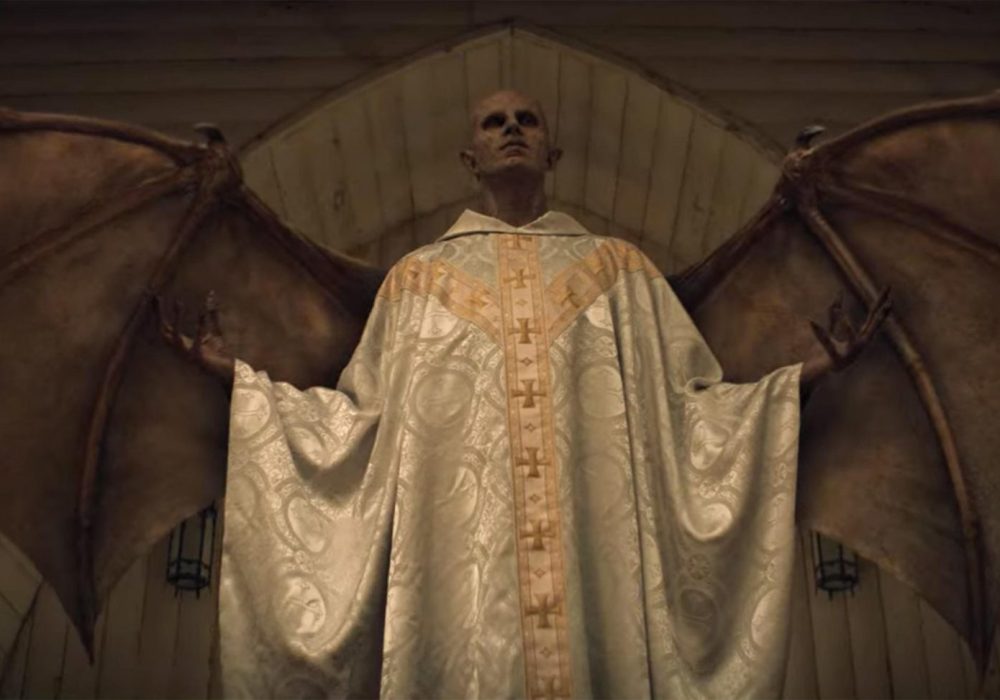

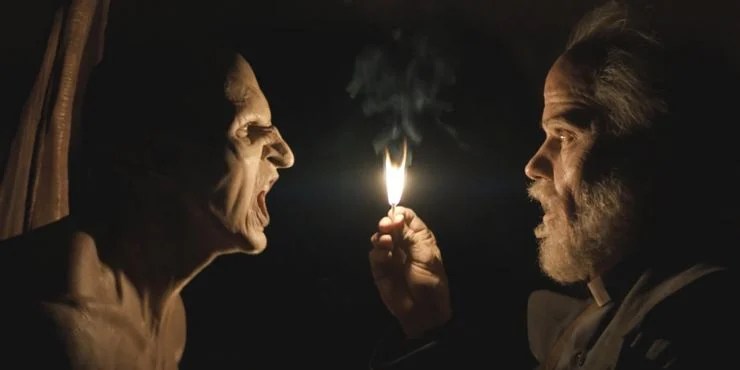
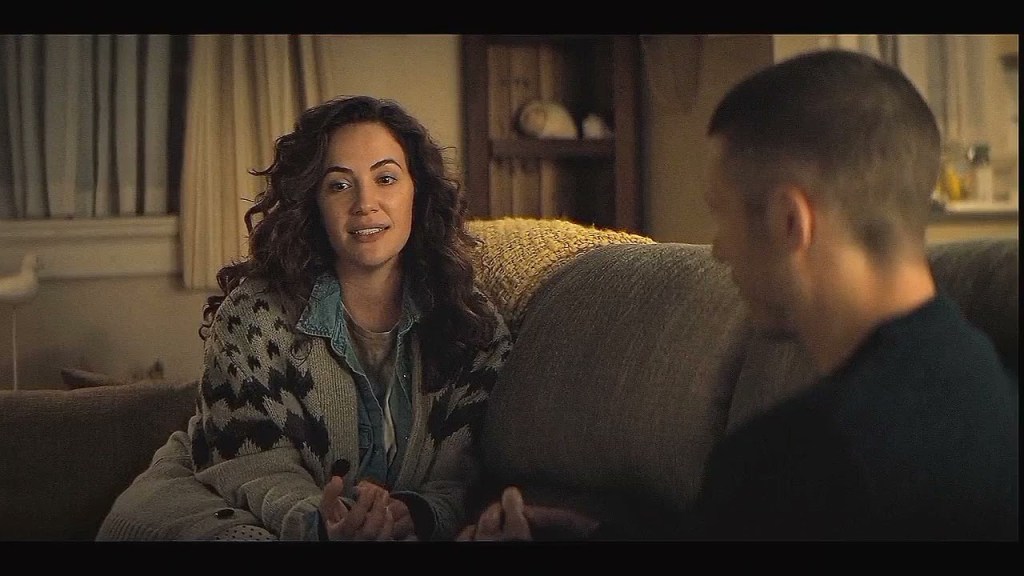
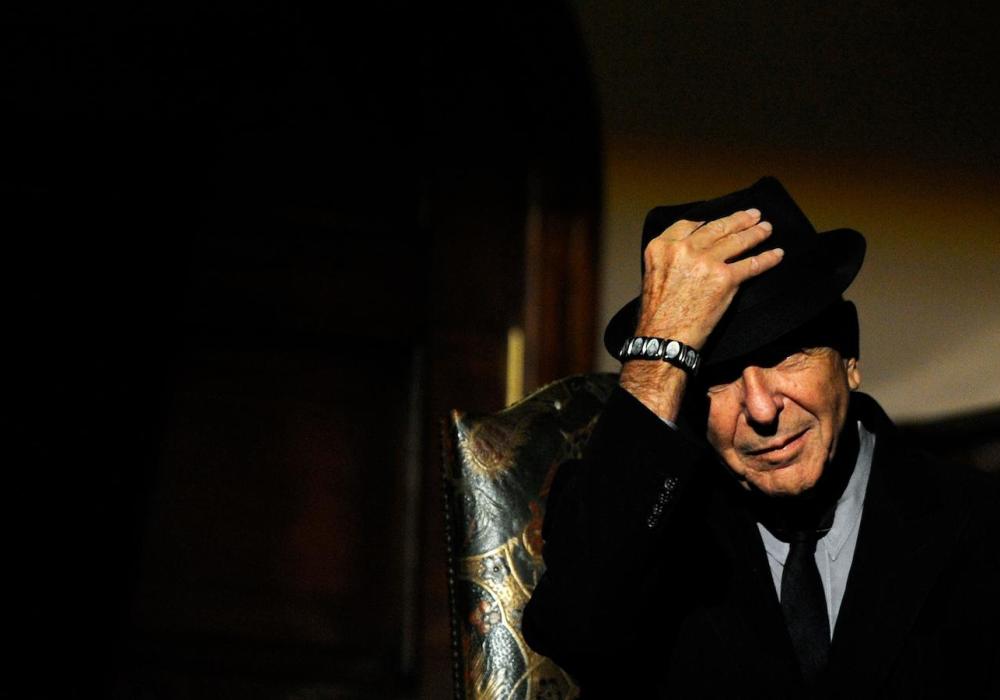

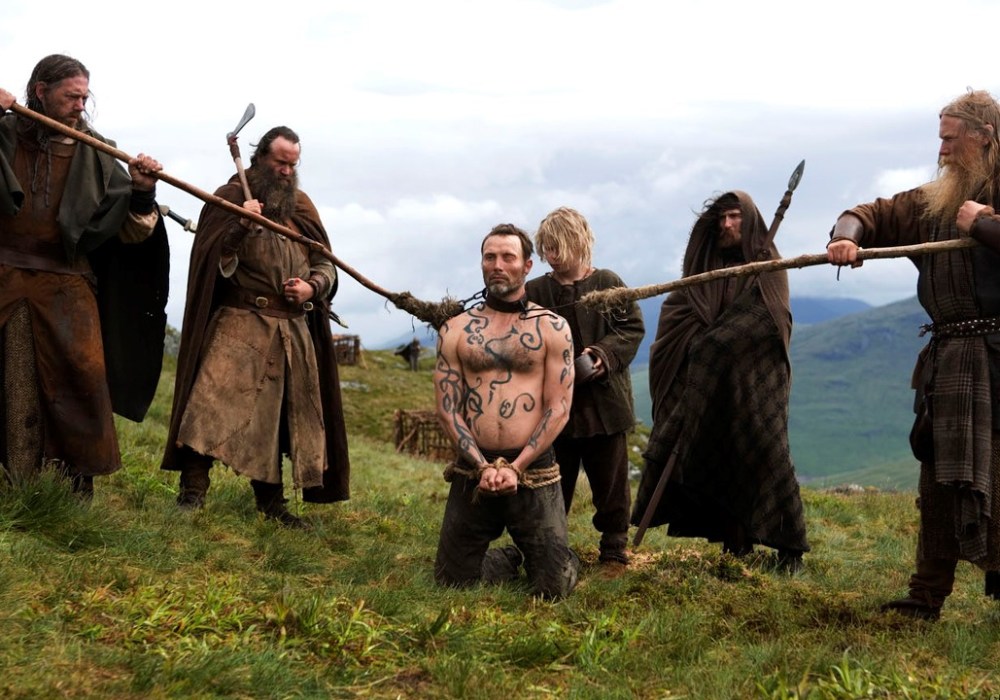


 Earth Critic